
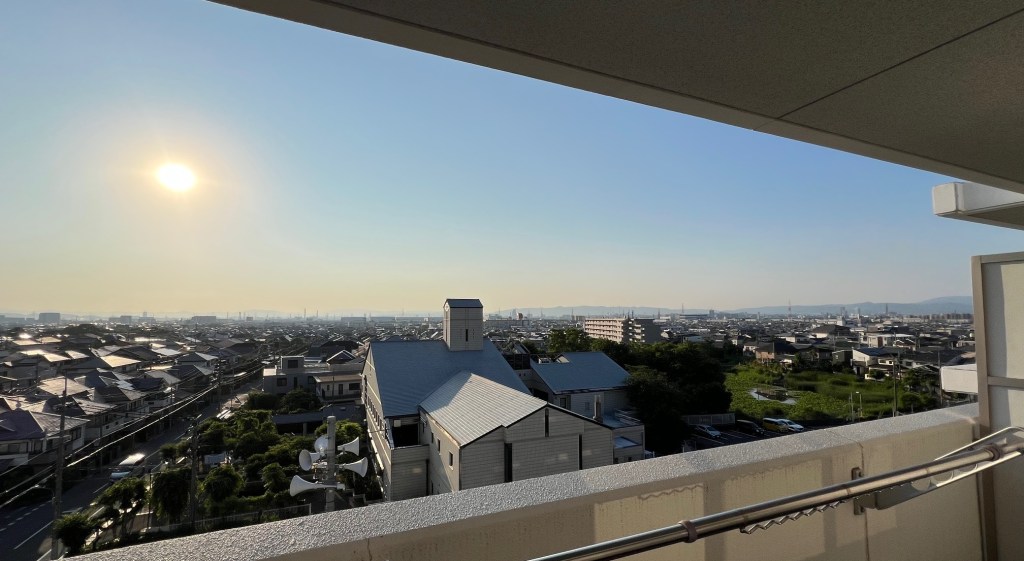
Thursday, June 5th.
I woke up with a jolt. It was 6 a.m. The curtain was half open, and morning sunlight streamed into the room.
Despite how much I drank last night, my body naturally wakes up around six. Strange.
Still a little dazed, but no headache. I splashed cold water on my face, then took a shower.
Breakfast was simple—salmon chazuke.
I ground fresh coffee beans with a hand mill, brewed it with care, and poured it into a pot. The coarse grind made for a mellow yet richly flavored cup.
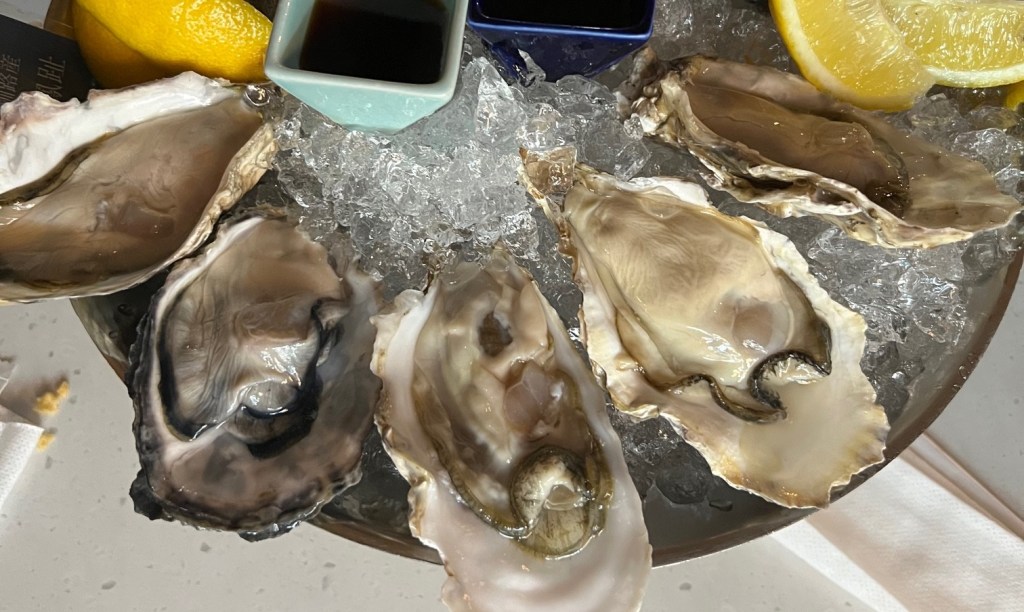
Last night, I had dinner with colleagues at a seafood-focused Italian restaurant known for its oyster dishes.
The place is called “Umeda Wharf,” about a five-minute walk from Hankyu Umeda Station in Osaka.
It was my first time visiting Umeda, and I found it to be a very polished business district.
The restaurant occupied the entire ground floor of a commercial building. Its interior combined wood and white tones, with soft orange lighting and candlelight creating a relaxed, Mediterranean atmosphere.
The weather was perfect, so we had reserved a terrace table under a large beige parasol.

While it was still light out, three of us—another Japanese colleague and a young Malaysian man in his 30s—chatted for a while.
About an hour later, a young Vietnamese man and a Malaysian woman joined us.
Before we knew it, the table was filled with laughter and lively conversation.
The Malaysians were Muslim and didn’t drink, and were mindful of what they ate. But they could eat oysters, which was a relief.
Raw oysters, fried, gratinéed, grilled, in soup and pasta—the fresh dishes kept coming, and we all cheered with delight.
The Malaysian man, who has lived in Japan since 2013, had just gotten married last year. Apparently, 700 guests attended his wedding reception. We Japanese were stunned.
While Malay is the official language of Malaysia, English is its second language.
Everyone spoke Japanese very well, casually switching between English and Japanese without missing a beat.
Even as someone older, I was spoken to on equal footing, with honest and unfiltered emotions.
I followed suit and became completely engrossed in the conversation.
“Yes, this is it.”
This is the kind of conversation I want to have.
Since moving from a foreign-affiliated company to a traditional Japanese one, I’ve struggled a bit with the corporate culture here. I’ve been studying English all this time just to feel this way.
Japan is a society deeply rooted in the value of wa—a form of harmony that emphasizes maintaining group cohesion and avoiding conflict above all else.
Though things are slowly changing, there’s still a pervasive belief that not speaking one’s mind equals being considerate. It’s common to match the opinions of elders or superiors, or to say vague, diplomatic things as a form of social grace.
Few countries elevate the dichotomy of honne (true feelings) and tatemae (public façade) to a core cultural principle like Japan does.
I believe this is why many foreigners find Japan so mysterious.
Though I’m Japanese, I’ve always felt uncomfortable with this style of communication.
That’s why I find the directness of foreigners not only refreshing, but comfortable.
Working at a global company, with frequent international interactions, had felt more natural to me.
I suppose it’s partly due to the environment I was raised in.
And so, carrying the warm afterglow of last night, I wrapped up my work today.
I had a tennis lesson scheduled for 7 p.m., but I was just too sleep-deprived.
I canceled and rescheduled for tomorrow.
I want to play tennis twice a week on weekdays, but I still haven’t quite found the ideal rhythm.
 Canon's Diary
Leave a comment