
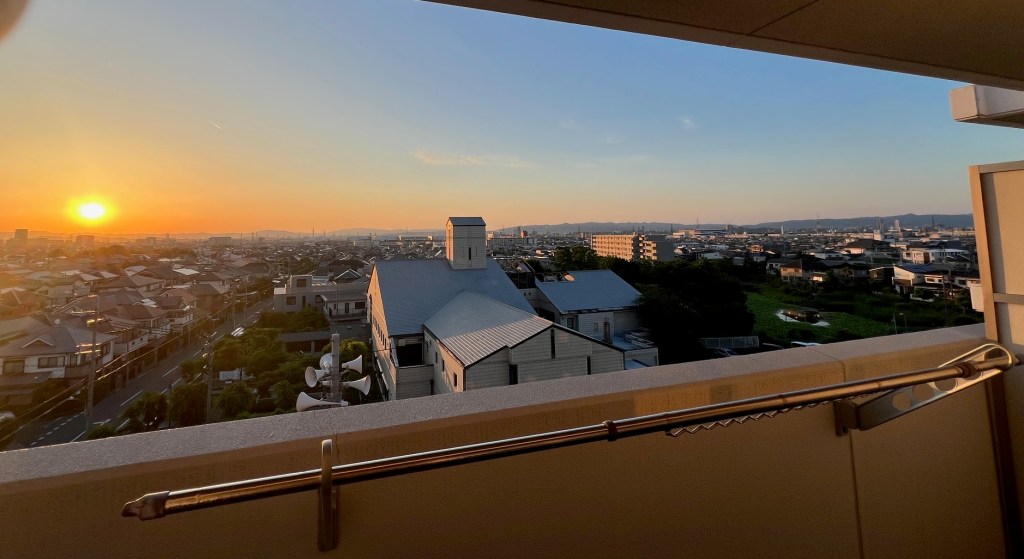
Friday, June 6th.
I went to bed around 10 p.m. last night, so I ended up waking at about 4 in the morning. It seems my internal clock is set to six hours of sleep. I would really prefer to get at least seven hours, so I crawled back under the covers. Around 5 a.m., I got up briefly to take a photo of the sunrise. The photo at the top is from this morning. I like that my window faces east—when the morning light enters my room, it’s easier to reset my mindset for the day. Since I’m usually out at work during the day, east-facing is actually better than south-facing for me. Wanting to make up for the lack of sleep yesterday, I got back in bed after taking the photo and slept for another hour. Thanks to that, I felt good this morning.
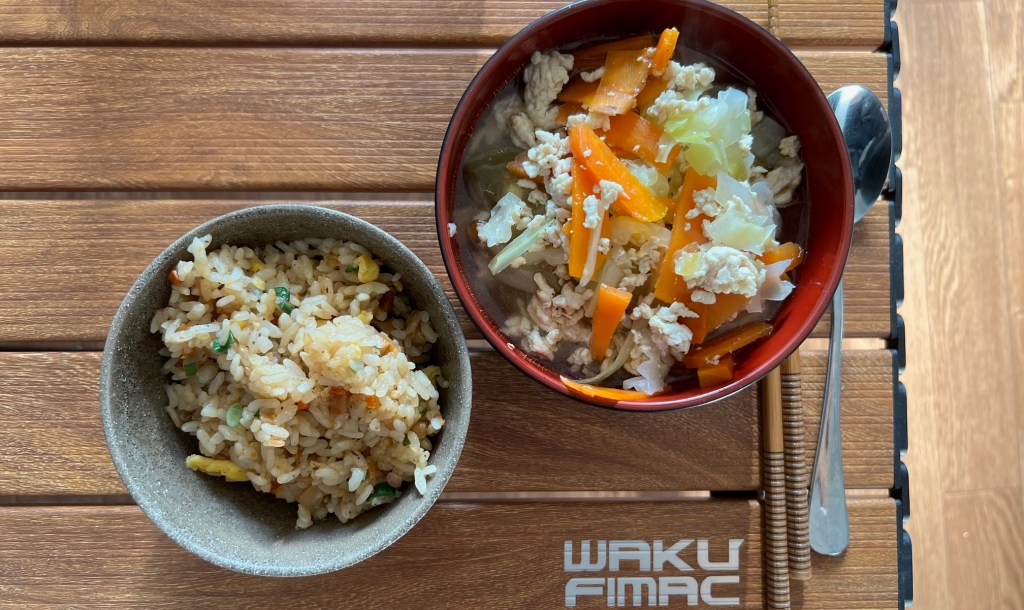
For breakfast, I had frozen fried rice and some chicken-and-cabbage consommé soup I had made in advance. “Oops, I forgot to add the green onions,” I thought, but I’d already started eating and didn’t feel like getting up to go back to the kitchen—so I just finished it as it was. Every time I buy frozen fried rice, I try a different kind and enjoy comparing the flavors. Today’s choice was a low-fat mixed fried rice—40% less fat.
While eating, I watched the morning news. There was a report about Ukraine launching a large-scale drone attack on a Russian air base on June 1st. Since the invasion of Ukraine by Russia began in February 2022, there still seems to be no clear path to a ceasefire. The number of civilian casualties is heartbreaking. The situation has shown little sign of improvement, and the war now looks set to drag on. Even Donald Trump, who was said to have been quite eager to promote ceasefire negotiations, recently made a cynical comment: “Might as well just let them fight for a while.”
Seeing such news, I felt a deep sense of loss and helplessness—but still, I went about getting ready for work. I made some coffee and washed the dishes. I wanted to buy some rice, but lately it’s gotten too expensive. Most rice sold in stores comes in 5 kg bags, which is too much for someone living alone like me. A 2 kg bag would be plenty, but they’re rarely available. Until the government’s emergency rice reserves start circulating, I guess I’ll be relying on frozen fried rice for a while. “Yeah… I’d like to expand my cooking repertoire a bit,” I thought, trying to shake off the gloom. “Maybe I’ll try making ginger pork this weekend.”
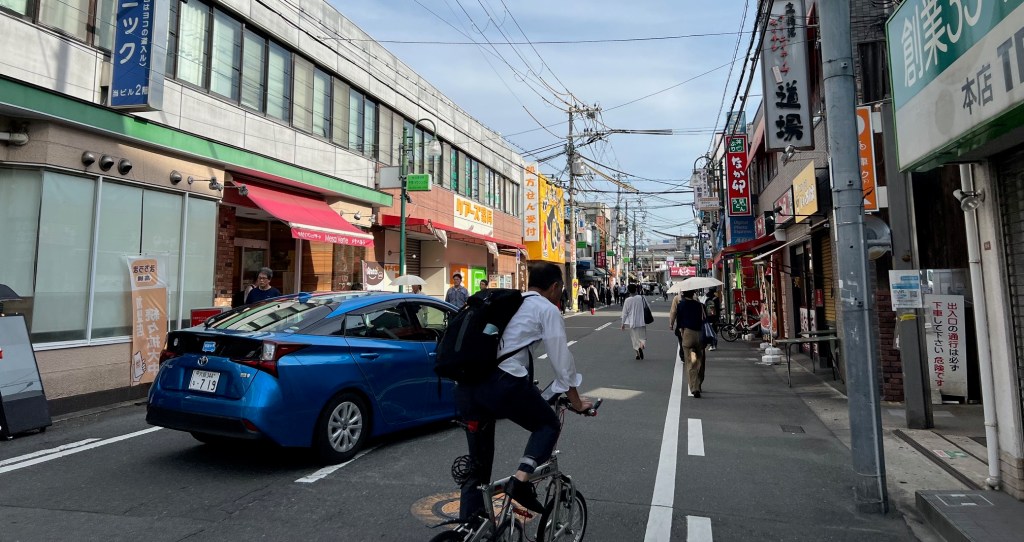
Heading off to work, I noticed the sun’s rays felt stronger than before—summer is clearly approaching. The shopping street was, as usual, bustling with people, cars, and bicycles. Compared to Naruse, there seemed to be more young people here. Naruse had a much higher proportion of elderly residents—it felt like a town that epitomized Japan’s aging population.
Work went smoothly today, without any major issues. I work at a pump manufacturing company. When I joined in 2020, I didn’t understand much—pump performance, characteristics, materials selection—it was all a mystery to me, and I seriously wondered how I’d manage. But now, in my fifth year, I’ve gained a fair amount of knowledge. When I hear technical explanations, I can visualize the internal structure in my mind.
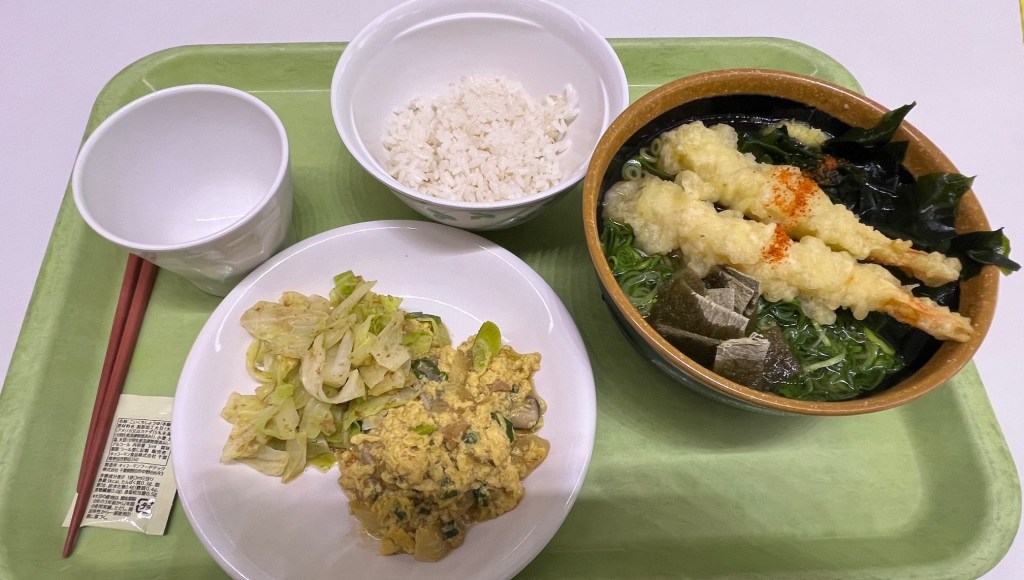
For lunch at the company cafeteria, I went with my go-to dish: tempura soba. The grated ginger garnish was subtle, just the way I like it. “Although… the broth is a bit on the salty side,” I thought—but still, I like that this meal lets me load up on green onions and seaweed. I’m deeply grateful to be able to enjoy a warm meal every day. Japan is probably one of the most stable and affluent countries in the world.
Hans Rosling, in his 2018 book Factfulness, explains the global income distribution like this:
Out of the world’s 7 billion people, about 1 billion live on less than $2 a day, with their entire lives consumed by the struggle to secure drinking water and food. Around 3 billion live on $2–$8 a day, barely managing to afford a motorbike or small appliances. About 2 billion can afford refrigerators and cars, though saving money remains difficult. And the remaining fewer than 1 billion live on over $32 a day—enough to attend university or travel abroad.
Roughly 800 million people are undernourished worldwide. In low-income countries, it’s normal for women and children to spend hours every day just fetching water. Around 20% of the global population lives in slums—without access to clean toilets or safe housing. In Japan, food is abundant, yet about 5 million tons of it is wasted every year. Clean, drinkable water comes straight out of the tap. Earthquake-resistant housing and advanced appliances are the norm here. But these “normal” things would cease to be normal with even the slightest change in environment.
One of the biggest factors behind poverty is political instability.
For example, South Sudan is one of the poorest countries in the world. Having gained independence only in 2011, it has been plagued by civil war and ongoing political unrest. Hunger and displaced populations are serious issues. Infrastructure is almost nonexistent; education and healthcare barely reach the people.
Somalia, too, has suffered decades of civil war and terrorist attacks from the Islamic extremist group Al-Shabaab, along with droughts and floods that worsen food shortages.
In Myanmar, the elected government led by Aung San Suu Kyi was overthrown in a 2021 military coup, and many civilians lost their lives. Suu Kyi remains imprisoned—I wonder if she’s doing okay.
The Democratic Republic of the Congo is essentially in economic collapse due to ongoing conflict and the presence of armed groups. Child soldiers, forced labor, and human rights violations are widespread.
Meanwhile, Afghanistan under the Taliban, the slums of Bangladesh, and Gaza continue to suffer—conflicts and humanitarian crises that are in the news constantly.
So, what is it that I can actually do?
I make a modest monthly donation to UNICEF, but in truth, it’s less about helping those in need and more about convincing myself that I’m doing something.
Realistically, I probably can’t do much at all.
The power of a single civilian is, as Hiroyuki Itsuki wrote in A Drop in the Great River (1998), just that—a single drop in a vast river.
And yet, we human beings are creatures capable of such irrational acts.
Perhaps what’s truly important is being aware of that very nature.
To recognize our own sinfulness, and at the same time, to appreciate the profound dignity of simply living each day.
In order to prevent even a single tragedy, I will make whatever effort I can in my own life, and devote myself to that.
What one person can do, in the end, is to live out their life fully—and pass on that way of being to the next generation.
I believe that acknowledging one’s own powerlessness, and still choosing to keep going—that very stance is what true strength is.
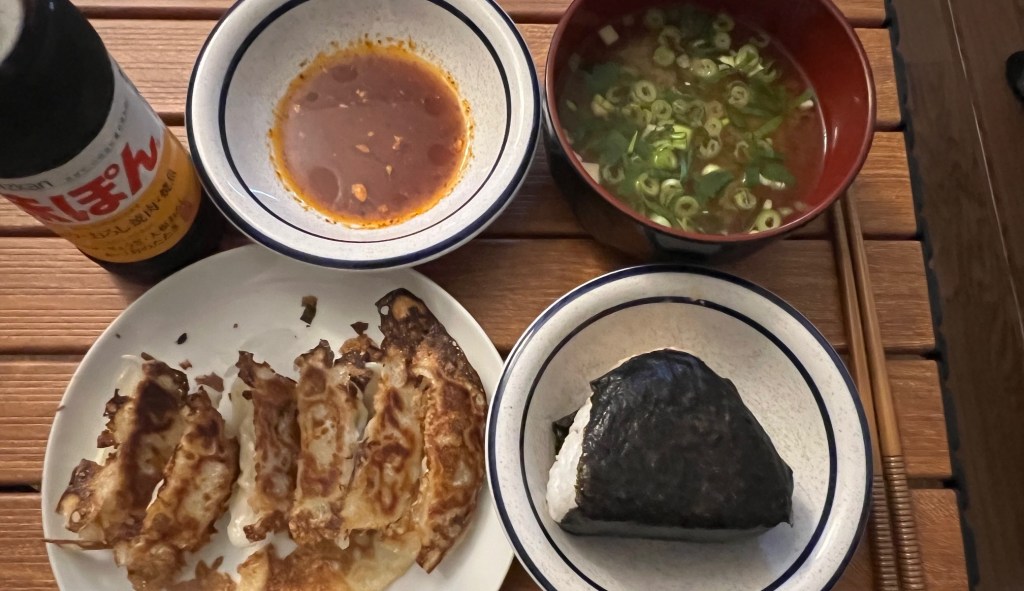
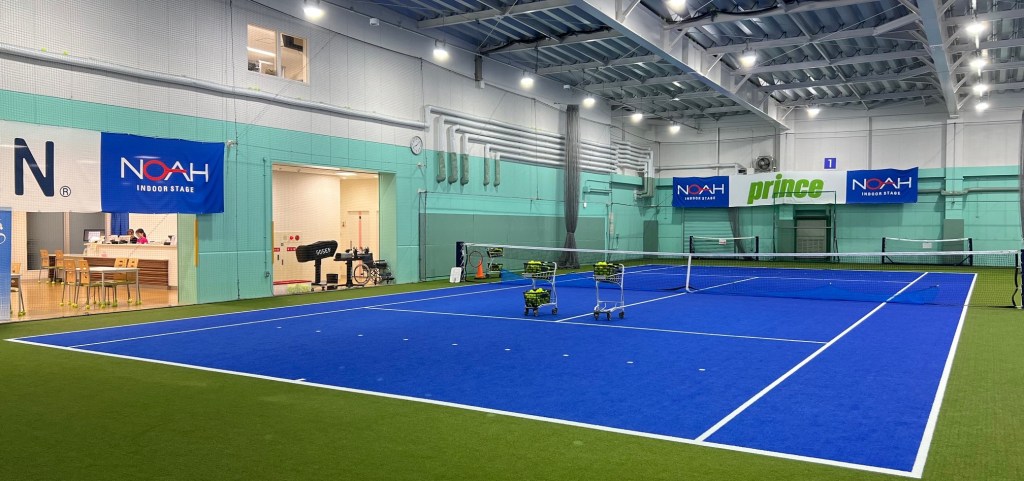
Tonight, I have a tennis lesson scheduled from 8:30. Since I’ll be exercising, I kept dinner light—some gyoza with ponzu and chili oil, plus a rice ball I picked up from the store. I added chopped green onions to my instant miso soup.
Tennis feels a bit like yoga to me sometimes.
While I play, I occasionally find myself meditating to calm my mind.
The human heart is fragile, so easily broken.
I want to take care of mine—to keep it steady, so it won’t be crushed by the absurdity of the world.


Leave a Reply