Action without thought is empty; thought without action is blind – Goethe
While living with schizophrenia, I move between Tokyo and Osaka. Through this journal, I hope to quietly share moments from my daily life—and memories from the journey I’ve taken with my illness.
My whole body feels stiff. Last night’s lesson was a tough one. The pain in my neck is probably from tensing up too much during my swing. My chest, abs, and thighs are sore. I didn’t sleep well either, so I stayed in bed until 8:30 in the dark room, on purpose. When I opened the curtains, bright sunlight poured in. Placing a hand on my right shoulder, I loosened the muscles and headed to the sink, brushing my teeth and washing my face as usual. I had run out of bread, so I went to a nearby convenience store and bought a rice ball and a bottle of green tea, and quickly filled my stomach.
Almost unconsciously, I kept going over the points I needed to improve from yesterday’s play. I should use my body more fully, I thought, and take a more decisive swing. This cycle of thoughts had become part of my usual routine. When I turned on the TV, there was a feature on the situation in the Middle East. Two months after the fighting began, a ceasefire had finally been reached, but tensions remained high, including concerns over a possible closure of the Strait of Hormuz. Even so, the stock market seemed to be looking ahead, reaching new record highs.
After breakfast, I sipped the coffee I had brewed the day before, now gone cold, while half-watching the news. I could hear cars passing by, faint birdsong, and announcements from the bus terminal, though I couldn’t quite make out what was being said. I opened the windows wide and started tidying up the room. I swept away the fine dust and wiped down the refrigerator. It didn’t take much movement before my body began to warm up. The temperature has been rising day by day.
A short sound came from my phone. In our family group chat, my younger sister had sent a “thank you” sticker to our mother. It was Mother’s Day. When I used to live with her, I would give her flowers and things like that, but doing it every year somehow felt a bit embarrassing, and lately I haven’t been giving anything so elaborate. Things I couldn’t say, times when we argued over nothing. My hand holding the phone paused for a moment, and then I sent a thank-you emoji as well.
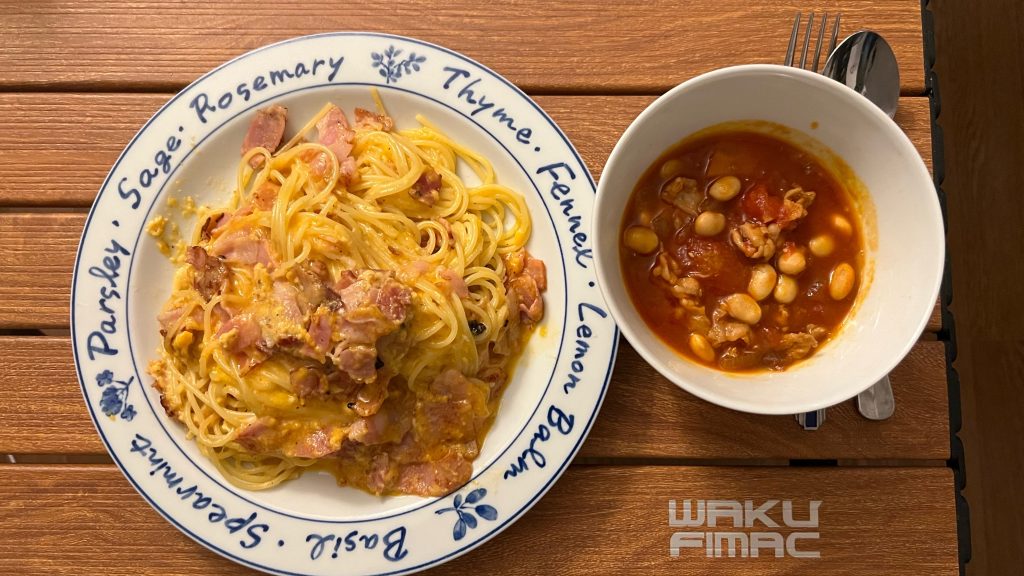
In the afternoon, I plan to step onto the court again. I want to check my movements. Even if it doesn’t go well, that’s fine. After a shower, I’ll make carbonara for dinner to refuel with some carbohydrates, then take a sip of Scotch and bring the day to a close.
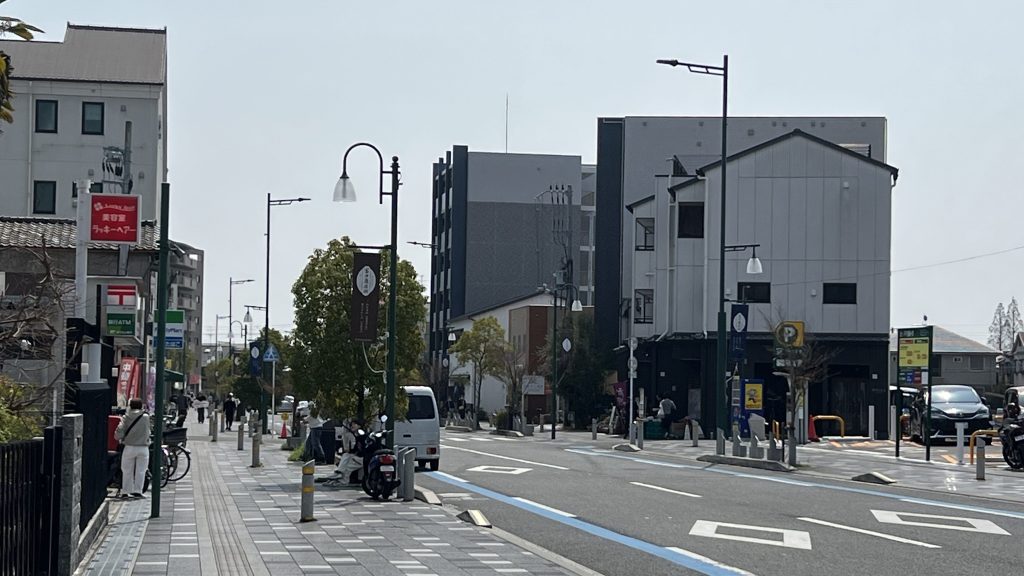
As usual, I sat on the sofa in my living room, sipping the coffee I had brewed that morning and poured into a pot. Heavy rain had fallen the night before, but today the sky stretched out clear and blue. A slightly strong wind stirred the fresh green leaves, setting the trees swaying. That day, a jazz festival was being held in the town where I live. A stage had been set up at the community center near Tsutsuiike Park, with food stalls lining the area. Bars and shops near the station had opened their doors, letting music spill out into the streets. There were even street performances, I had heard.
I rode my electric bicycle to the shopping street, bought a teriyaki bento from a skewer shop, and continued south along the main road. At the open space by the community center, I sat on a folding chair I had brought, enjoying a local beer with my meal.
It has been a year since I moved to this town. During last year’s long holiday in May, my father had been in a critical condition, and I had no room in my heart for anything else. This year, however, I have been able to spend my time quietly in my room. My father passed away on May 11, and his first death anniversary is approaching. I worry about my mother, who remains in Tokyo and struggles to manage without him, but as for myself, I feel that I have finally begun to come to terms with things. Though I live alone, I have not felt lonely. Having spent so many years living with my wife and parents, constantly mindful of others, I had come to understand the quiet importance of time spent by myself.
Glancing at my watch, I saw that it was half past one. There was to be a small classical jazz performance at a bar near my home starting at two. Good—right on schedule. I cleared away the empty plastic container from my meal, got back on my bicycle, and headed north toward home.
The whole town was caught up in the festival, and music flowed even from speakers along the main street. Small shops and food trucks lined the roadside. The wind was a little strong, but the sunlight was warm, and more families than usual strolled leisurely along the sidewalks.
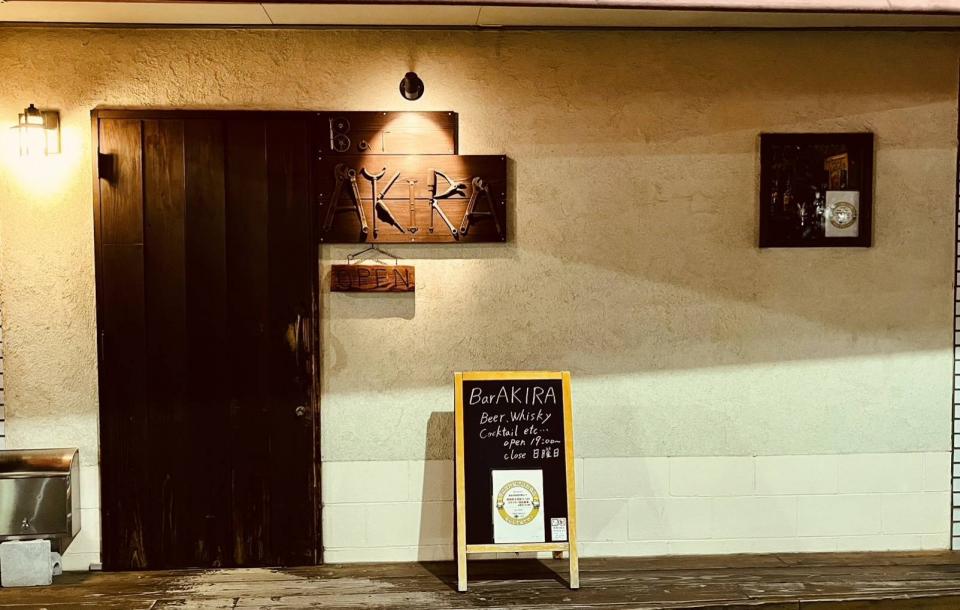
My destination was a small bar with a modest sign that read “Akira.” Normally, it was shut behind a heavy-looking door, offering no glimpse of the inside. A menu stood out front, but the writing was too small to read, giving the place an unapproachable air. I had often passed by, curious, since it was so close to my home. When I learned that live music would be open to the public for the festival, I finally felt inclined to step inside.
When I arrived, the atmosphere was entirely different from usual. Beneath a green parasol, with the door standing open, two young people who looked like siblings welcomed me.
“What would you like to drink?” “In that case, I’ll have a whiskey soda.” “Thank you. Please, come in.”
Led inside, I was able at last to see the interior. It was not large, but the white-painted walls and high ceiling with exposed wooden beams gave it a sense of quiet openness. Soft indirect lighting, placed here and there, cast a gentle glow across the room. An L-shaped wooden counter stood inside, lined with an astonishing variety of spirits. I was shown to a seat at the counter, where the bartender prepared my drink and set it before me.
“Please, take your time.”
When the time came, the door that had been open was quietly closed. I caught my breath. The music from outside was completely shut out, leaving a deep silence. In the dim light, a spotlight fell upon the performers. It felt as though I had been transported in an instant—from the daytime bustle into a midnight gathering.
Soft jazz began to play.
Suddenly, I found myself remembering a small jazz concert I had once attended with my wife when we were young. For some reason, I felt as though she were sitting beside me. I took another sip of my whiskey. Gazing into the glass, I listened to the gentle voice of the female vocalist. The low resonance of the bass sank slowly into the depths of my chest. Back then, even without conversation, simply sharing the music had been enough.
When the song ended, I found that once again, I was alone.
Last Friday fell in the middle of the May holidays. I had originally planned to take a day off, but work had piled up beyond control, so I decided to go in. Even so, I was to return to Tokyo that same day, so I wrapped things up at three in the afternoon and boarded the Shinkansen.
My sister had told me that my mother, who lives in Tokyo with my wife, had tripped over a sofa at home and fractured her ribs. She had already been treated at the hospital and was wearing a corset, but the pain was so severe that she could barely move. Still, I had lost count of how many times she had fallen and broken something. She was eighty-six now, yet whenever something caught her attention, she would start moving in a hurried trot. No matter how many times I warned her, she never listened. Perhaps because of that accumulation, what rose in me was not so much concern as a weary sense of here we go again.
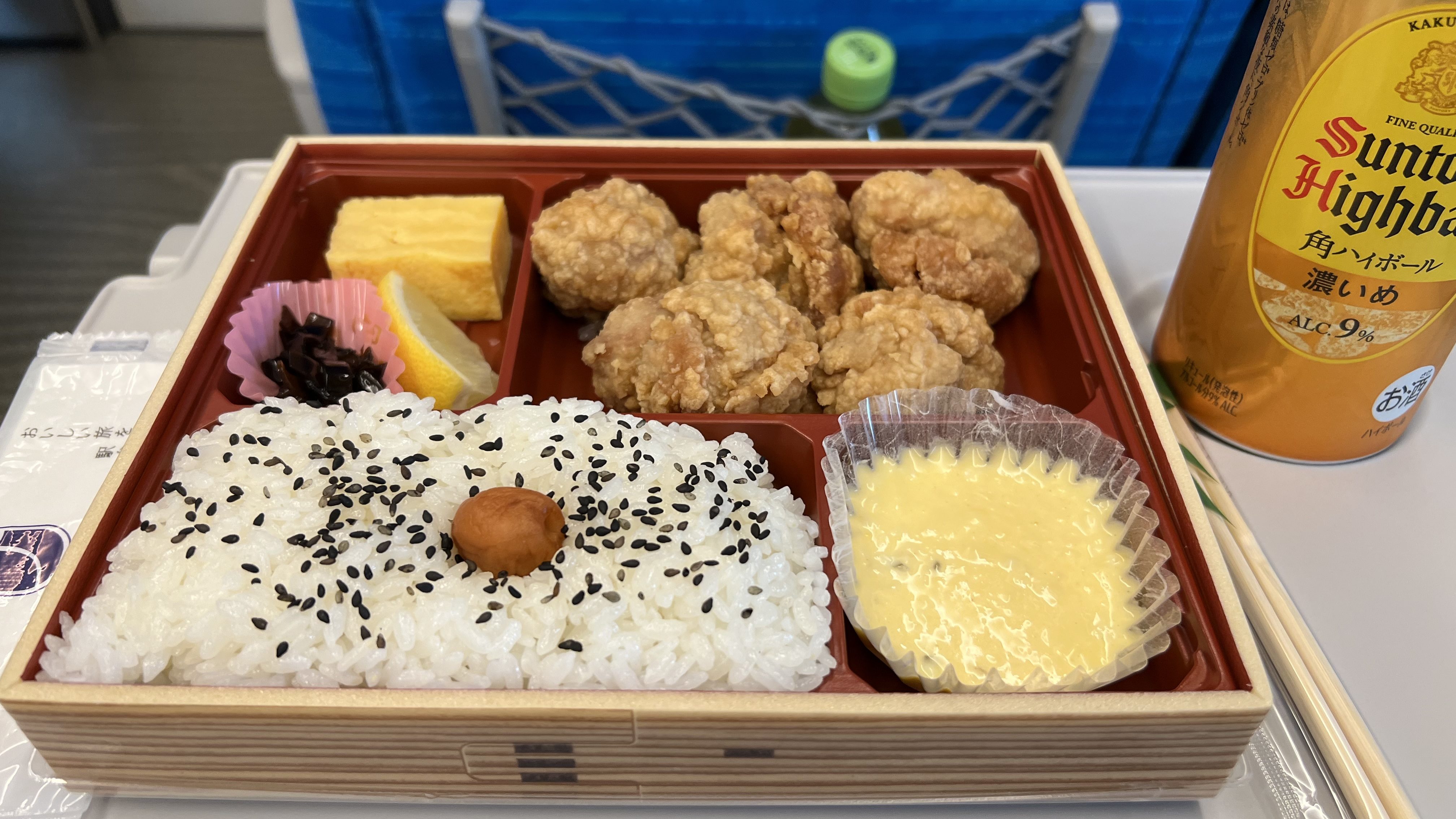
In the fading light of the train, I did what I always do—I took a picture of my meal and sent it to her on LINE, adding, “I bought a fried chicken bento on the train today.” “It looks delicious, eating a bento on the train,” she replied, just as she always did. Looking at that message on the screen, I found myself sighing for no clear reason.
I may have mentioned this before, but my mother had a strong faith. As a child, I was taught little beyond what Buddhism was, what compassion meant. When I brought my troubles to her, she would dismiss them, saying it was because my prayers were insufficient. Perhaps because of that, I was left with a certain habit: whenever I found myself at a crossroads, I would hesitate somewhere along the way, unable to decide before pausing. It is a tendency that followed me into adulthood, and one that has cost me more than I can easily measure. What a parent and child ought to be does not apply to every family. Whenever I think of my mother, I sometimes feel a crushing emotion that defies explanation.
I arrived home late that night. We exchanged only a few words before I took a shower and retreated to my room, sinking deep into a chair. In the dim light, I took a single sip of Scotch, but my body gave way all at once, and I turned off the light and lay down on the bed.
I fell into a deep sleep, but before dawn I had the same kind of dream again. Someone was ordering me to issue an urgent change to a project. I frantically struck the keyboard, but the monitor warped before my eyes. The longer I stared, the smaller the screen seemed to become. I had to send the email quickly, but panic overtook me. The distress lingered until I woke with a start in the dark room, the curtains still drawn. When I looked at the clock, it was already past eight in the morning.
I went downstairs for breakfast. The living-dining room, about eighteen tatami mats in size and facing south, held two black reclining chairs in front of a forty-two-inch television. Behind them stood a table, and further east, the kitchen. The shutters and curtains on the south-facing windows were still closed.
My mother lay in one of the recliners, its back tilted far down, a blanket draped over her. Her eyes were closed, her face contorted in pain. As I prepared breakfast, I spoke to her. She said the pain from her broken ribs was unbearable. If she stayed still, it did not hurt, but she needed to go to the bathroom every ten minutes, and so she had no choice but to stand. She didn’t know what to do. She began to sob. The frequent trips to the bathroom had apparently started that morning. Even as we spoke, she repeatedly dragged herself to the toilet, bent over, clearly in distress.
I opened the shutters and curtains. She explained that the day before yesterday, when she had tried to open them, she had tripped over the recliner behind her and fallen. Around that time, my wife came down to the kitchen and joined us. We watched her for a while. She went back and forth to the bathroom, sometimes staggering. It might have been cystitis.
I put her in the car and drove to the hospital. It was fortunate that it was the last day of consultations before the long holiday. The sky was clear, the fresh greenery dazzling, but my mood did not lift. I carefully helped her out of the car, supporting her by the waist as we made our way to the entrance. She walked slowly with a cane. She looked so frail that the nurses who greeted us watched with concern and spoke to us.
After the examination, she was prescribed medication for cystitis in addition to her usual prescriptions. On the way out, her legs wavered and she caught herself on a chair in the waiting area.
“Are you all right?” a nurse asked hurriedly. “Thank you,” I said.
We picked up the medication at the pharmacy and somehow made it back home. As we sat and talked, she seemed to regain some composure. What struck me as strange, however, was that during the hour and a half from leaving for the hospital to returning home, she had not once said she needed to use the bathroom.
Still, her condition had stabilized, and I was able to breathe again. I took out my phone and contacted a friend. I had been invited to a barbecue at a friend’s house in Enoshima that afternoon, but I explained the situation and canceled.
My wife prepared lunch. The cabbage had begun to spoil, so she cut away the usable parts and added them to ramen. There was also a pizza left in the refrigerator from when my sister had visited the previous week, so we had that as well. The three of us sat together and talked at length for the first time in two months. Only a short while earlier, my mother had been in visible distress, but now she even smiled. She worried that I had lost weight and tried to make me eat everything. I told her, as I always had, that food is best enjoyed in moderation, but no matter how many times I explained it, she never seemed to understand.
To prevent her from falling again, my wife suggested moving one of the heavy reclining chairs from the living room to the basement to create more space. The gas water heater had been malfunctioning, so we called a technician to repair it. I checked the output of the newly installed solar panels using an app. My wife handed me documents from the Tokyo Metropolitan Government and asked me to complete the procedure for a subsidy, which I did on my phone.
That morning, she had barely been able to walk even with a cane, yet by the afternoon she was striding about and had begun vacuuming the room. I could not find the words to make sense of it. Before I knew it, evening had come.
My mother began to complain that she could not understand anything difficult—that she could do nothing without someone to look after the gas or electricity. She said that when she was alone in the house while I was in Osaka, she spent her days in tears. I took out my phone again and called a high school friend, apologizing that I would not be able to attend the reunion planned for that day.
My father passed away last May, and my mother now lives with my wife. At his funeral, many people from their religious community were in attendance. Even at an advanced age, many of my parents’ friends remained energetically engaged in their faith. And yet, there seemed to be something misaligned between my mother’s words and her actions.
My wife works during the weekdays, so it may be only natural that my mother feels lonely. I am reminded again that this places a burden on her, and I feel sorry for that. Still, the fact remains that the mother who once imposed her faith on me so forcefully now does not seem to rely on it at all.
No matter how I try to understand why, I cannot arrive at an answer that is enough to quiet the unease in my chest.
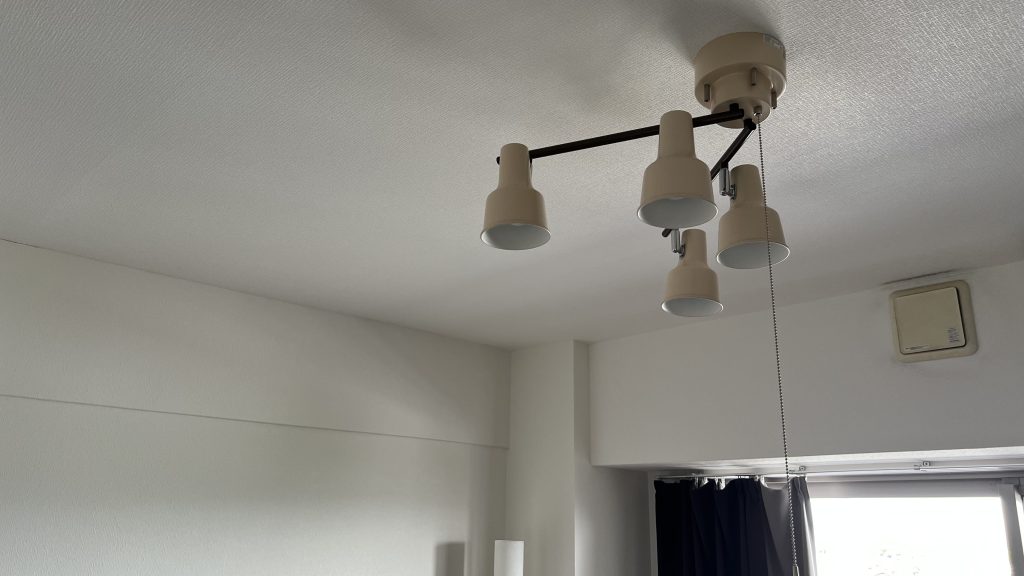
Leaning back into the living room chair, I gazed absentmindedly at the white ceiling. A beige light fixture with four LED bulbs came into view. To suit different moods, two were set to a cool white, the other two to a warmer glow. Still, at night I usually rely on a separate lamp, so this light is rarely used.
A glance at the clock told me it was past eleven. I had just finished preparing pork and beans for dinner, now left in the pot to cool before going into the refrigerator. The hum of the ventilation fan filled the room.
Outside, the sky was clear and pleasant, though the forecast said clouds would gather in the afternoon, with rain by evening. I was planning to go to tennis practice later—the first in two weeks—and found myself quietly watching the sky.
I brewed some coffee and poured it into a pot. One sip, and a soft breath escaped me.
It brought back a memory from the night before last, when I had dinner with colleagues at Osaka Station. On a Friday night, the place was alive with young people and visitors from abroad. We stopped by an American-style standing bar—loud music, fragments of foreign languages flying through the air, people swaying and dancing to the rhythm.
I used to belong easily in places like that. But that night, something felt different.
It was, without question, an enjoyable evening. Still, I found myself taking a step back, choosing to listen rather than speak. Perhaps it would be too simple to blame it on age—there are plenty of people well past sixty who remain vibrant and bold. What lingered in my mind was the sense that the age difference might be making others uneasy.
I had wanted a natural conversation, yet I sensed a faint tension in those I spoke with. So amid the noise and laughter, I spoke little, offering instead a quiet smile and a nod.
Yesterday morning, I traveled from Settsu-Tonda Station, changing trains three times, then taking a short bus ride from Kongō Station in southern Osaka to a used car dealership. It was the day I was to receive the car I had ordered back in March.
For nearly ten years, I had lived mainly with my motorcycle, and I had long felt that whatever car I chose next would likely be the last one I would own. I spent years thinking about it.
What I finally arrived at was a red Mazda Roadster.
After exchanging a few words with the dealer, I started the engine. The weather was fine, so I lowered the top. It had been twenty-five years since I last drove a manual, but within five minutes, the feeling came back to me.
The jacket I had brought, just in case, turned out to be unnecessary.
Soft sunlight. A gentle wind. Fresh green leaves lining the streets.
Shifting into second, I pressed lightly on the accelerator. The engine responded with a bright, eager sound, and I felt my body drawn backward with the motion.
A quiet lift stirred within me.
There was still, I realized, a certain heat left inside my heart—subtle, but unmistakable. And perhaps it has always been this way: that I am more at ease conversing with a machine than navigating the small complexities of human relationships.
By the time I returned from tennis, the sky had begun to darken, and as the forecast had promised, a light rain started to fall.
Hungry after the exercise, I made carbonara. Lately, I find myself cooking pasta on weekends more often. Carbonara in particular is something I return to, though I am always caught in the same dilemma—if I keep it hot, the eggs begin to set; if I aim for smoothness, the pasta cools too quickly.
I have been quietly struggling with this trade-off.
I stood there for a while, hands still over the pot. Outside, the sound of rain grew just a little stronger.
Last night’s tennis session felt good. My body moved well, and my focus was sharp. The indoor court was brightly lit even at night, its blue carpet offering little in the way of irregular bounces. I made few mistakes at crucial points, and I was able to return serves with controlled counters. My emotions stayed steady, and my body remained relaxed. My serves had good pace, with no double faults, and I held my games consistently.
After practice, I exchanged brief farewells with the others and went alone to the locker room for a shower. Saturday nights are usually the last session of the day, and if I take too long, I often end up being the last to leave. Not wanting to keep the staff waiting, I hurried through rinsing off. The lesson began at eight and ended at half past nine. By the time I had showered and changed, it was close to ten when I stepped out of the court.
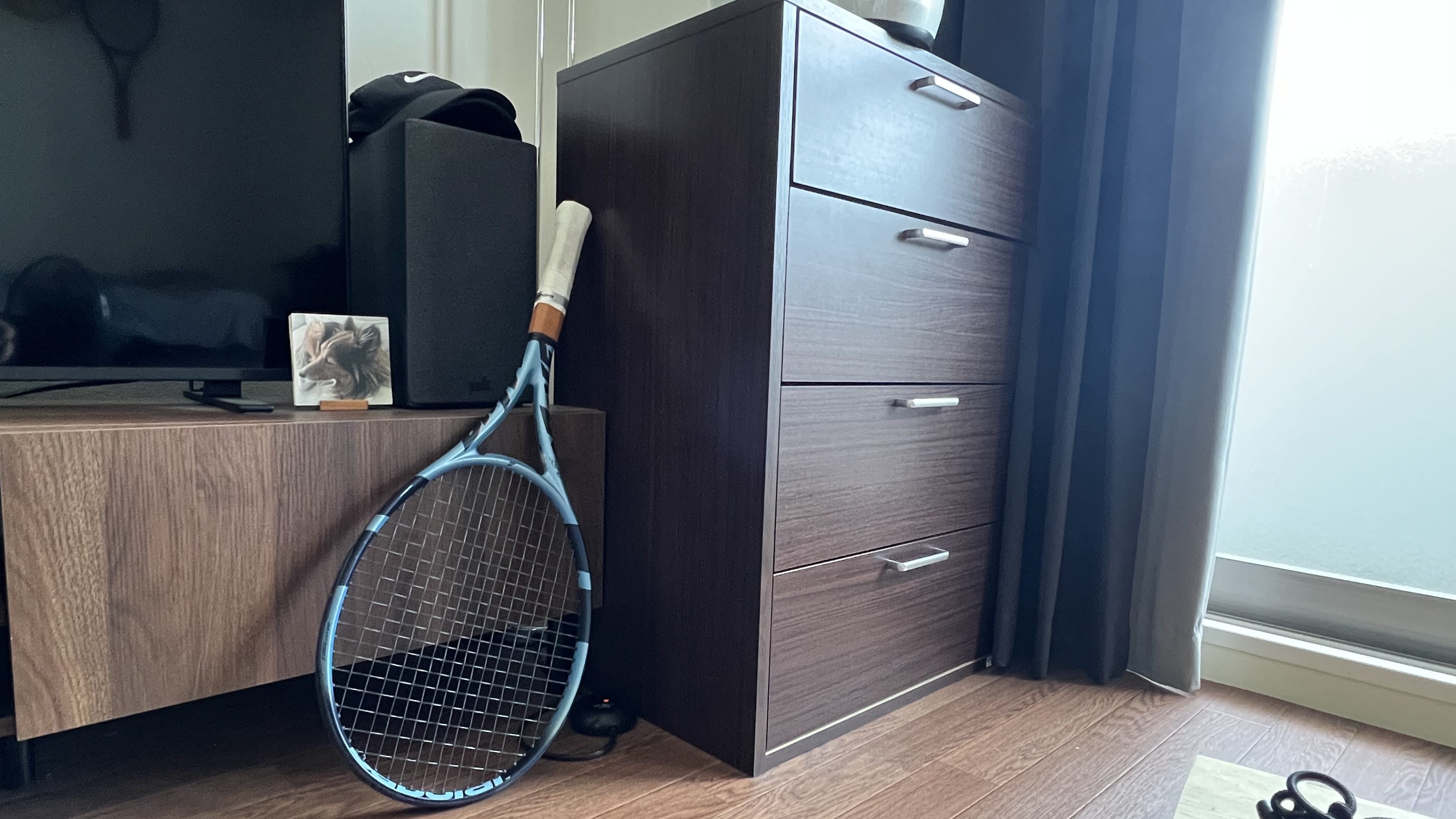
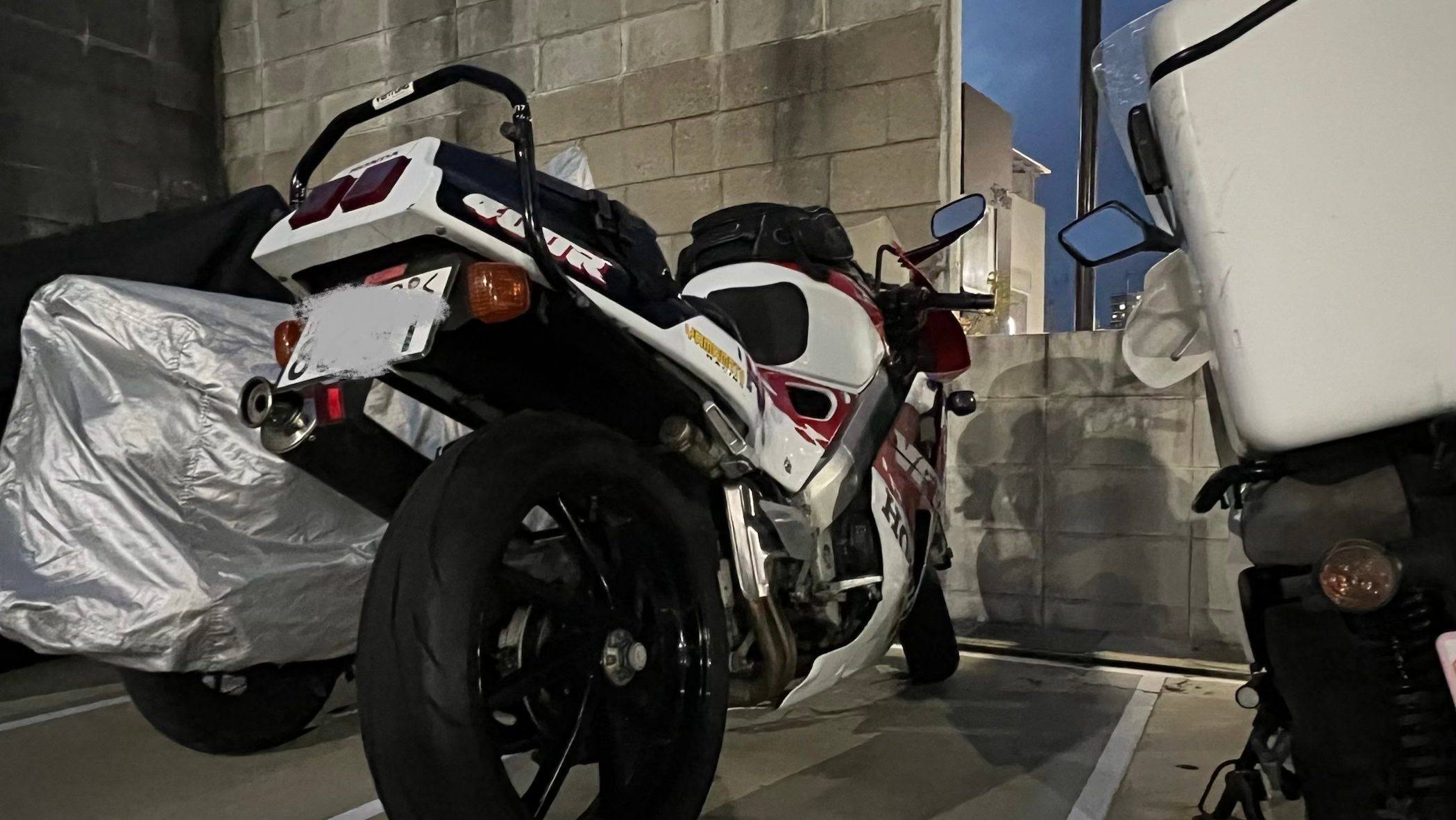
With a backpack holding my shoes, clothes, and racket slung over my shoulders, I started the engine of my NC30, put on my helmet, and fastened the strap. Even at night, the air was still warm, and my black long-sleeved riding suit was beginning to feel heavy for the season. Traffic on Route 171 at this hour was relatively light, though there were always some cars on the road. The lanes were wide, making it easy to pick up speed, so I kept myself in check. I rode in lower gears, letting the engine rev high. Since I only ride about once a week, it felt better to let it run a little. About twenty minutes later, I arrived at my apartment. I carefully covered my Honda VFR400R—an OKI-colored version reminiscent of the RVF ridden by Wayne Gardner in the Suzuka 8 Hours in the early 1990s—with a black rain sheet.
Back in my room, I sank into a chair and took a sip of Scotch. At night, I usually dim the lights to relax. But it was already half past ten. Having just been active, my body wasn’t ready for sleep. I played some jazz, letting the soft glow of a single lamp settle my mind.
I began riding motorcycles in high school. On a 50cc scooter, I commuted daily along Route 246 from my family home near Komazawa University Station in Meguro to Hiroo High School in Shibuya. In college, I obtained a mid-sized motorcycle license and bought a Honda NC21 on loan, sometimes riding it to Chuo University in Suidobashi. That was around 1987. To pay off the loan, I worked as a waiter for four years alongside my studies, but I still remember fondly a touring trip to the Noto Peninsula with my coworkers.
After joining a company, I began spending weekends at a local motorcycle shop, where I learned how to clean carburetors, replace spark plugs, change tires, and maintain brake pads. Around that time, I bought the NC30 and started riding at Tsukuba Circuit. Back in high school, I had been a quiet student, sitting in the corner of the classroom with few friends. For the younger me, a motorcycle felt like a companion. Looking back, it was almost frightening—the morning traffic on Route 246 was aggressive, full of sudden lane changes and abrupt acceleration, and motorcycles weaved through cars at high speed. Since that was the road where I first began riding, I never questioned the way everyone seemed to compete with one another. Opening the throttle, pulling the clutch, pressing the brake—the bike surged forward, carving through corners. It became the closest thing I had to someone I could talk to.
Then one summer day, an accident happened. It must have been around 1995. At the final corner of Fuji Speedway, I lost control in a high-side crash. The NC30 was wrecked, and I spent three months in the hospital. After that, I kept my distance from motorcycles for a while.
Instead, I turned to tennis. I had belonged to a tennis circle in college, but our activities were hardly what one would call tennis. I even served as the club’s president in my third year, yet none of us were at a level to compete in matches—we mostly gathered to drink and make noise. I think there was always something in me that felt unfulfilled.
In 1998, after being transferred from Fukuroi in Shizuoka to Kofu in Yamanashi, I joined a tennis school at the recommendation of a colleague. It was the first time I had taken proper lessons from a coach. As I practiced, I became absorbed in the depth of the sport—the footwork to reach the ball, the take-back, the rotation of the torso, the follow-through. When everything connected, tennis felt almost like a kind of dance.
Around that time, the Grand Slam tournaments broadcast on Wowow featured matches between Roger Federer and Rafael Nadal, battling for the world No. 1 ranking. Inspired by them, I entered many tournaments myself. The night before a match, I would be too excited to sleep. I cried when I lost. I was simply happy when I won. And I kept practicing.
If motorcycles had once washed something away inside me, tennis became a way of facing myself. Before I knew it, thirty years had passed. In 2010, when my feelings had begun to settle, I found myself wanting to speak again with that old companion, and I bought a used 1993 NC30. Of course, I no longer ride recklessly as I once did. Modern bikes no longer use carburetors, relying instead on electronic ignition, but I have only ever ridden these older machines. Time moves on, changing everything. I wonder if there will come a day when I can no longer keep up with that flow.
I took another sip of Scotch. In the dim glow of an incandescent light, I listened to a jazz playlist, my iTunes connected to the living room amplifier. After Chet Baker’s “My Funny Valentine,”“April in Paris” followed. Originally composed by Vernon Duke in 1932 with lyrics by E.Y. Harburg, it has been covered by many great singers, but my favorite remains the version by Ella Fitzgerald and Louis Armstrong.
In the glass, the ice slowly melted, making a quiet sound.
My younger sister sent me a photo from my niece’s entrance ceremony at Waseda University. My mother and I replied with our congratulations. In the picture, my niece stood between her parents, giving a small, slightly shy peace sign.
Lately, I’ve been thinking about my mother, who lives alone at our family home. Almost every day, I send her photos of the meals I eat, speaking to her through them as if we were sharing the same table. My sister is part of the group chat as well, and before I knew it, conversations among the three of us had grown more frequent. At some point, my phone’s storage quietly filled up with images of food.
In April, a personnel reshuffle brought changes to our organizational structure. I suppose my company sees more internal movement than most. Our department, newly formed last year and overwhelmed with work, gained three new members and is now a team of six. Two are female assistants, and one is a veteran man from the design department.
With the reorganization came a rearrangement of the office floor, and the veteran designer now sits beside me. I welcomed the presence of new colleagues with genuine relief. He is perhaps a little over fifty—his hair streaked with white, his manner quiet, yet his expression carries a firm, unshakable core. He answers, without hesitation, questions that would normally take me hours to research, and he asks me things just as easily when he is unsure. Before long, we found ourselves sharing lunch together in the company cafeteria.
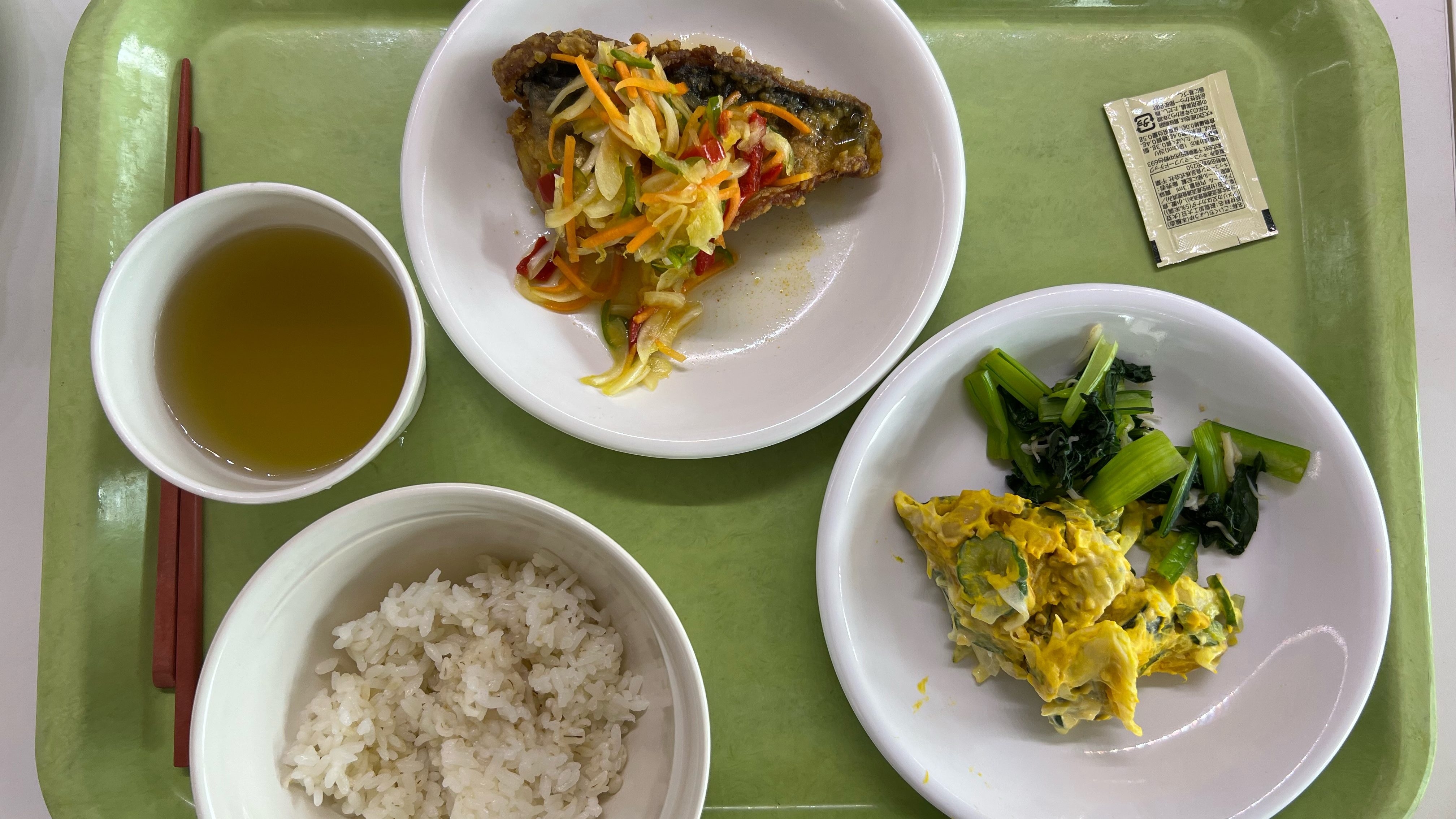
The cafeteria is spacious, with employees arriving in staggered waves; it can probably hold around two hundred people. Though the building is old, soft sunlight filters through large windows, and people enjoy their meals in their own quiet ways. That day’s lunch was mackerel marinated in curry, pumpkin salad, and spinach dressed with whitebait. Before eating, we place our hands together at the same moment. Casual conversation over an ordinary meal. There is still a trace of awkwardness, but I can feel the tension gently loosen. At work, his gaze is sharp, so seeing his expression soften during lunch brings me a quiet sense of ease.
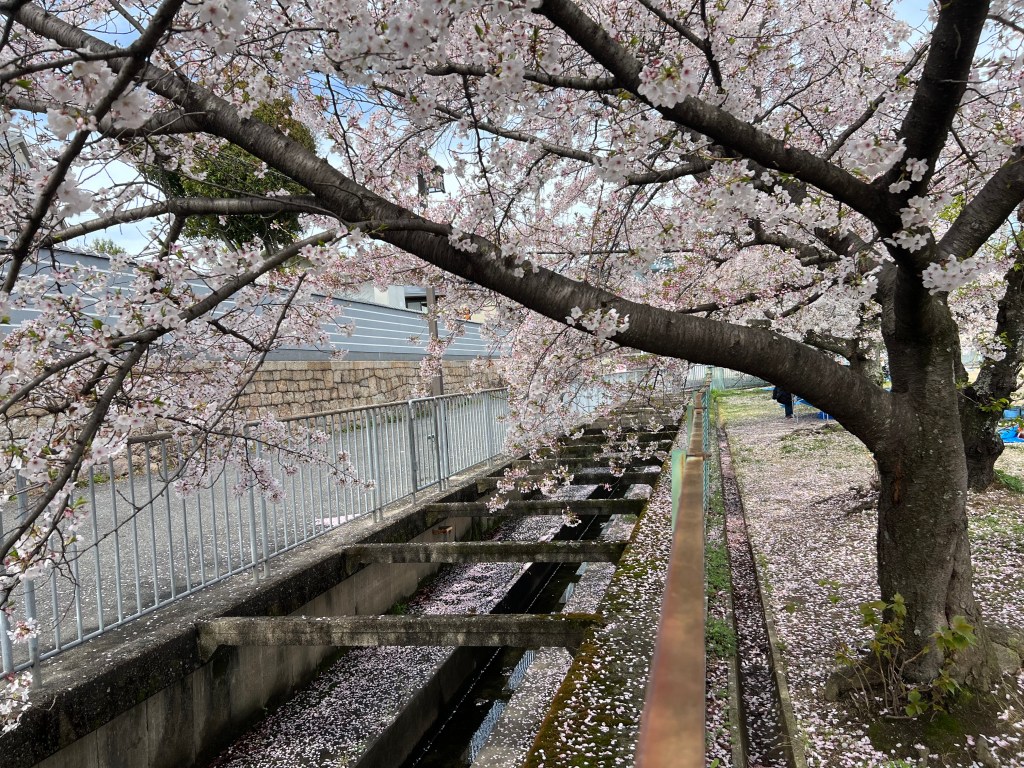
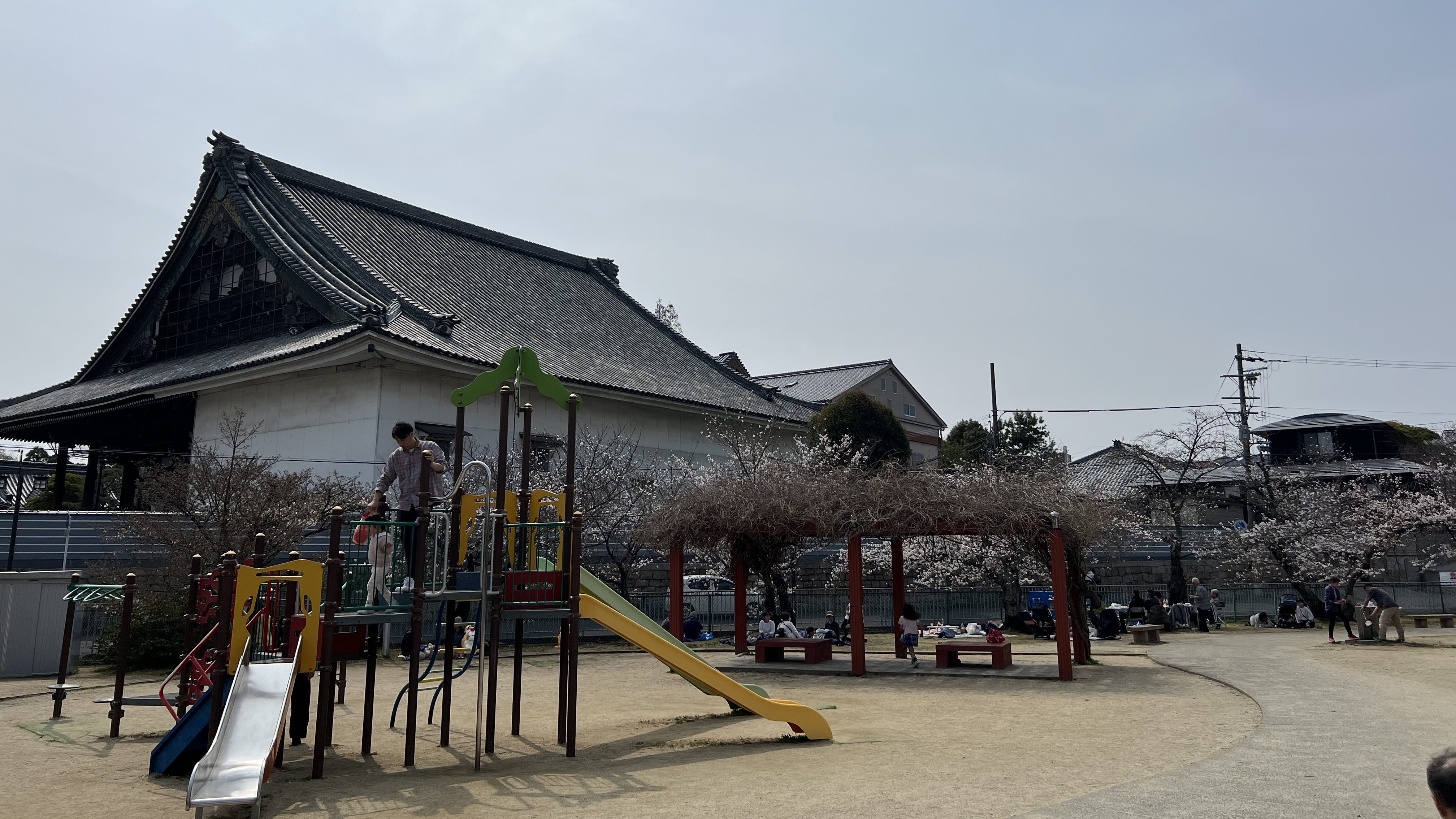
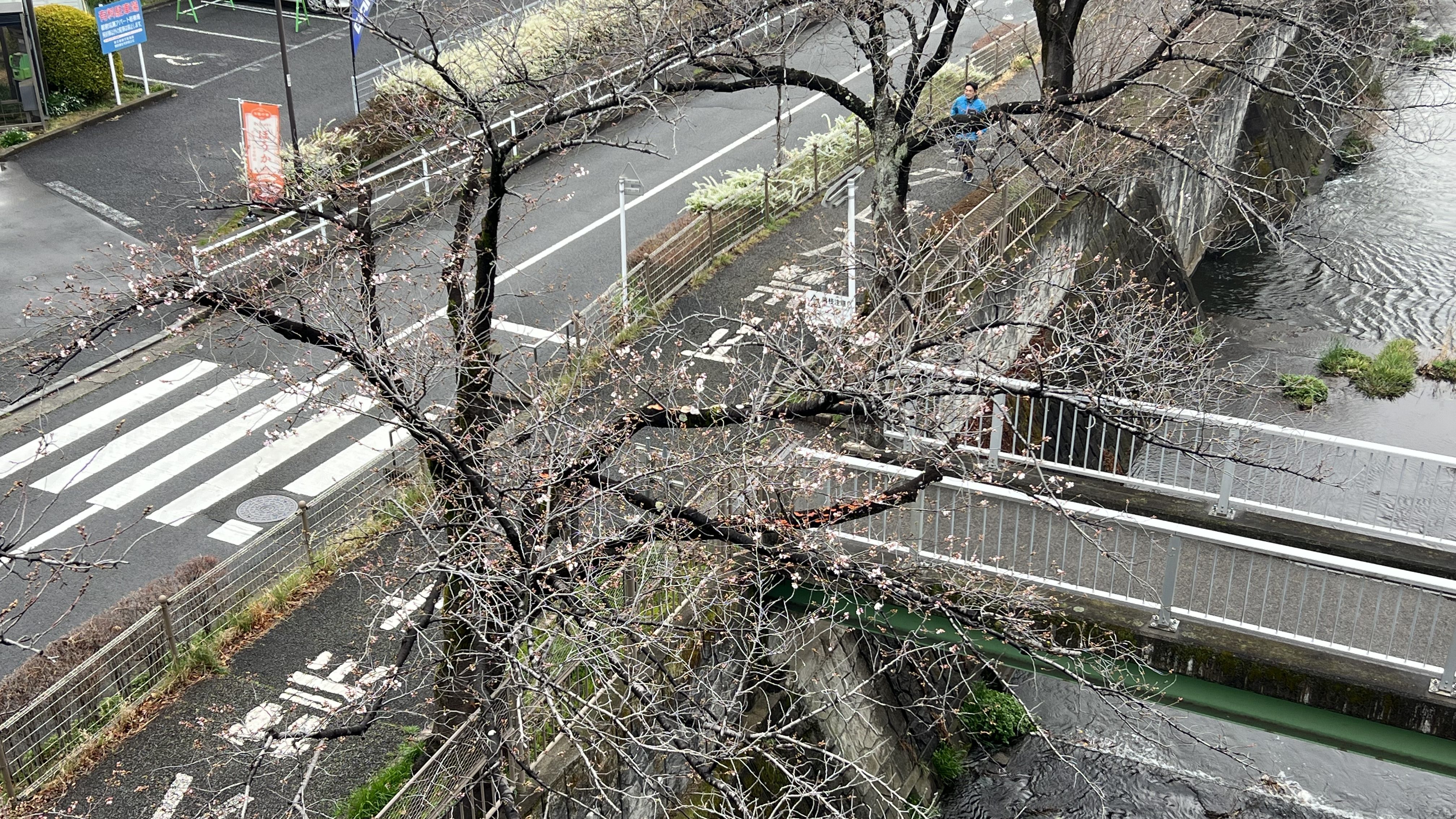
Last Sunday, after the rain had passed, I managed to see the cherry blossoms in full bloom at Tsutsuiike Park. The petals had already begun to fall, forming a soft carpet along the small stream beside the park. I had never imagined such a scene could exist in a place so ordinary.
Today is bright and clear again. When I open the window and look outside, the blossoms have already almost disappeared. The days when cherry blossoms are in full bloom last only a fleeting moment each year. Perhaps it is their fragility that makes us cherish them so deeply.
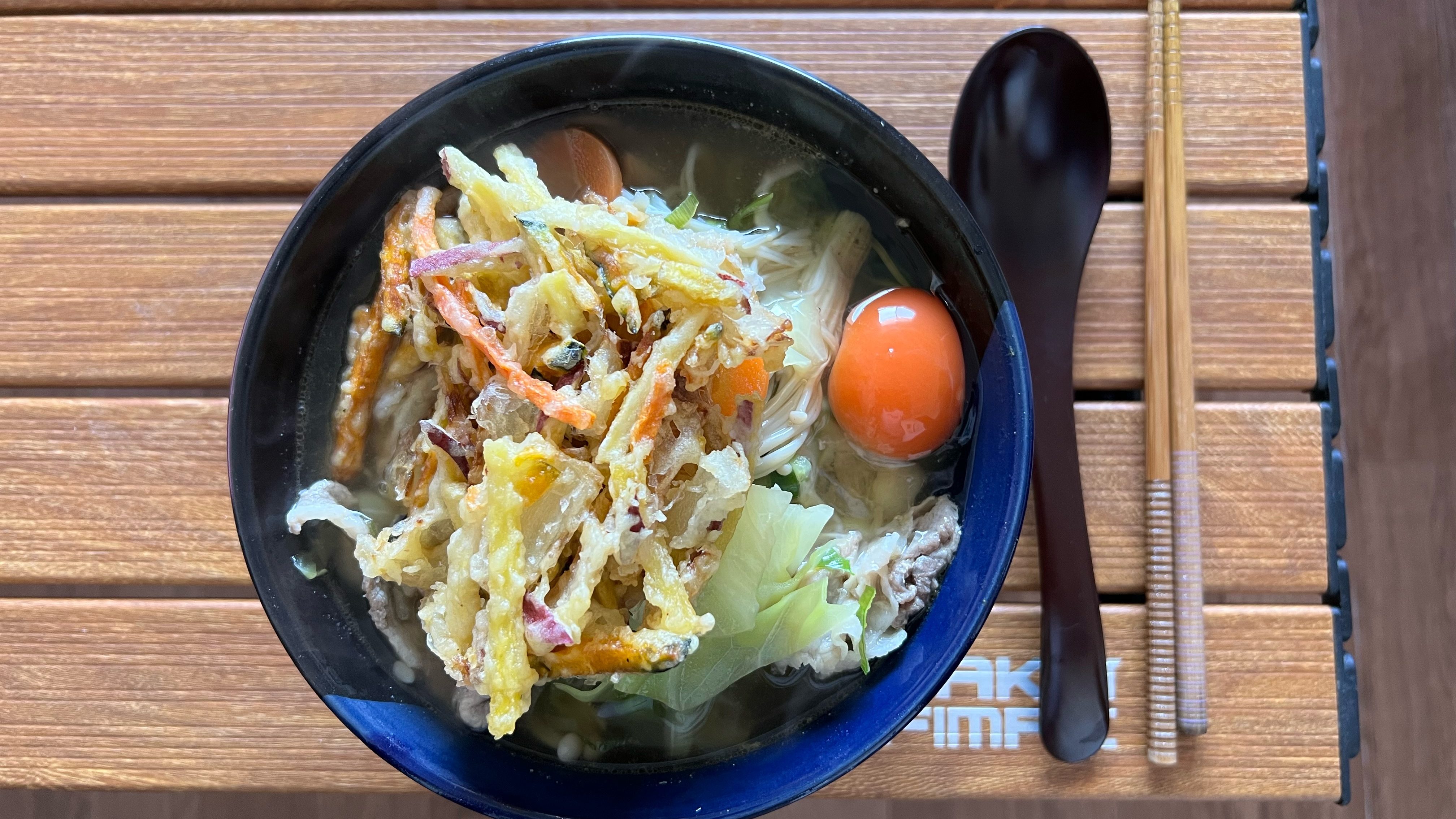
As always, I set the washing machine in motion and begin cleaning the room. As always, I boil soba, chop cabbage, and make a soup with pork, carrots, and enoki mushrooms. Feeling the quiet shift of the seasons against my skin, I sense my loneliness softening, little by little. I’ve begun to have small conversations with people at my tennis school, and new colleagues have entered my daily life.
Before I knew it, like the passing of the seasons, my heart too has begun to loosen, gently and without force. The season of fresh green is already close at hand.
With each passing day, the warmth deepens, and the arrival of spring makes itself felt. Yet today, of all days—a long-awaited Saturday—the light morning drizzle had turned into steady rain by noon. I hurried to bring the laundry in from the balcony. By now, the cherry blossoms should have been in full bloom.
As I boiled soba for lunch in the kitchen, the east-facing window gradually fogged over, turning milky white. The temperature was low for this time of year, and for the first time in several days, I switched on the air conditioner.
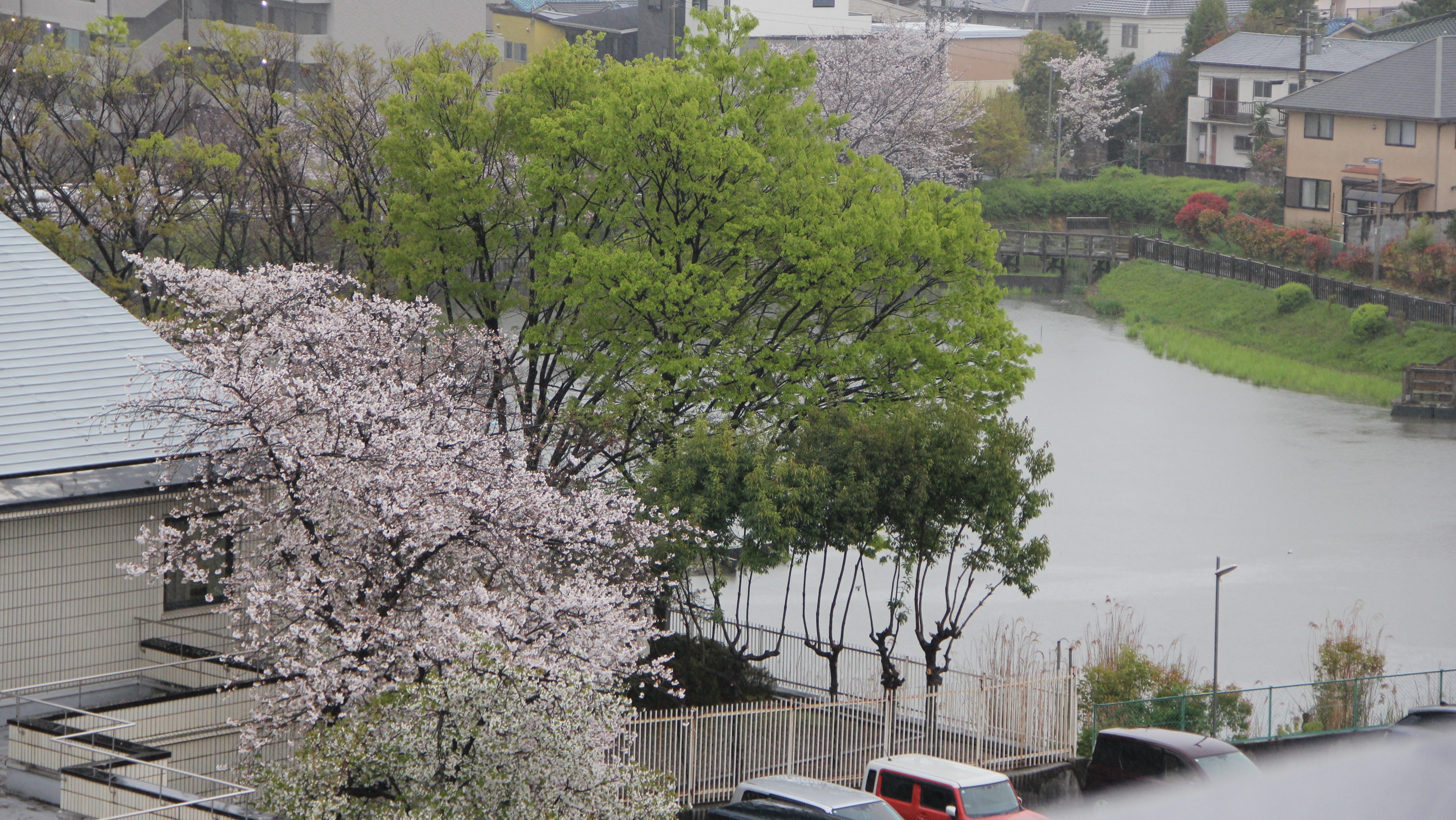
Work had piled up to a tiresome degree, but I had no desire to open my company laptop today. After finishing my meal, I took a sip of freshly brewed coffee and gazed out the window. People walked by under their umbrellas. The pavement was soaked, and each passing car sent up the sound of water scattering. Kodera Pond, visible to the southeast, lay dappled with ripples as raindrops spread across its surface. A few cherry trees stood around the pond, their blossoms drooping, appearing somehow forlorn. Nearby, white flowers bloomed close together—perhaps kobushi (Japanese magnolia), or maybe hakumokuren (white magnolia).
Turning away from the window, I moved to sit in the living room chair, but the room felt dim, so I switched on the light. I didn’t feel like going out today. My 1993 Honda NC30, parked at the nearby rented lot, remained covered in a black rain sheet, droplets falling steadily onto the ground. On days like this, not having a car feels inconvenient. I had been looking forward to seeing the cherry blossoms in full bloom, and even thought of going to the nearby Uniqlo to pick up a spring hoodie, but I gave up on the idea and decided to stay in.
I opened my MacBook and scrolled through the news on Nikkei. It was reported that President Trump had stated the attacks on Iran would conclude in about two weeks. There were also remarks suggesting Iran was seeking dialogue for a ceasefire, though the truth remained uncertain. Iranian authorities issued statements contradicting Trump’s claims. Yesterday, news came in that a U.S. F-15E fighter jet had been shot down by Iranian forces. Iran appeared prepared to continue its full resistance against the United States. More than a hundred American international law experts have pointed out that the military actions initiated by Trump “clearly violate the UN Charter and may constitute war crimes.”
What, then, has Trump—under the banner of MAGA—brought about? Large-scale tariffs on exports to the United States, the capture of Venezuela’s president, claims over Greenland, policies prioritizing fossil fuels in opposition to global efforts against climate change, and now military action against Iran. The international order is trembling. Surely, many are aware of this. At the very least, it is hard to deny that his influence looms large over the current chaos.
Dear American friends—once, Japan launched a surprise attack on the military facilities at Pearl Harbor, taking 2,400 lives. The Second World War followed, and in the end, the United States dropped atomic bombs on Hiroshima and Nagasaki. In Hiroshima, 140,000 perished; in Nagasaki, some 70,000. Few remain today who experienced those days firsthand. Our generation, raised without knowing war, grew up even harboring a sense of admiration for America. And yet, I want to ask you now: what is it that he is doing? Do you truly believe this is right? When I look back on the history between Japan and the United States, conflicting emotions inevitably arise.
After the war, America became the world’s police—guardian of the international order—strengthening its military while expanding its economy. The night skyline of Manhattan, Hollywood films—America once shone brilliantly in my youth. Or perhaps, in truth, it only appeared that way. Meanwhile, defeated Japan renounced the creation of nuclear weapons. There seemed to be, in that decision, a quiet sense of atonement as a participant in war. Since then, though poor in natural resources, Japan has continued its development through intellect and technology, speaking little, as if keeping its heart closed.
“Japanese people are hard to understand”—I recall hearing such things said. Over the eighty years since the war, our two nations have been called steadfast allies, yet perhaps the sentiments of their people stand in contrast, like light and shadow. Looking back now, I cannot help but feel that the version of myself who once admired America was simply naive, ignorant of the world. I spent nine years working for a German-owned company, and from a certain ideological perspective, I find myself wondering whether Germany might be a more fitting partner as a friend. It is a thought that comes to me, almost unexpectedly.
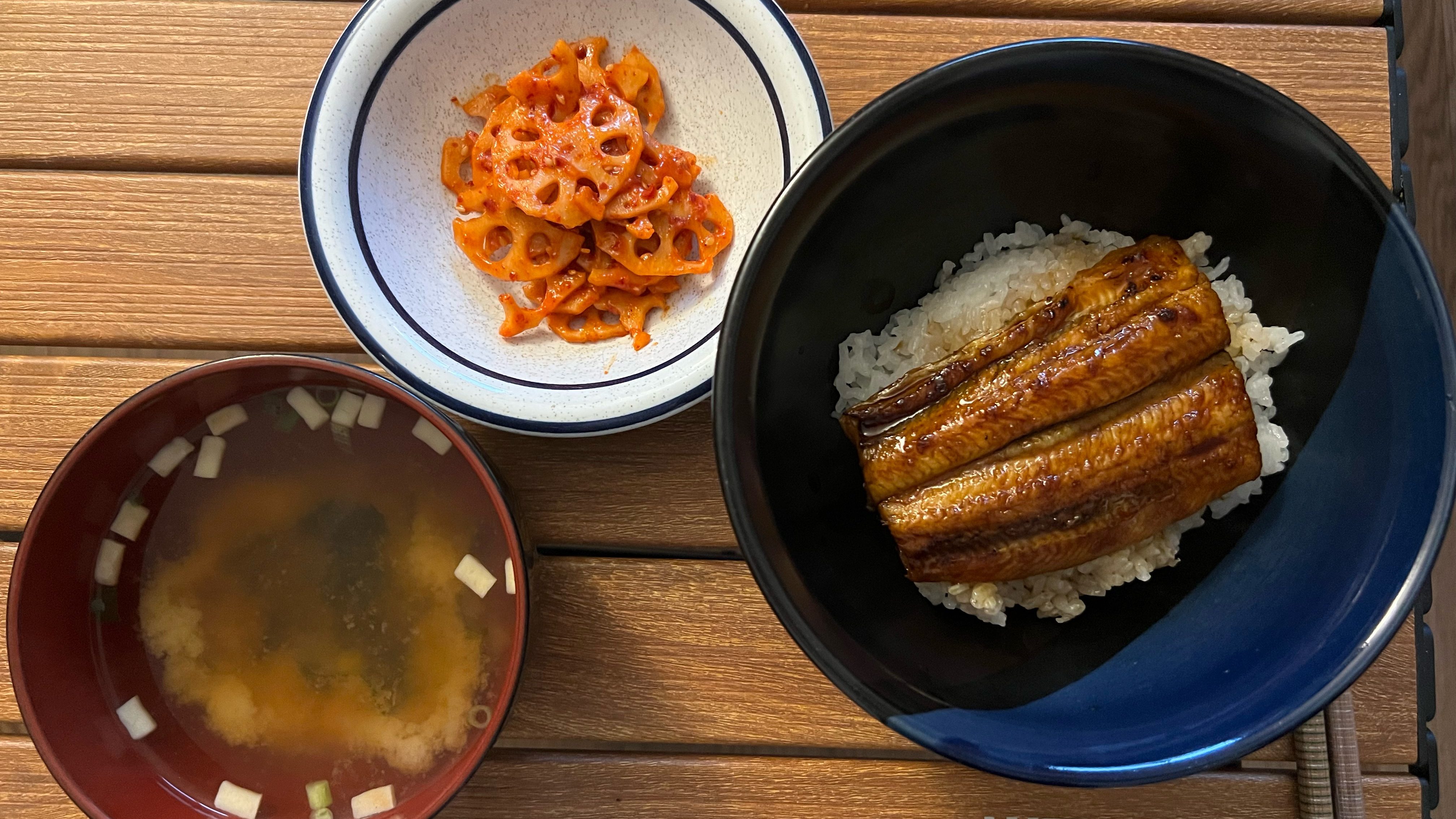
As evening fell, I began preparing dinner. Grilled eel, obtained through a hometown tax program, accompanied by instant miso soup and lotus root kimchi I had bought the day before. I warmed the eel in hot water for a couple of minutes, then lightly crisped the surface in a toaster. This gives it a delicate contrast—crisp on the outside, tender within. The sauce was not overly strong; the balance of soy-based saltiness was just right, mellow and satisfying.
Yesterday, there was news that a heavy oil tanker from Mitsui O.S.K. Lines had passed through the Strait of Hormuz. It was the first Japanese-registered tanker to do so since the route had been effectively closed due to rising tensions around Iran. Perhaps the situation is, little by little, moving toward calm. Will the turmoil in the global economy settle in a few weeks’ time? According to the forecast, the rain will stop tomorrow, and the skies will clear. I may be able to go out and see the cherry blossoms in full bloom—if today’s rain has not already scattered their petals.
For now, though, all I can do is stay inside and wait for the rain to pass. It feels no different from quietly watching the uncertain course of this country—and of the world—as it unfolds. In truth, perhaps the one I should be questioning is not them, but myself, who can only sit here and observe.
Every week is much the same. After working full days from Monday through Friday, I am completely worn out by Friday evening, and by the time I make it home, I collapse into a kind of quiet exhaustion. Yesterday was no different. I didn’t feel like cooking, so I bought a breaded egg cutlet bento from the supermarket. After dinner, I had a small glass of Scotch and watched television absentmindedly. I had been curious about the situation in the Middle East, but there was no news coverage, and nothing else caught my interest. Before long, I turned off the TV and took a hot shower.
Letting the hot water run from my head down the back of my neck, I felt as though some unseen impurities within me were being gently washed away. I splashed water over my face, rinsing off the cypress pollen clinging stubbornly to my eyelids. After stepping out of the bathroom, I dried myself carefully and tidied my hair with a dryer. Then I returned to the dimly lit living room and swallowed the medicine my doctor had prescribed with a glass of cold water. It was all part of a routine by now. Once finished, sleep came naturally—I brushed my teeth and drifted off without resistance.
On Saturday mornings, a lingering heaviness often remains even after waking. I tend to stay in bed longer than I should, trying to recover from the week’s fatigue. I had a tennis lesson scheduled for eleven, but I wasn’t in the mood. While eating a simple breakfast of ham and lettuce on toast with onion soup, I pressed the cancel button on my phone.
I set the washing machine running and began cleaning the room. Dusting the furniture, sweeping the floor with a broom and dustpan, I cleared away the small accumulations of the week. It’s a small room, so it doesn’t take long. When I opened the window and hung out the laundry, warm sunlight poured in, revealing the quiet streets of Tonda. It was the last Saturday of March. The forecast said it would be sunny all day, with temperatures rising to twenty-two degrees. In Tokyo, the cherry blossoms were already in full bloom; in Osaka, they were expected to reach their peak by next weekend.
It has been nearly a year since I was transferred from Tokyo to Osaka to live alone. Last year’s cherry blossom season, I spent in Tokyo. Being able to show my father—who passed away the following May—the blossoms one last time has remained a quiet comfort in my heart. Well then, I thought, I have the time today. Perhaps I’ll go and see the cherry blossoms. I found myself thinking this as I ate my usual bowl of cabbage soba for lunch.
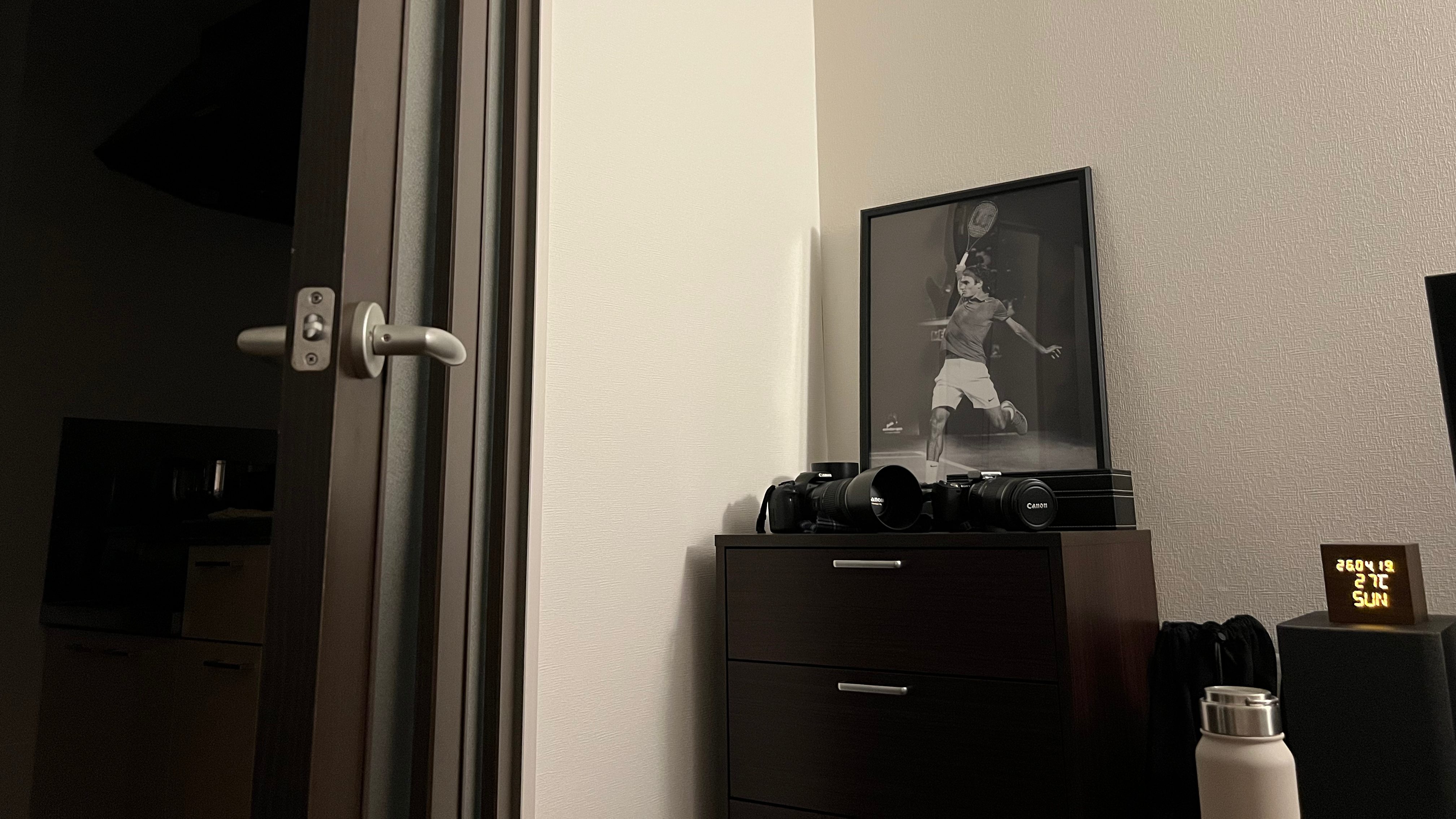
In the corner of my room sit two aging digital cameras. One is a Canon EOS Kiss X4 I bought in Hamamatsu in 2010; the other is a Sony α NEX-5, inherited from my father. With the rise of smartphones, fewer people carry such bulky cameras these days. Yet the thrill of peering through a viewfinder, the tactile motions of zooming and focusing, the sound of the shutter, the solid weight in the hand—these are pleasures a phone cannot replace. The battery still had some life in it. I decided I would continue to take good care of these cameras, including the one my father left me.
The Japanese have a deep affection for cherry blossoms. During the brief time each year when they bloom in full, people gather in parks as if they have been waiting all along, simply to gaze at them. Famous spots like Maruyama Park in Kyoto, with its weeping cherry tree in Gion, or Ueno Park in Tokyo, draw large crowds. Until last year, I would visit the cherry trees along the Onda River near my family home in Naruse every spring. It is a beautiful place as well. But in truth, cherry blossoms can be found everywhere in Japan. In spring, one needs only to walk a short distance to encounter them. For the Japanese, they mark the passage of time—another year lived, another season returned. This year, too, we are able to see them. And so people look upon the blossoms with quiet gratitude.
I slipped the EOS Kiss X4 gently into my backpack, got on my electric-assist bicycle, and headed to Tsutsuiike Park, about five minutes from my apartment.
There was no longer any need for a heavy coat; the warm breeze felt pleasant against my skin. Soft sunlight lit the road, and the faces of passing people seemed calm, almost softened. Having come through the long winter, everyone appeared to welcome the arrival of spring. Tsutsuiike Park is a small, ordinary park, but it was lively with families. Along the embankment by a small stream, cherry trees had been planted, and people had spread out cloths beneath them, gathering in quiet celebration.
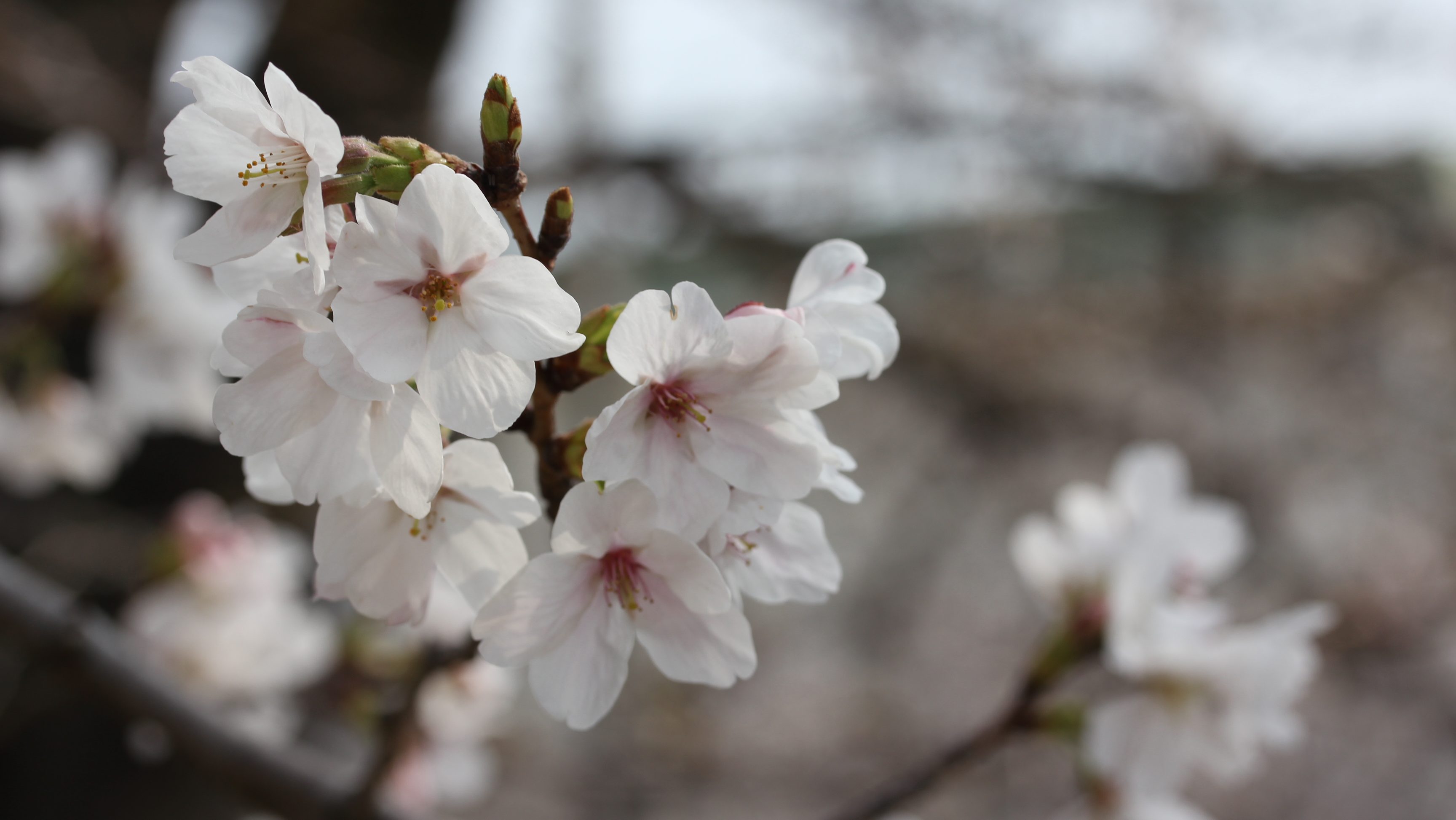
The blossoms were perhaps half in bloom. And yet, the cherry blossoms in Tokyo and those in Osaka wore the same expression. Their pale pink petals seemed to look back at me, gently telling me that a new season had arrived.
After returning home, I sent the photos I had taken to my mother in Tokyo via LINE. She had gone to see a nearby weeping cherry tree the week before. Lately, she has been complaining about her knees and how she cannot walk long distances. “Take it easy, and enjoy what you can,” I wrote back. Since moving to Osaka, my exchanges with my mother and sister have increased. Strangely enough, it feels as though we speak more now than when we lived together in Tokyo. Only recently have I come to understand that there are conversations that can exist precisely because of distance.
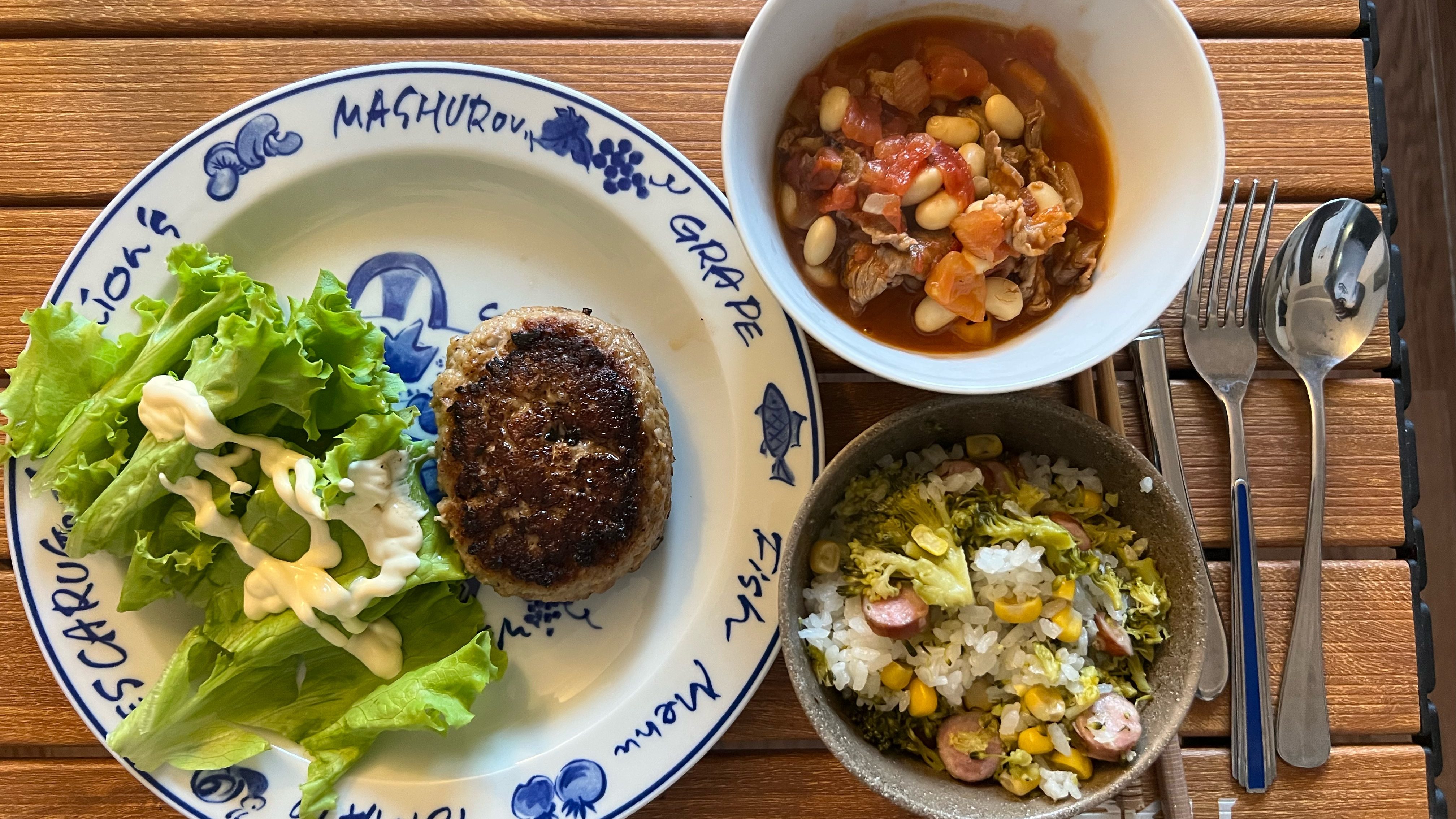
As evening approached, I began preparing dinner. Today, I made pork and beans—sautéing onions, pork, and carrots before adding tomato sauce and letting it simmer. I seasoned it with consommé and garlic. In the rice cooker, I prepared a mixed rice with broccoli, corn, and sausage. I added a Karatsu hamburger steak, ordered through a hometown tax program, with a side of lettuce. It turned into quite a generous meal. With plenty of leftovers from both the rice and the pork and beans, I knew I would be able to enjoy these flavors for a while.
As I recalled the cherry blossoms, still a little short of full bloom, I felt that I, too, could take my time—slowly settling into this season.
It was a clear and pleasant day. With each passing day, the air had been growing warmer, though a light coat still felt necessary when stepping outside.
I woke in the morning and checked my phone. Eight hours and six minutes of sleep—uninterrupted, deep, and quietly restorative.
After brushing my teeth and washing my face, I took a sip of carbonated water to moisten my throat, then began preparing breakfast. I boiled water in the kettle and, in a single frying pan, cooked fried rice and a sunny-side-up egg at the same time. These morning routines now flowed almost without thought, a sign that living alone had finally settled into my body.
As I ate, I watched the morning news. The situation in Iran remained unpredictable. The Revolutionary Guard continued to enforce the blockade of the Strait of Hormuz, and oil prices stayed high. Relentless airstrikes by the United States and Israel were reported, while Iran, though increasingly weakened, continued to resist.
President Trump had called on NATO and Asian nations to dispatch naval forces for escort operations in the Strait. Amid such tensions, Prime Minister Takaichi was set to attend a Japan–U.S. summit. Even as a key ally, Japan could hardly commit its Self-Defense Forces to a war said to violate international law. What, I wondered, would be discussed there?
In Japan, gasoline prices had reached 169 yen per liter. The war in Iran was beginning to cast its shadow over everyday life. And yet, I could not help but feel that I was still treating it as something distant— as if it belonged to another world. That realization, in itself, felt faintly irresponsible.
After breakfast, I turned to the paperwork related to the recent renovation of the house in Naruse. With the support of a Tokyo metropolitan subsidy, we had installed a solar power system this February. Much of the coordination with the contractor in Osaka had to be done remotely, which was not without its difficulties. Still, the electricity costs at my family home in Tokyo should now decrease significantly, and in time, it may even generate income through surplus power sales.
Although most of the project was covered by subsidies, there is a waiting period before the funds are disbursed. Until then, I have to endure the gradual decrease of my own savings.
Once the administrative work was done, I tidied up the room and finished the laundry. Then, somewhat hurriedly, I packed my belongings— a DSLR camera, a tennis racket, and my MacBook Pro.
Today, I was heading back to my family home in Tokyo, where I had plans to see my mother and my nieces. The younger of the two had finally finished her entrance exams and had been accepted into Waseda University. Both sisters would now attend the same university. It may sound a bit self-indulgent, but I couldn’t help feeling that the Kazane family had not done too poorly after all.
Stepping outside, I was met with a gentle warmth in the air. In Tokyo, the cherry blossoms had officially been declared in bloom, though the ones nearby still seemed mostly in bud. Spring was close—almost within reach.
With a heavy bag slung over my shoulder, I swayed gently on the train bound for Kyoto Station, letting my thoughts drift toward the conversations I would soon have— with family, with old friends in Tokyo.
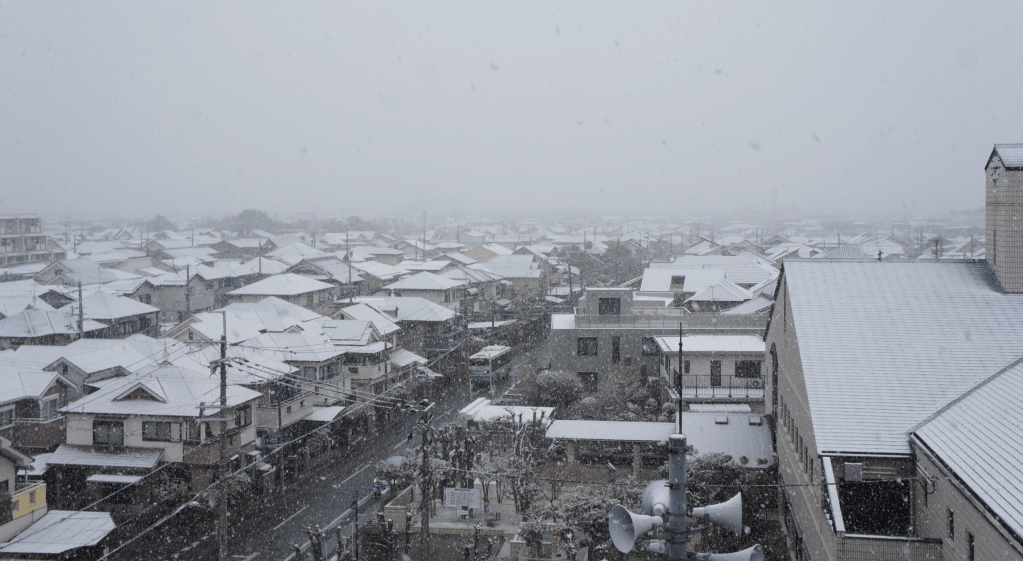
It was a quiet morning. I had drawn the curtains tightly, so the room was dim and utterly still. Worn out from work, I wanted to give my body a proper rest, so I closed my eyes once more beneath the covers and took a deep breath. I could hear almost nothing—only, faintly, the sound of a Hankyu train passing by, as if it were running somewhere farther away than usual. About thirty minutes later, I looked at my phone. My sleep time was six hours and fifty minutes. Well, that’s about right. Come to think of it, the weather forecast on television yesterday had said it might snow today. From experience, I knew that when snow accumulates, sounds lose their echo and the world grows quieter. Could it be… I got out of bed and opened the curtains. Before me spread the streets of Tonda, blanketed in white, with large flakes of snow drifting down.
The room, surprisingly, was not all that cold, but it was too chilly to stay barefoot, so I quickly pulled on thick socks and turned on the heater. I brushed my teeth and shaved. Since I had run out of lettuce, I settled for bacon and eggs and a bowl of miso soup for breakfast.
As I made coffee and relaxed in the room, the delivery driver rang my doorbell. The electric-assist bicycle I had ordered the other day had arrived. I had been debating whether to buy it for quite some time. I use my motorcycle for longer trips, but company rules don’t allow me to commute by bike. My commute is a fifteen-minute walk one way, which in winter is just enough to warm me up. But walking under the blazing summer sun is almost dangerous, and I had been wondering what to do about it. Toward the end of summer, I checked several suitable models on Amazon and put one in my cart. Still, owning both a motorcycle and a bicycle felt wasteful, and I never went through with the purchase. So why did I buy it now? Because the owner of the motorcycle parking lot had told me to remove the box where I kept my bike cover. I tried to explain that I couldn’t very well carry the cover on my shoulder every time I rode, but he wouldn’t listen. Other users, he said, came to the lot by bicycle, put the cover in the bike’s basket, and swapped the bicycle for their motorcycle. Apparently, leaving a box was not allowed, but leaving a bicycle with a basket was. What a ridiculous rule, I thought—yet, in a tipsy moment over an evening drink, I ended up buying the bicycle that had been sitting in my Amazon cart. The next morning I came to my senses and regretted pressing the purchase button, but it was a model I had agonized over and chosen months ago, so I found myself thinking, Well, maybe this is fine.
The delivery driver brought a large cardboard box up to my sixth-floor apartment on a dolly.
“It looks like a bicycle. Where would you like it?”
Since it was snowing, I didn’t feel like leaving it outside.
“Ah, inside the room, please,” I said.
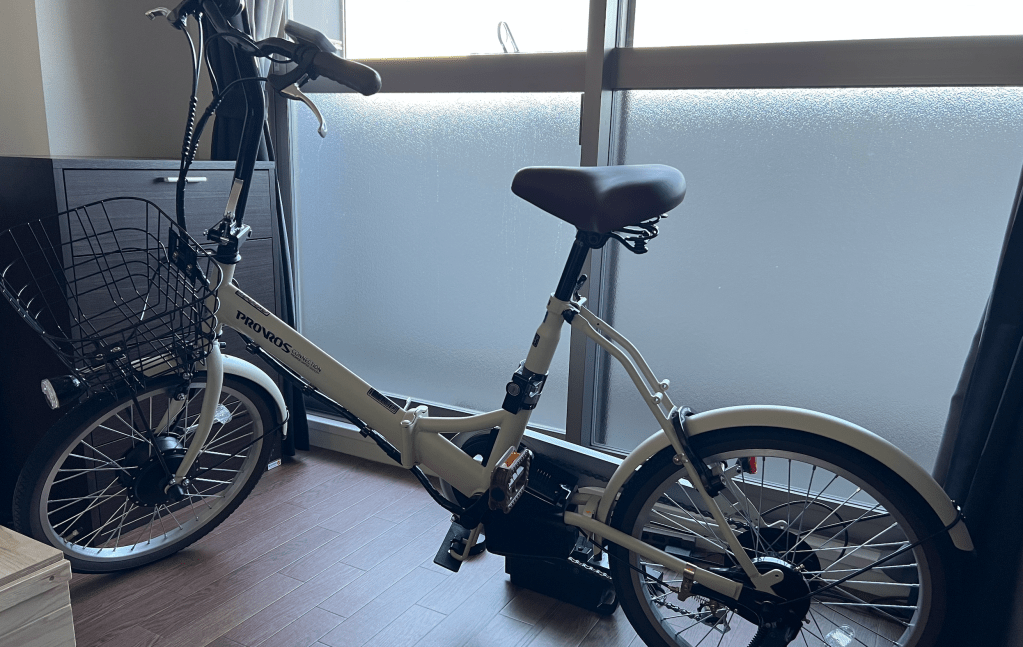
I had chosen a small, foldable model, but once it was inside, it turned out to be bigger than I expected. The driver and I carried it together just inside the door.
“It’s cold today. Thanks for coming all this way, even with the bad footing.”
“No problem. Thank you very much,” he said with a smile, and hurried off.
Delivering packages on a day like this must be tough. It’s hard work. I remembered my own days in college, when I worked part-time delivering packages during the year-end gift season. Back then I weighed less than sixty kilos, but my abs were defined, and my chest and arms were strong. Now, even though I’ve lost some weight, compared to those days I’m heavier—and yet my muscle has faded. I hope this bicycle will help me regain some of my strength.
Outside, the snow was still falling steadily. The room was dark, so I turned on a warm-colored light. I began to unpack the large cardboard box little by little. Inside, the beige frame was folded and carefully wrapped. I cut away the packaging piece by piece with scissors. The saddle was the color of tanned leather, the handlebar black, and the grips brown. The pedals, too, were made of brown resin. Centered on beige, the bicycle was balanced nicely with black and brown accents. Sipping the coffee I had brewed earlier that morning, I assembled it bit by bit.
From time to time, I looked out the window. The snowflakes grew larger, then smaller. In the quiet, I worked alone, reading the instructions and turning screws, and I began to picture myself riding this bicycle through the streets of Tonda. With this, it will be easier to go to the big supermarket a little farther from the office. Shopping on the way home from work should be easier too, with a basket. Maybe it makes sense to use the bicycle for commuting and the motorcycle for tennis school. Well, I’ll see how it goes, I thought, letting my mind wander.
Life is a series of choices. Half in resignation, perhaps, I chose the bicycle this time. With that, my life will change a little again. Before I knew it, the assembly was finished. Bicycles these days are well made. The chain had just the right amount of grease, the tires felt properly inflated, and the brakes worked well. When I was done, I started charging the battery.
I looked out the window. The snow was still falling. It doesn’t look like I’ll be riding it today. Imagining the future day when I will place my foot on those pedals, I took another sip of coffee from the pot.