
Sunday, July 6th.
This morning, I casually turned on the TV and found a documentary showing the lives of people in a small village centered around a dairy farm. A first-year junior high school girl living there said she loved being surrounded by nature and watching the Zao mountains, whose expressions change every day. She talked about how she wanted to create as many irreplaceable memories of her school life as possible with her many friends, and that since she loved animals, she hoped to become a veterinarian in the future.
Though you could sense the fragility and delicateness that come with her sensitive age through her expressions, she had firm thoughts of her own and was living earnestly, protected by the adults around her. Dairy farming is hard work, but the surrounding nature of Mount Zao is breathtakingly beautiful, and you could really feel the harmony between people’s lives and nature there. I found it truly beautiful—and, in some way, enviable.
When I was her age, I didn’t have the luxury of thinking about such things. I didn’t know what I wanted to do, or even what was wrong with me. I was in so much pain, unable to do anything, barely managing to fend off the pressures forced upon me by those around me. Sometimes I wonder if there could have been another way to live, but perhaps that was simply who I was at the time—that was my way of living.
Now, with a fragile autonomic system, living with a mental disorder, after a long battle with illness, and nearly sixty years old—
even so, just as that young girl is beginning to walk her own path, I feel now, from the bottom of my heart, that it’s my turn.
Since I had a tennis lesson scheduled for the afternoon, I planned to keep lunch light. This time, I decided to try making French toast, something I had always wanted to try. It was like the one Dustin Hoffman, playing the father, made in the movie Kramer vs. Kramer.
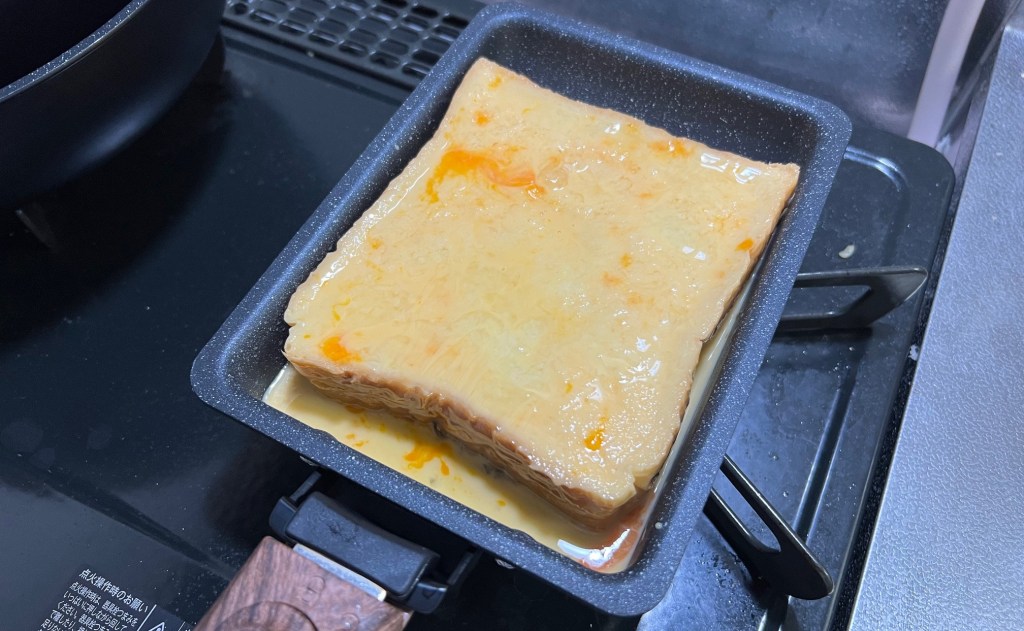
I mixed one raw egg, a tablespoon of sugar, and 60ml of milk well. Then I soaked a thick slice of bread in it for about two minutes on each side, letting the egg mixture thoroughly seep in. I put some butter in a frying pan and cooked it just enough to get a slight golden color on both sides.
Perfect. Delicious. The outside was fragrant and the inside was creamy—exactly like the French toast I often had at hotel breakfasts when I was traveling abroad. When I sent a picture of it to my wife, she replied with a smiling emoji, saying, “Please make that at home for me next time.”

Lately, we’ve had some arguments over my mother, and we’ve kept a bit of distance. But since we can still talk over LINE, in this particular matter, I actually felt a little relieved that I was living alone for work. People often say we can’t change, but throughout my life—especially with my illness—I’ve always been updating myself and changing. I don’t think my wife has quite kept up with the changes inside me. I wonder if, like the Kramers, we’ll be able to make up again someday. It probably depends on whether we can both notice and care about each other’s changes. As for my own Meryl Streep at home—she hasn’t yet come around to fully accepting me.
Today’s lesson started at 2:00. The tennis school I attend in Tokyo is quite different from the one in Osaka. In Tokyo, they use sand-filled artificial grass courts (called Omni courts), the same kind used for professional matches, and they use pressurized balls. The Omni courts also have large irregular bounces. The courts in Osaka are carpet courts. Because carpet courts have a faster bounce, they use non-pressurized balls to reduce the ball’s speed—regular players couldn’t handle the usual pressurized balls on such a fast surface. The carpet courts also don’t have irregular bounces, making it easier to read the ball’s trajectory.
Switching between these two completely different environments every two weeks is quite tough. Well, if I treat the first lesson after switching as just a warm-up, by the second time, I usually get used to it.
Today’s lesson used the slower non-pressurized balls. Yesterday, the first day back on carpet, was a disaster, but I figured I’d be more adjusted today. Since the ball comes to the hitting point more slowly than on the Omni courts, I switched to a heavier racket with a clearer feel at impact, and that worked great—I could hit the ball really cleanly. In the past, I would’ve just rejected the change outright, but maybe now I’ve developed more adaptability to different environments. Being able to adapt and even enjoy it—that’s a huge step forward.
I got in another satisfying workout today. And little by little, I’m also starting to make some friends I can chat with there, which means a lot.
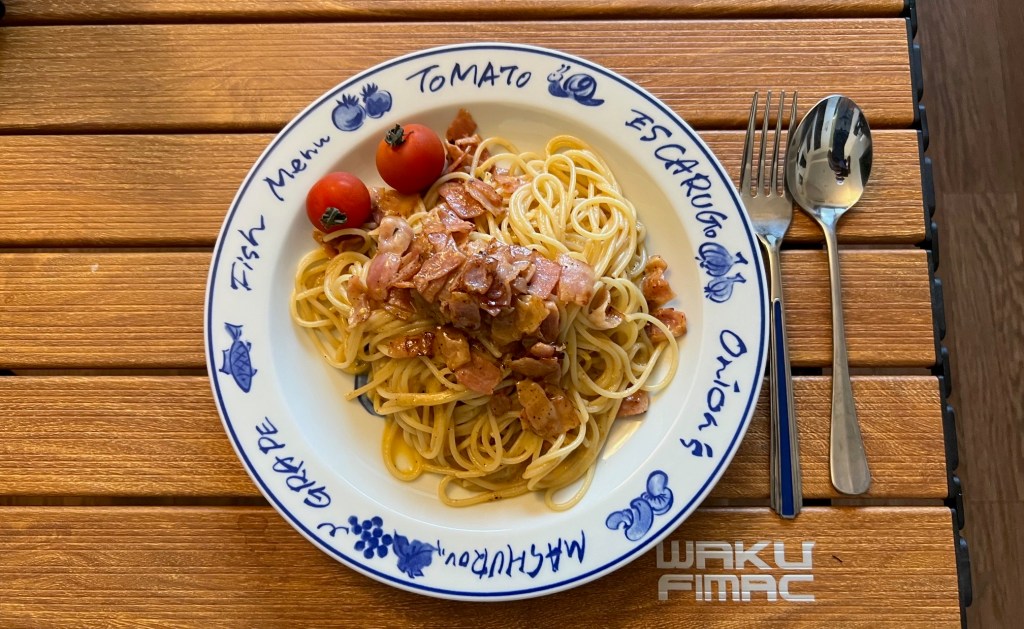
After a shower, I came home and started preparing dinner. Tonight, I decided on carbonara. I boiled the pasta, sautéed some bacon, and made a sauce with eggs and parmesan cheese. Up to that point, it was simple—but finishing it off in the frying pan was the tricky part. If the pan is too hot, the eggs scramble. So, I turned off the heat and used only the residual warmth of the pasta to mix it.
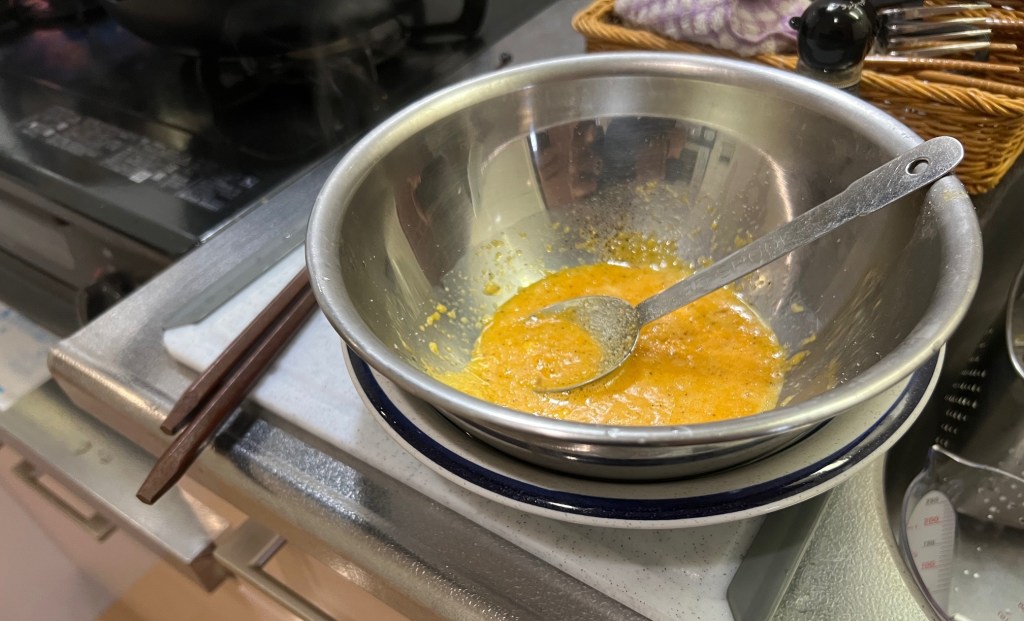
In the past, my cheese-and-egg sauce was too cold, so the dish cooled down too quickly and I couldn’t enjoy it warm. This time, I pre-warmed the bowl with boiling water before adding the sauce, and then added a bit of hot pasta water when mixing it all together, to keep it smooth.
When I tried it, it was nicely warm. Yes! Finally, on my third try, I managed to get it right. I allowed myself a little moment of self-praise. Now I’d have something new to chat about with my wife and family over LINE.
 Canon's Diary
Leave a comment