
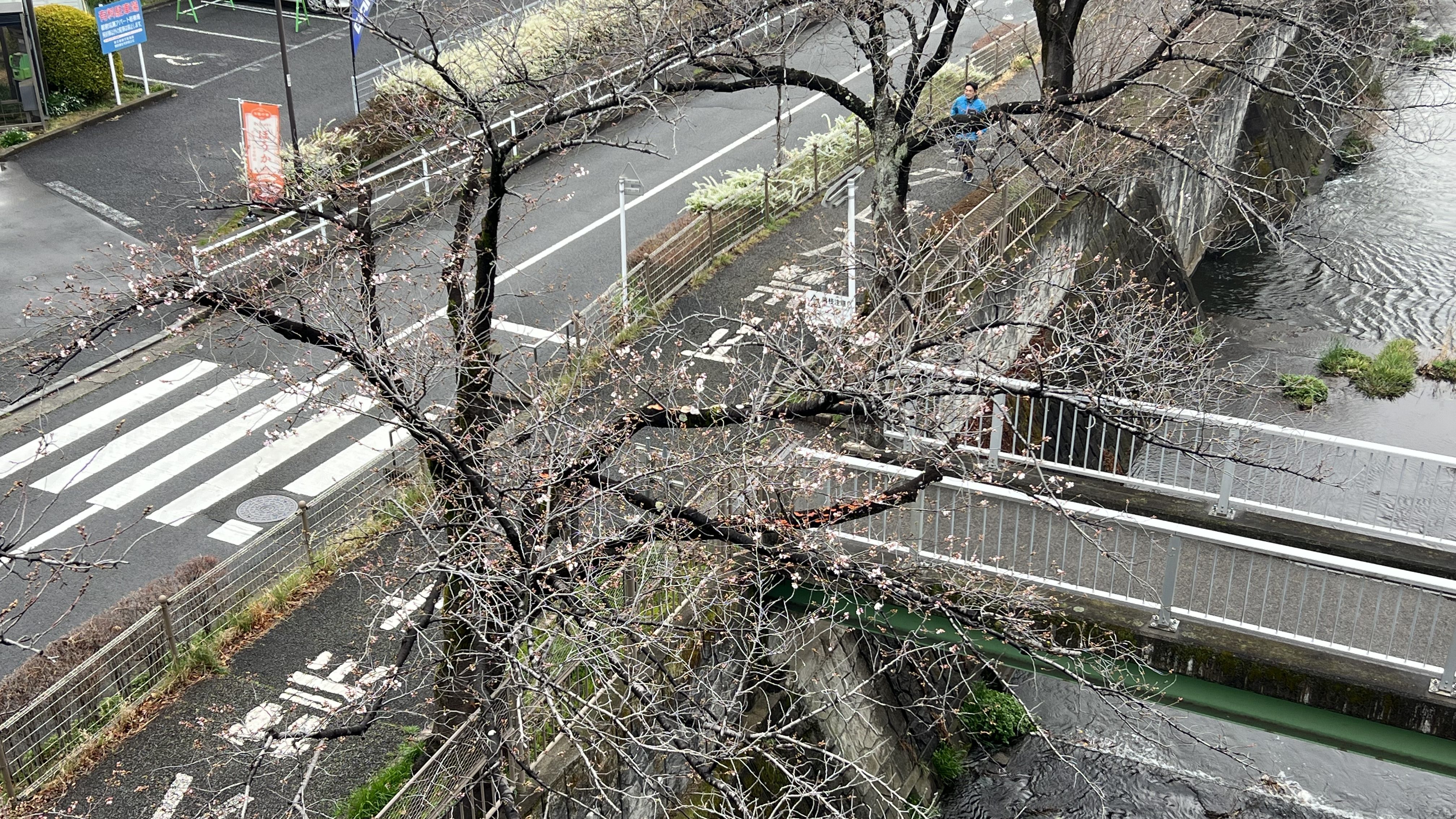
It was a clear and pleasant day.
With each passing day, the air had been growing warmer, though a light coat still felt necessary when stepping outside.
I woke in the morning and checked my phone.
Eight hours and six minutes of sleep—uninterrupted, deep, and quietly restorative.
After brushing my teeth and washing my face, I took a sip of carbonated water to moisten my throat, then began preparing breakfast.
I boiled water in the kettle and, in a single frying pan, cooked fried rice and a sunny-side-up egg at the same time.
These morning routines now flowed almost without thought, a sign that living alone had finally settled into my body.
As I ate, I watched the morning news.
The situation in Iran remained unpredictable.
The Revolutionary Guard continued to enforce the blockade of the Strait of Hormuz, and oil prices stayed high.
Relentless airstrikes by the United States and Israel were reported, while Iran, though increasingly weakened, continued to resist.
President Trump had called on NATO and Asian nations to dispatch naval forces for escort operations in the Strait.
Amid such tensions, Prime Minister Takaichi was set to attend a Japan–U.S. summit.
Even as a key ally, Japan could hardly commit its Self-Defense Forces to a war said to violate international law.
What, I wondered, would be discussed there?
In Japan, gasoline prices had reached 169 yen per liter.
The war in Iran was beginning to cast its shadow over everyday life.
And yet, I could not help but feel that I was still treating it as something distant—
as if it belonged to another world.
That realization, in itself, felt faintly irresponsible.
After breakfast, I turned to the paperwork related to the recent renovation of the house in Naruse.
With the support of a Tokyo metropolitan subsidy, we had installed a solar power system this February.
Much of the coordination with the contractor in Osaka had to be done remotely, which was not without its difficulties.
Still, the electricity costs at my family home in Tokyo should now decrease significantly, and in time, it may even generate income through surplus power sales.
Although most of the project was covered by subsidies, there is a waiting period before the funds are disbursed.
Until then, I have to endure the gradual decrease of my own savings.
Once the administrative work was done, I tidied up the room and finished the laundry.
Then, somewhat hurriedly, I packed my belongings—
a DSLR camera, a tennis racket, and my MacBook Pro.
Today, I was heading back to my family home in Tokyo, where I had plans to see my mother and my nieces.
The younger of the two had finally finished her entrance exams and had been accepted into Waseda University.
Both sisters would now attend the same university.
It may sound a bit self-indulgent, but I couldn’t help feeling that the Kazane family had not done too poorly after all.
Stepping outside, I was met with a gentle warmth in the air.
In Tokyo, the cherry blossoms had officially been declared in bloom, though the ones nearby still seemed mostly in bud.
Spring was close—almost within reach.
With a heavy bag slung over my shoulder, I swayed gently on the train bound for Kyoto Station,
letting my thoughts drift toward the conversations I would soon have—
with family, with old friends in Tokyo.
 Canon's Diary
Leave a comment