Canon's Diary

Action without thought is empty; thought without action is blind – Goethe

While living with schizophrenia, I move between Tokyo and Osaka. Through this journal, I hope to quietly share moments from my daily life—and memories from the journey I’ve taken with my illness.

  • Sunday, July 6th.
    This morning, I casually turned on the TV and found a documentary showing the lives of people in a small village centered around a dairy farm. A first-year junior high school girl living there said she loved being surrounded by nature and watching the Zao mountains, whose expressions change every day. She talked about how she wanted to create as many irreplaceable memories of her school life as possible with her many friends, and that since she loved animals, she hoped to become a veterinarian in the future.

    Though you could sense the fragility and delicateness that come with her sensitive age through her expressions, she had firm thoughts of her own and was living earnestly, protected by the adults around her. Dairy farming is hard work, but the surrounding nature of Mount Zao is breathtakingly beautiful, and you could really feel the harmony between people’s lives and nature there. I found it truly beautiful—and, in some way, enviable.

    When I was her age, I didn’t have the luxury of thinking about such things. I didn’t know what I wanted to do, or even what was wrong with me. I was in so much pain, unable to do anything, barely managing to fend off the pressures forced upon me by those around me. Sometimes I wonder if there could have been another way to live, but perhaps that was simply who I was at the time—that was my way of living.

    Now, with a fragile autonomic system, living with a mental disorder, after a long battle with illness, and nearly sixty years old—
    even so, just as that young girl is beginning to walk her own path, I feel now, from the bottom of my heart, that it’s my turn.


    Since I had a tennis lesson scheduled for the afternoon, I planned to keep lunch light. This time, I decided to try making French toast, something I had always wanted to try. It was like the one Dustin Hoffman, playing the father, made in the movie Kramer vs. Kramer.
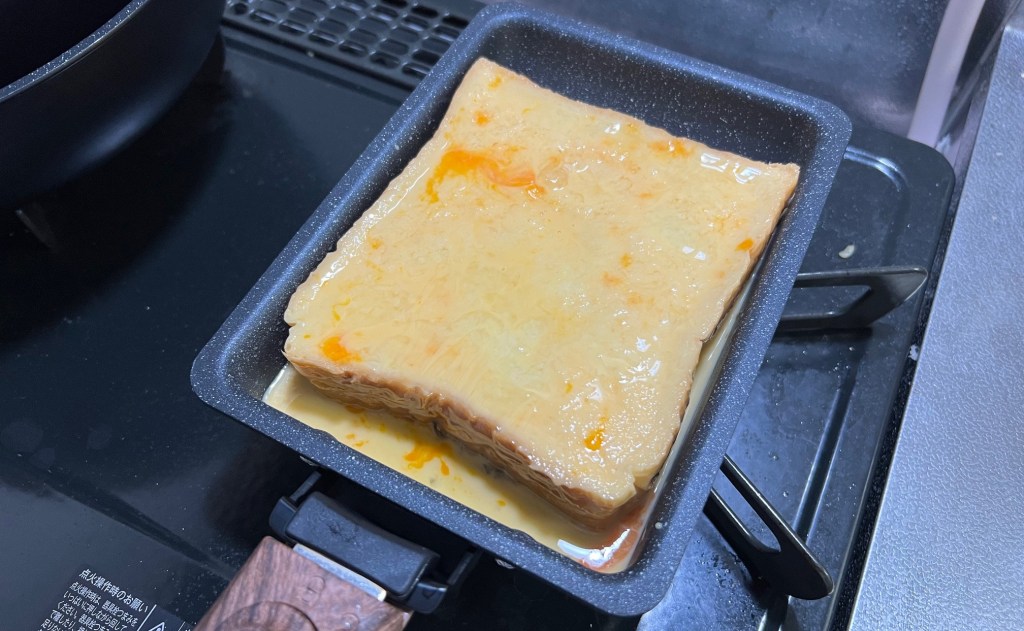
    I mixed one raw egg, a tablespoon of sugar, and 60ml of milk well. Then I soaked a thick slice of bread in it for about two minutes on each side, letting the egg mixture thoroughly seep in. I put some butter in a frying pan and cooked it just enough to get a slight golden color on both sides.

    Perfect. Delicious. The outside was fragrant and the inside was creamy—exactly like the French toast I often had at hotel breakfasts when I was traveling abroad. When I sent a picture of it to my wife, she replied with a smiling emoji, saying, “Please make that at home for me next time.”

    Lately, we’ve had some arguments over my mother, and we’ve kept a bit of distance. But since we can still talk over LINE, in this particular matter, I actually felt a little relieved that I was living alone for work. People often say we can’t change, but throughout my life—especially with my illness—I’ve always been updating myself and changing. I don’t think my wife has quite kept up with the changes inside me. I wonder if, like the Kramers, we’ll be able to make up again someday. It probably depends on whether we can both notice and care about each other’s changes. As for my own Meryl Streep at home—she hasn’t yet come around to fully accepting me.


    Today’s lesson started at 2:00. The tennis school I attend in Tokyo is quite different from the one in Osaka. In Tokyo, they use sand-filled artificial grass courts (called Omni courts), the same kind used for professional matches, and they use pressurized balls. The Omni courts also have large irregular bounces. The courts in Osaka are carpet courts. Because carpet courts have a faster bounce, they use non-pressurized balls to reduce the ball’s speed—regular players couldn’t handle the usual pressurized balls on such a fast surface. The carpet courts also don’t have irregular bounces, making it easier to read the ball’s trajectory.

    Switching between these two completely different environments every two weeks is quite tough. Well, if I treat the first lesson after switching as just a warm-up, by the second time, I usually get used to it.

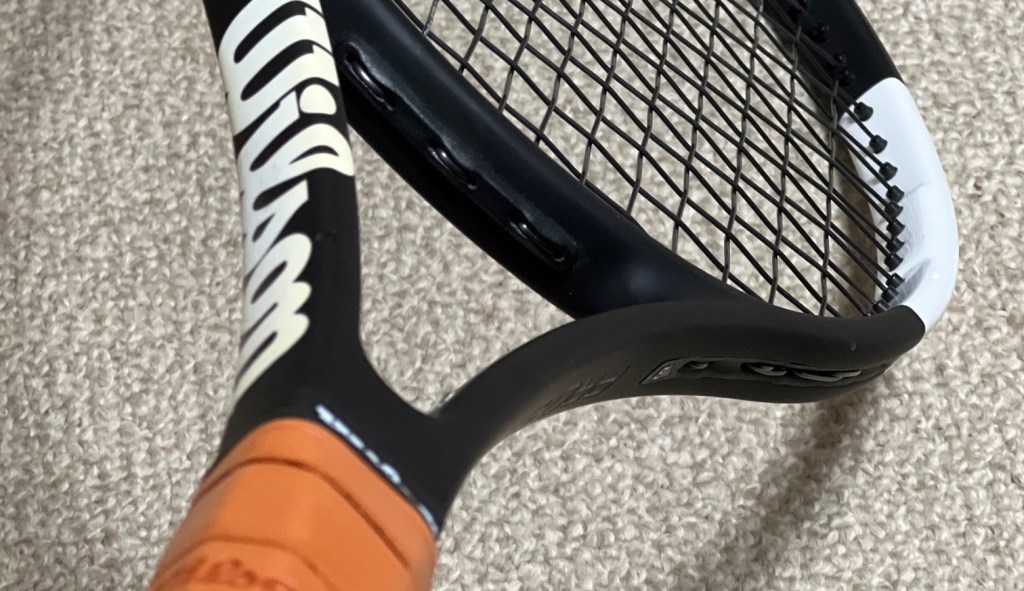
    Today’s lesson used the slower non-pressurized balls. Yesterday, the first day back on carpet, was a disaster, but I figured I’d be more adjusted today. Since the ball comes to the hitting point more slowly than on the Omni courts, I switched to a heavier racket with a clearer feel at impact, and that worked great—I could hit the ball really cleanly. In the past, I would’ve just rejected the change outright, but maybe now I’ve developed more adaptability to different environments. Being able to adapt and even enjoy it—that’s a huge step forward.

    I got in another satisfying workout today. And little by little, I’m also starting to make some friends I can chat with there, which means a lot.


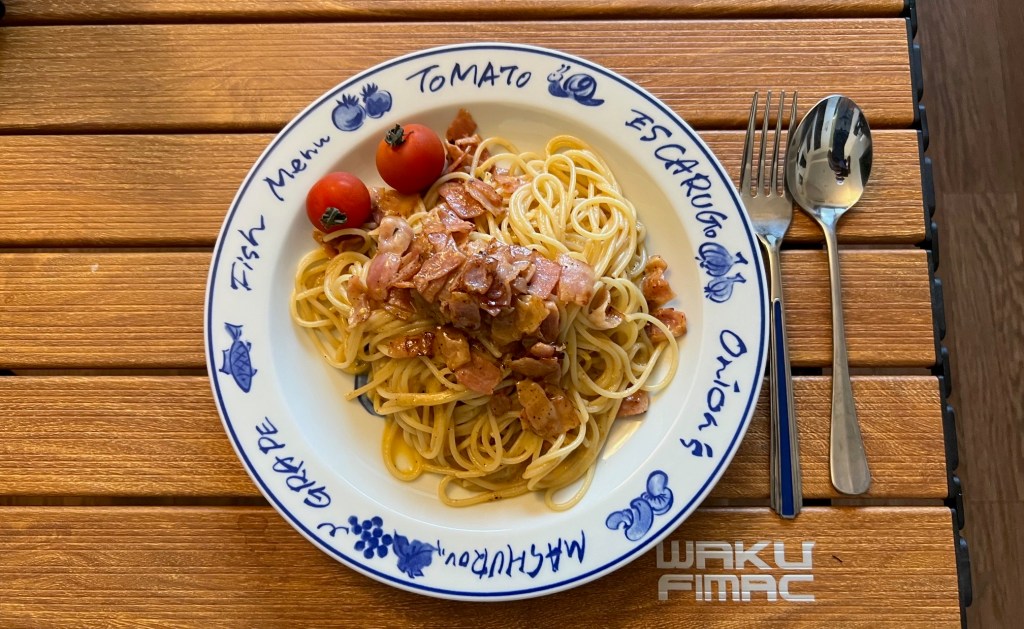
    After a shower, I came home and started preparing dinner. Tonight, I decided on carbonara. I boiled the pasta, sautéed some bacon, and made a sauce with eggs and parmesan cheese. Up to that point, it was simple—but finishing it off in the frying pan was the tricky part. If the pan is too hot, the eggs scramble. So, I turned off the heat and used only the residual warmth of the pasta to mix it.
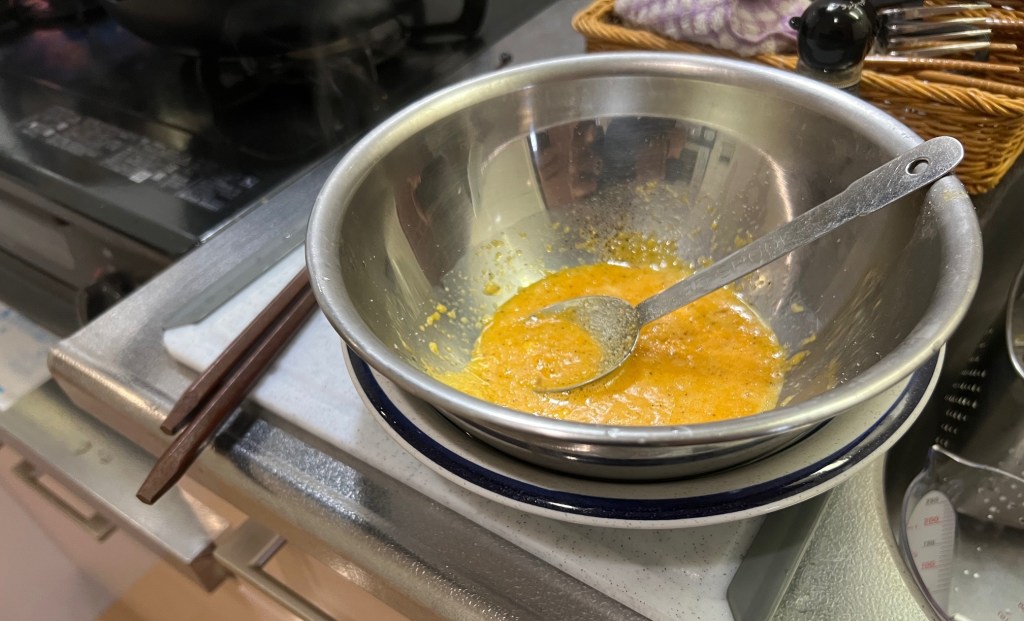
    In the past, my cheese-and-egg sauce was too cold, so the dish cooled down too quickly and I couldn’t enjoy it warm. This time, I pre-warmed the bowl with boiling water before adding the sauce, and then added a bit of hot pasta water when mixing it all together, to keep it smooth.

    When I tried it, it was nicely warm. Yes! Finally, on my third try, I managed to get it right. I allowed myself a little moment of self-praise. Now I’d have something new to chat about with my wife and family over LINE.
  • Saturday, July 5th.

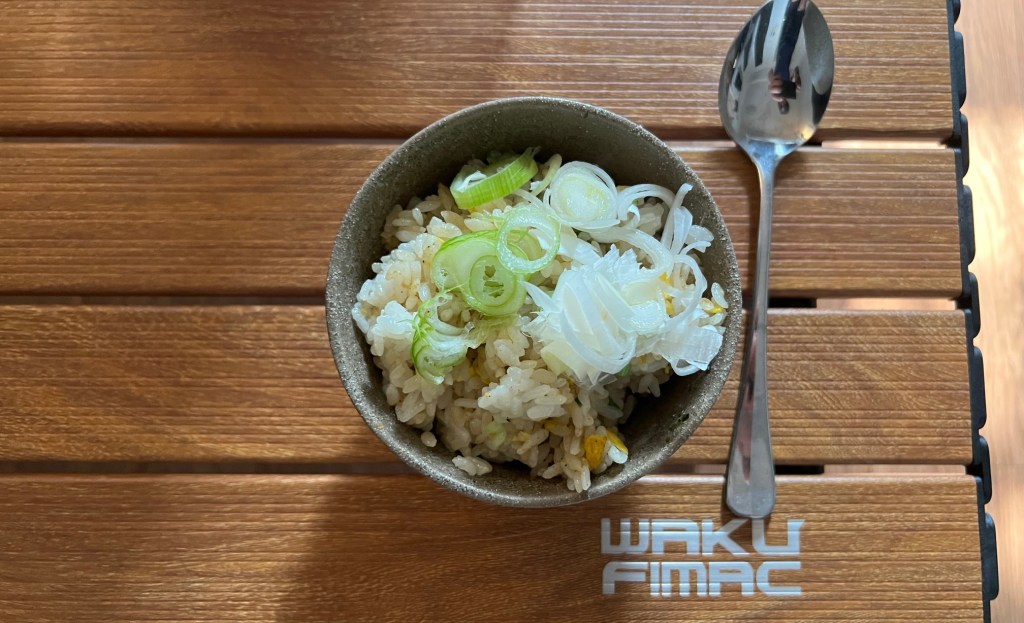
    This morning I slept in until around 8 o’clock. The sky was beautifully clear. For breakfast, I had mildly seasoned fried rice. I’d decided to take it easy today.

    I turned on the TV and watched a recording of the 2025 Roland Garros French Open final—Carlos Alcaraz versus Jannik Sinner. Since it was an epic five-set battle lasting over five hours, I didn’t watch every point with rapt attention. Instead, I let the cheers and commentary play in the background while I did some laundry and tidying up, occasionally glancing at the screen. Still, whenever there was a spectacular shot, I couldn’t help but let out a cry of delight. There are moments in today’s cutting-edge tennis that truly take your breath away. The power and consistency of the shots have clearly evolved. Players now use the court in an even more three-dimensional way, unleashing heavy, high-bouncing topspins, or taking the ball early and driving it flat from above shoulder height. Mixed in are rising shots and delicate drop shots—it’s remarkable to watch.

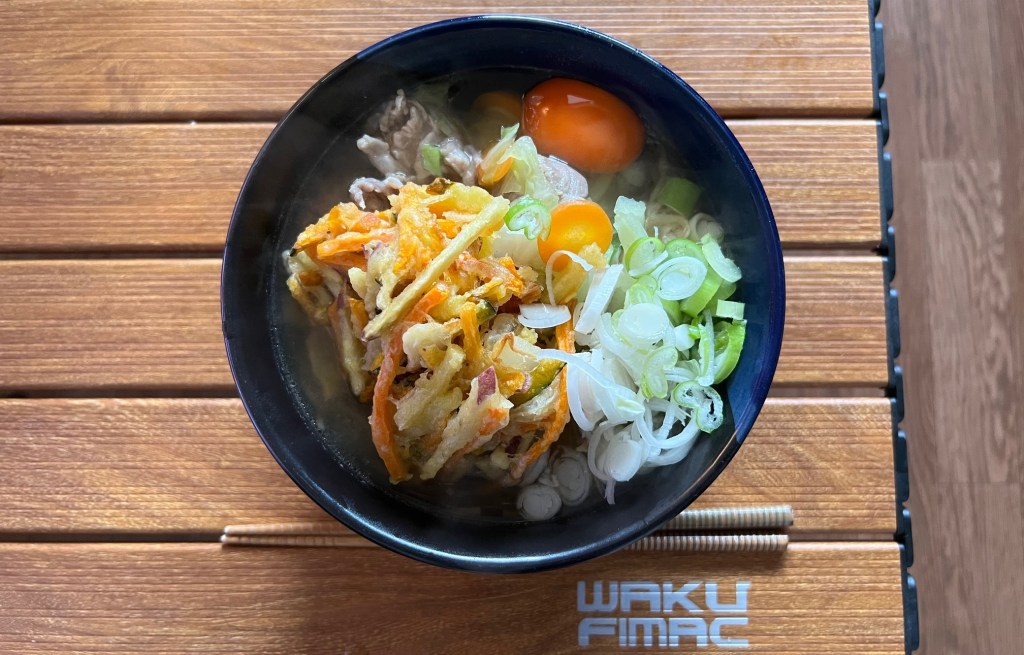
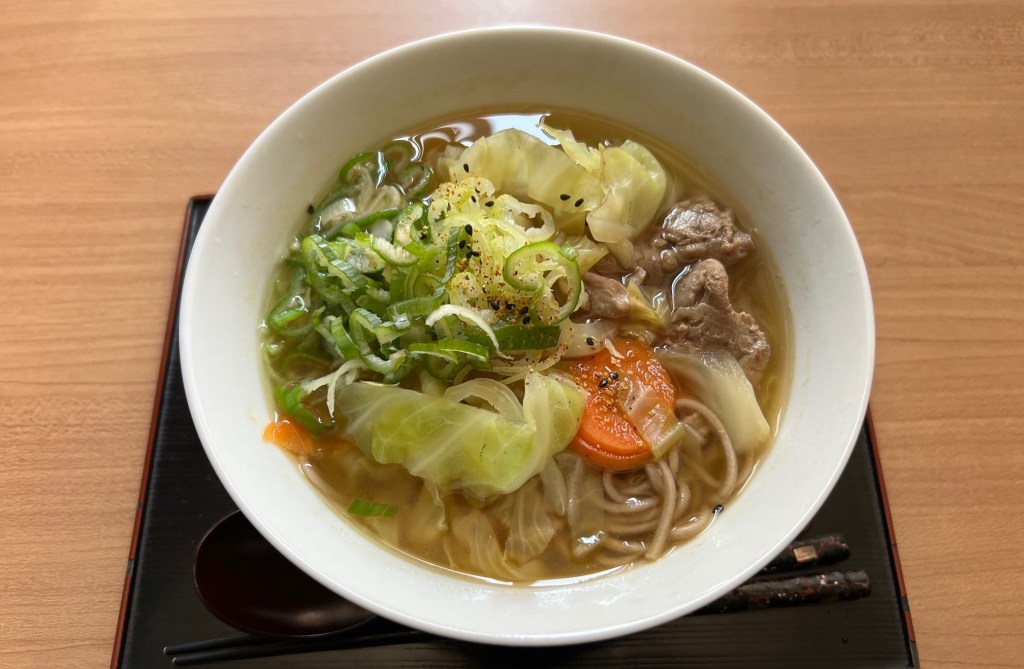
    Once I finished tidying up, I made soba using kakiage tempura I’d bought at the supermarket. As always, I added pork, cabbage, green onions, and some carrots. The broth was a light soba sauce with bonito stock. This is the flavor that always puts me most at ease.

    I spent the afternoon in a calm, absentminded sort of way. I sat back in my reclining chair and closed my eyes. With the air conditioner running, the windows were shut, so I couldn’t hear much from outside. Still, the faint, steady sound of the Hankyu Line trains passing by reached me. I took a deep breath. It felt good. I was truly relaxed.

    My wife called my cell phone. Because my father’s bank account had been frozen, some of his contracts that were set up for automatic withdrawal couldn’t be paid, and bills had arrived at the house. My mother was surprised by the unexpected notices, so I explained the situation to my wife and asked her to handle it. She called me twice more after that. It seems she’s taking care of various procedures for changing the account names. I feel sorry for relying on her so much, and living separately in Tokyo and Osaka is inconvenient at times like this. I wonder how much we can sort out during my next trip back home. Still, I’m grateful my wife is handling things.

    At 8 tonight, I have a tennis lesson booked. I haven’t been moving my body much lately, so I plan to sweat just enough to count as rehab. For dinner, I’ll keep dinner light with some tomato soup and bacon and eggs.

    I imagine that match at Roland Garros was probably watched by the very generation that had me so captivated—Roger Federer and Rafael Nadal. I wonder how they felt seeing it. I remember watching their Wimbledon finals, or the Australian Open, hugging my knees in front of the TV, hands sweating as I stared at the screen. Those days feel so nostalgic now. If it were Nadal in his prime on clay, I still believe he’d be stronger than Alcaraz or Sinner today.

    I want to keep believing that.

  • July 4th, Friday. Clear skies.
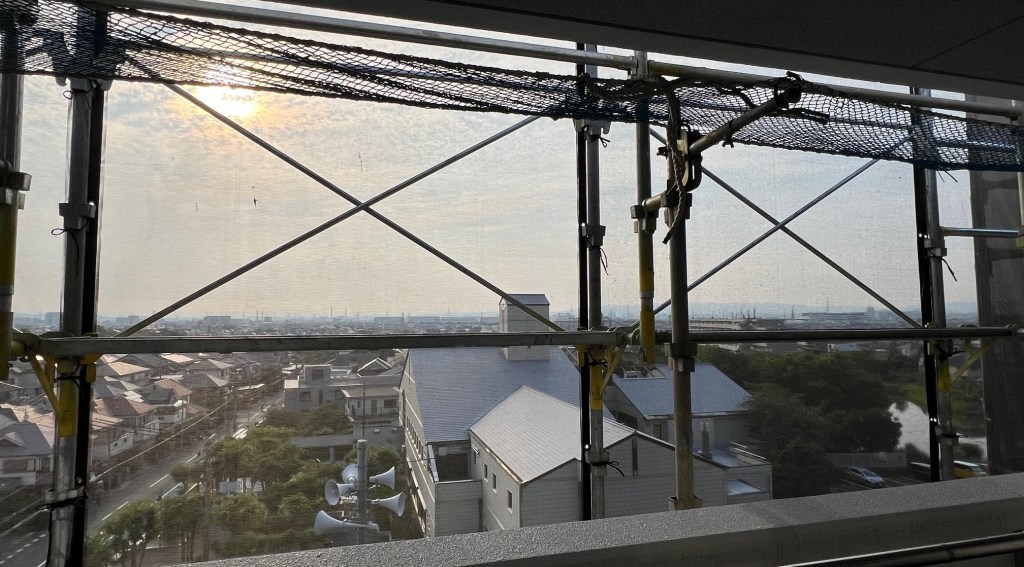
    The scaffolding for the exterior repairs of my apartment building still shows no sign of being removed. Yesterday, I came down with a mild case of heatstroke, left work early, and spent the day resting at home. This morning, I made a simple rice porridge using cabbage soup. Feeling somewhat better than yesterday,

    I took a shower and decided to head to the office. The muggy heat outside hadn’t changed, but wearing a hat and carrying an orange umbrella made the walk feel easier than usual. Before entering the office, I told myself, “Hey, it’s going to be freezing in there.” I’d learned from an AI that mentally preparing yourself can lessen the impact of sudden temperature changes.

    My body wasn’t fully back to normal yet, but I managed to get through my work. Still, reading the computer screen made me feel a bit nauseous. There was also a slight sense of dizziness.

    “This isn’t good. I’m starting to feel sick again. What is this, really?”

    Thinking it over, I decided to take an extra dose of one of the medications I usually take at night—one that helps regulate the autonomic nervous system. Perhaps that did the trick. My condition improved significantly, and I was able to work without any issues.

    Having gone to a psychosomatic clinic for many years, I was once accustomed to adjusting my medication frequently in consultation with my doctor. So tweaking my dosage like this is nothing new. But for nearly the past decade, I hadn’t needed to change anything, so it had been quite a while since I last increased it. I suppose the major life changes—moving alone from Tokyo to Osaka, my father’s passing—had taken their toll, raising my stress levels temporarily. I’ll try to focus on relaxing a bit more. At lunch, I had curry with my coworkers. Just joking around while eating eased my mind considerably.

    In the afternoon, I was even able to handle leading a meeting without any trouble. As time passed, my condition continued to improve, and I found myself able to maintain my concentration again. It was a relief. If things stay like this, I should be able to start working on technical documentation next week.

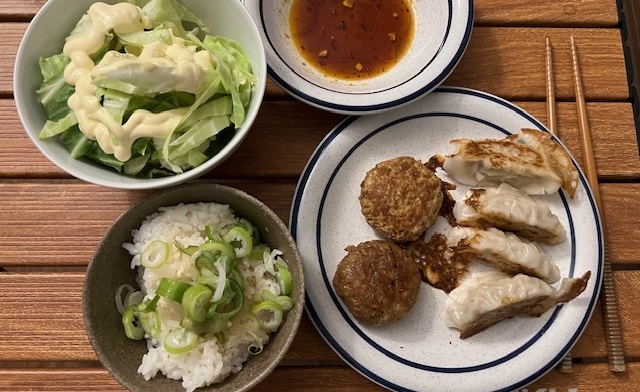
    Back home, I took a lukewarm bath to soothe my fatigue. Tonight’s dinner was gyoza and mini hamburg steaks with cabbage. I topped my rice with soba sauce, green onions, and a bit of wasabi. Later, I’ll watch a Gundam anime and try to get to bed early. Maybe this weekend, I’ll finally play some tennis again—it’s been a while.

  • Thursday, July 3rd.
    It’s cloudy, but the humidity and temperature are high.
    When I finally arrived at the office, the air conditioning was blasting.

    I hadn’t felt well since the morning. Lightheaded, nauseous, chills that made me put on extra layers. I couldn’t focus on work. Something was clearly wrong. I checked my pill case — I had taken last night’s medication properly.

    I had some soba noodles for lunch and felt a bit better, but I still couldn’t concentrate on work afterward. My hands and feet were tingling. It seemed I might have come down with a mild case of heat exhaustion.

    I let my boss know and headed home.

    To be honest, I’m exhausted.
    In February, I was told I’d be transferred alone. In March, I prepared for the move. And in April, I started a new life in Osaka. The move, the unfamiliar environment. Amid all that, my father passed away. I arranged the funeral, handled the inheritance paperwork for my mother. New job responsibilities. Frequent trips back and forth between Tokyo and Osaka.

    Even so, I tried to live carefully, mindfully. I started cooking for myself. I kept playing tennis. My autonomic nervous system must have been thrown off balance too.

    I need to rest a little.

    Right now, I’m at home, quietly listening to jazz.
    Today, I think I’ll just take it slow.

  • Tuesday, July 1.
    Last night I got home late, so I didn’t soak in the tub—just took a quick shower. Even this morning, waking up, I felt a sluggish heaviness lingering in the thick, humid air. It’s sunny outside, but my apartment building is under exterior renovation, scaffolding all around. Even the windows on my top-floor unit on the sixth floor are wrapped in hefty steel pipes. The view is far from pleasant, and my mood is a bit gloomy, too.

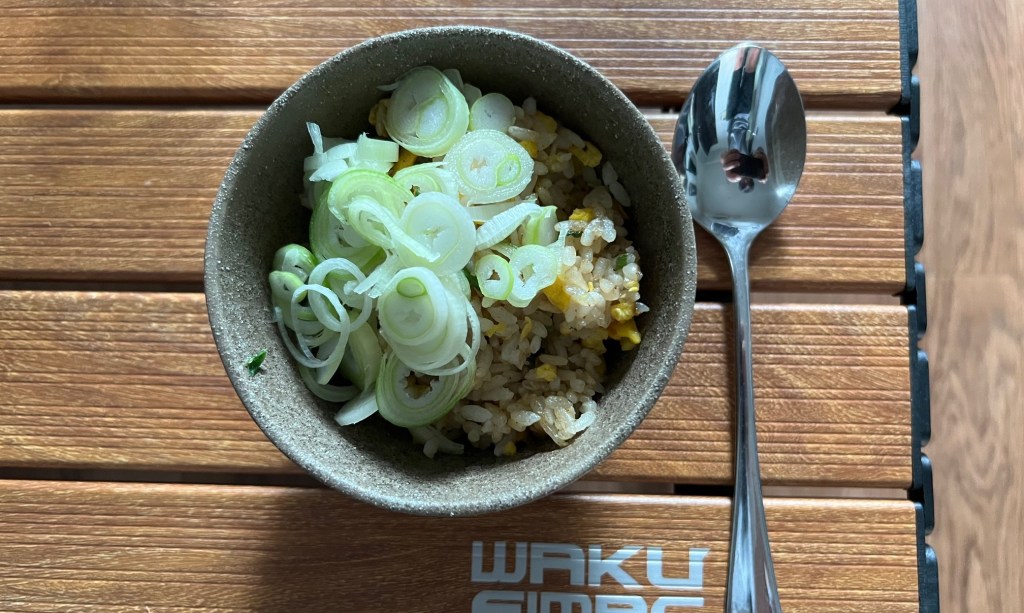
    Since I forgot to cook rice yesterday, breakfast ended up being frozen fried rice again. “Pretty heavy-flavored for the morning,” I thought, topping it with some green onions to adjust the taste.

    From early on, the heat was oppressive. On my commute, I was already starting to sweat. Honestly, it makes me dread the real summer ahead. I’m seriously starting to consider going to work in a T-shirt and shorts, then changing into my work clothes in the locker room.

    I rode the elevator up to my office on the sixth floor of the company headquarters. A bunch of people crowded in. Inside that cramped box, bodies close, heat rising—it was stifling. We all rode up in silence, but even that short trip felt painfully long, making me wish desperately for my floor to come sooner.

    Once I started working… well, what can I say? It’s nowhere near the amount I could finish in a single day. The number of projects I’m involved in has grown, and the workload has become quite substantial. Lately, it feels like I’m “drowning in unfinished tasks.”

    Being a working adult means spending almost all of your weekdays—really, most of the time you’re allotted in life—just doing “work.” Is that how it’s supposed to be? Life is short. Honestly, I’d rather lavish my time on thinking about myself and my family. If I’m going to fret, I’d rather it be over my mother or my wife. Getting consumed by work every single day… at my age, I’m simply fed up with it.

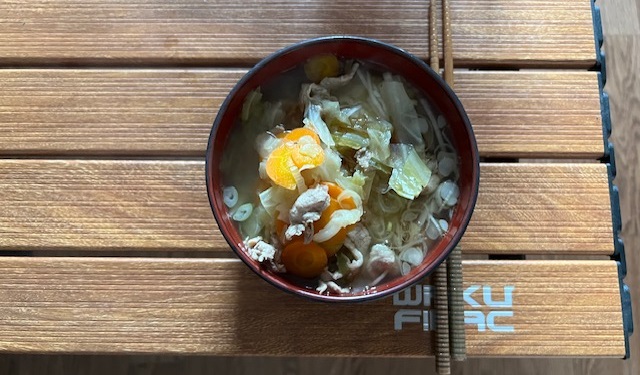
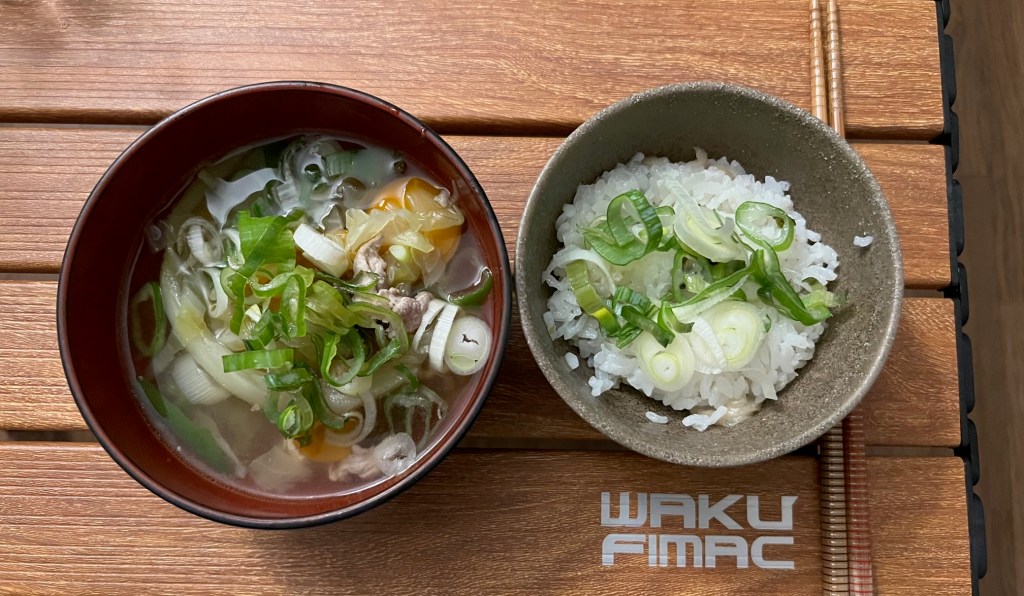
    After coming home from work, I started preparing dinner while heating the bath. I decided to make my usual cabbage soup. Boiled cabbage, pork, and carrots, seasoned with soba dipping sauce, bonito stock, and a bit of grated ginger. When cooking rice in the rice cooker, I added some matsutake soup base for flavor. I topped both the rice and the cabbage soup with chopped green onions. The rice had a wonderful matsutake aroma—I added just a splash of soy sauce too. The cabbage soup had its usual gentle taste. I still think keeping it this lightly seasoned lets you truly appreciate the flavors of the ingredients.

  • Monday, June 30.
    It was my first time going back to our Osaka head office in a while.
    My fridge was empty, but luckily, I found some fried rice waiting for me in the freezer — that saved the day.

    Having worked through Saturday and Sunday in Tokyo, plus taking the bullet train all the way to Osaka, I was still pretty worn out. Even so, I had a hefty workload waiting for me, so I powered through at a pretty fast pace. My main task was preparing technical documents to submit to a client, but in between that, I had team meetings and a handover session for a new project.

    Before I knew it, the clock had ticked past closing time without even a moment to chat with my coworkers. By 7 PM, there were only three of us left at our desks in the department, myself included. It’s rare for me to head home this late — I usually clock out right on time.

    “Are you always here this late? Don’t overdo it, okay?”
    I gave a quick word of encouragement to a colleague still at his desk, then headed home.

    At that hour, I didn’t have the energy to cook, so I stopped by the supermarket and picked up some deli items at 40% off. Prices drop nicely late at night. I also bought some cabbage, carrots, pork, and green onions for dinners starting tomorrow.

    Tonight, though, I’m calling it quits and giving myself a break to recover.
    Time to rest up.

  • June 29, Sunday.
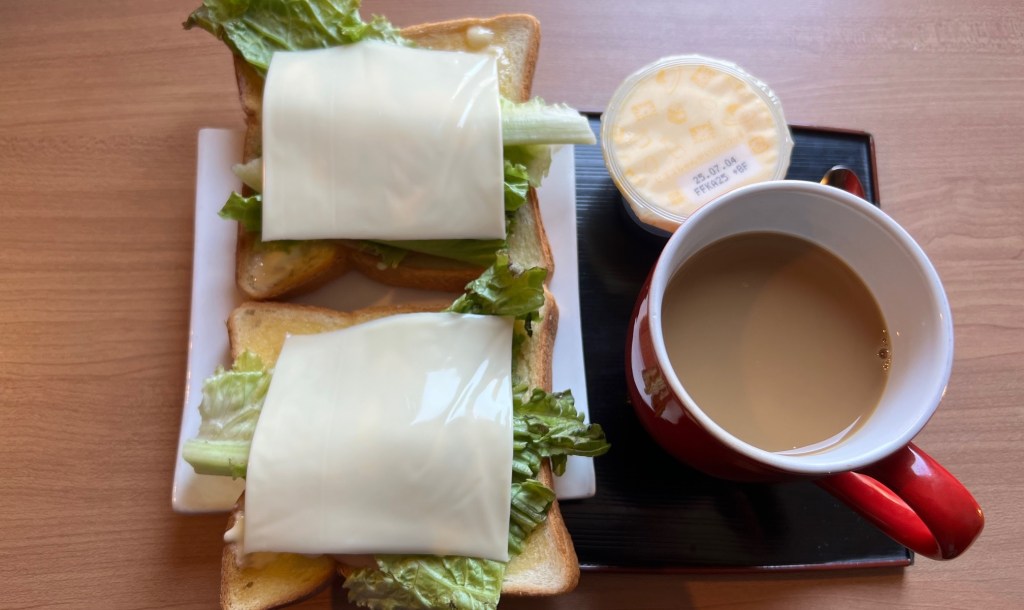
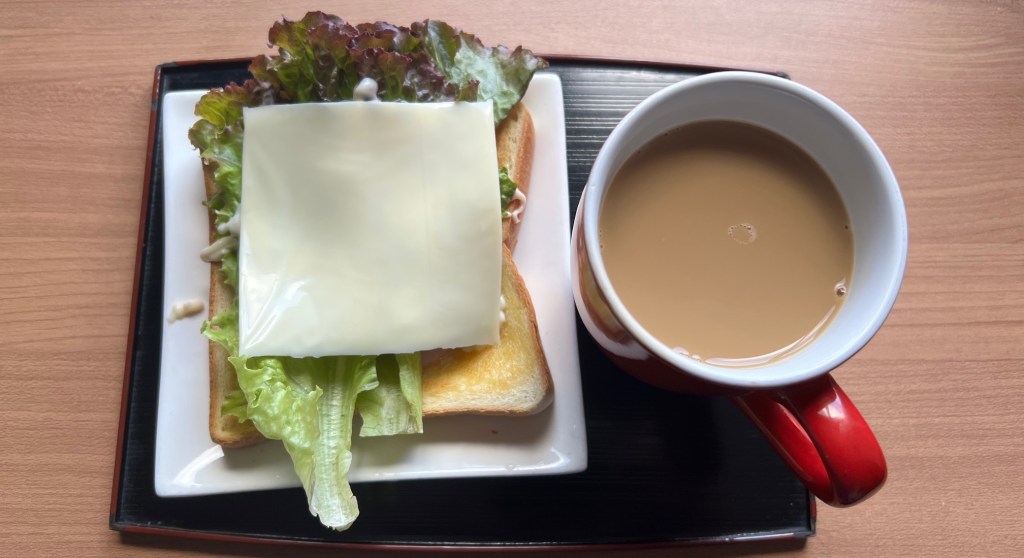
    In the morning, I took a bath to warm myself up, then had a simple breakfast of a lettuce sandwich and coffee. After that, I opened my work laptop again, just like yesterday. Some technical documents were due urgently, with the deadline being tomorrow. I focused on the materials.

    I wasn’t yet familiar with this kind of work, so at first I felt quite lost. But by making a table comparing the specs in the specification sheet with those in the technical documents prepared at the time of the estimate, I was able to organize my thoughts. Once I settled on a process, I took a quick lunch.
    I didn’t have much time today, so it was just cup ramen with green onions and a bowl of rice topped with raw egg. Well, it was a bit of a junk meal, but green onions really are amazing. Just having them somehow makes me feel at ease. I wonder if it’s just me who feels this way.

    In the afternoon, I continued working.
    “Hm, for a newcomer, he’s actually doing pretty well. Not as many mistakes as I expected.”
    Even so, I found some minor errors, so I documented them clearly in a table. Once the whole thing was done, I incorporated it into the official technical documents.
    “Alright, next is the performance curve. Looks like the design support system isn’t working properly. If I input the data manually, I should be able to generate the drawing. Seems like I can download the data from the equipment selection program.”
    I kept switching between various data files and programs, and managed to work through the documentation process. At least I confirmed I could get it all done.

    Alright, that should do it for the technical documents due on Monday. But Sunday was completely eaten up by work. It was already 3 p.m. I sat at my desk, put my hand on my left shoulder, and rotated my elbow. “My body feels a bit heavy.”

    But it was about time to head back to Osaka.
    All the important documents for inheritance procedures — family registers, agreements on dividing assets, property tax certificates, my mother’s bankbooks and My Number card — had been in my bag all week. I carefully sorted them and placed them together in the living room.

    “I’ll leave all the documents here, okay? Please put the important ones in the safe.”

    “Alright, but if something comes from the bank, I wouldn’t know what to do, so I’ll just leave it as is.”

    “That’s fine, as long as you keep it where I can find it. I’ll come back around Saturday, July 19. There’s a three-day weekend then.”

    I finished packing up and started preparing dinner with my wife for the Shinkansen ride.
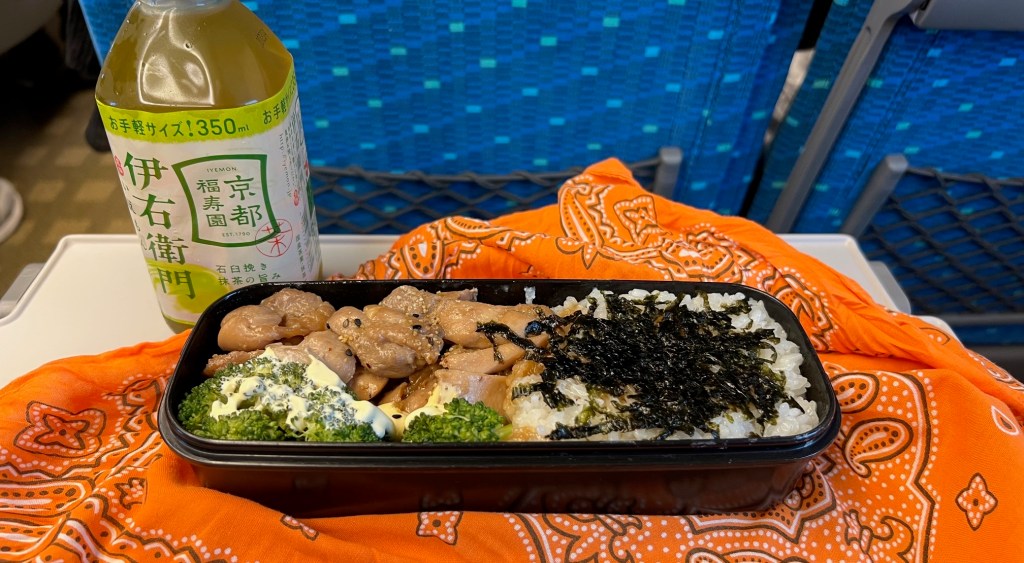
    We cut some chicken thighs into bite-sized pieces, lightly seared them in a pan, then poured in a sauce made of soy sauce, mirin, sake, and ginger. Stirred it all and let it steam for about five minutes. And there it was — chicken ginger stir-fry, done.
    I packed white rice, the chicken, and some broccoli into a bento box. Ekiben are delicious, but they’re a bit pricey, so we went with this. Actually, my wife used to make this exact bento for me every day about three years ago. Seeing it packed into the same old lunch box brought back a wave of nostalgia.

    My wife drove me to the station.
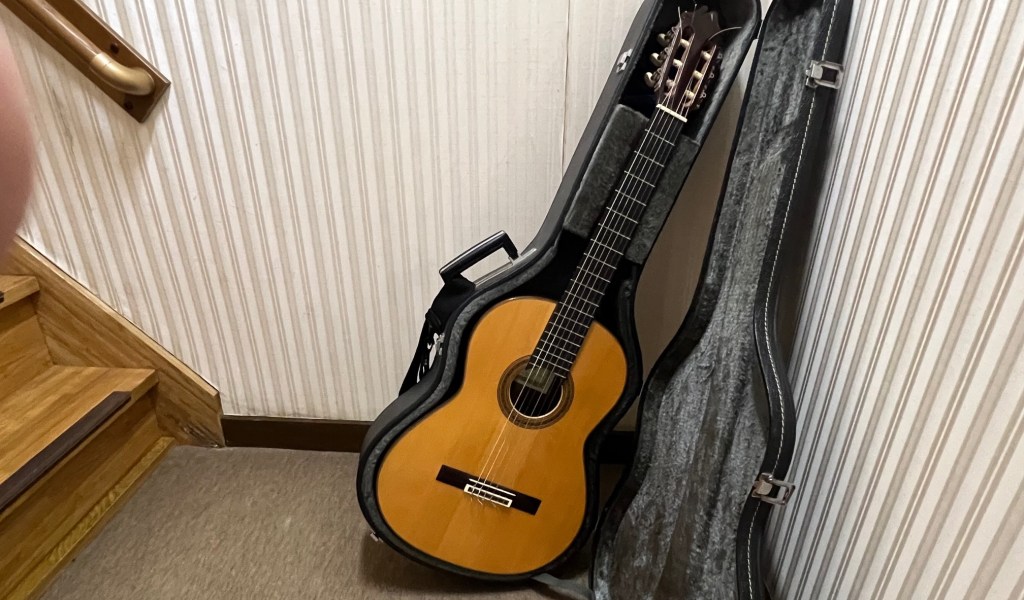
    She doesn’t like it when I bring my father’s guitar back to Osaka or keep taking my tennis rackets home, so she was grumbling about it the whole drive.
    I thought, “This really doesn’t concern you…” but I understood she must be under a lot of stress too. So I didn’t say anything back.

    The classical guitar and three tennis rackets made for quite a load, but once I got on the Shinkansen, all I had to do was sit.
    Fortunately, I even found a spot on the overhead rack for the guitar.
    With a sigh, I finally felt at ease.


    Through the westward window, I could see the sun setting.
    I took out the chicken ginger bento my wife had helped me prepare earlier.
    It was delicious—a nostalgic taste.
    Her sharp words can wear me out sometimes, but in the end, I really am grateful to her.

  • Saturday, June 28.
    In the afternoon, I came home from my psychiatric appointment and had soba noodles for lunch. Since I didn’t have any kakiage tempura, I tossed in some cabbage, pork, and carrots to make sure I was getting enough veggies.

    I was a bit worried about work, so I turned on my work laptop to tidy up some tasks. I thought it would just be a quick check, but I was met with an overwhelming flood of emails. As I went through them one by one, I checked what had already been completed and what still needed to be investigated. Most of it was related to the initial submission documents for a project I’d just taken over. I compared the customer’s specification sheets with the estimate documents submitted by our sales rep. That’s when I found a few discrepancies between the customer’s specs and what we quoted. Uh-oh. Well, the sales rep is still pretty new, so it’s understandable that mistakes happen. But the submission deadline is Monday. I’ve got to hurry.

    So I created a new spreadsheet, checked for inconsistencies between the specs and the data registered in our internal database, and made a list. There was just way too much to look over—no way I could finish this in half a day. The initial submission deadline is the day after tomorrow, on Monday, and it’ll probably take me two days just to sort out the current mismatches. Man, I’m in trouble.

    For now, I canceled the tennis lesson I’d planned for today. I kept making tables to get a clearer view of everything while checking item by item. But even then, it didn’t look like I’d be done anytime soon, so I also canceled the tennis with my friend that was planned for tomorrow.

    “Sorry. Looks like I won’t be able to finish work in time, so I can’t make it to tennis tomorrow.”

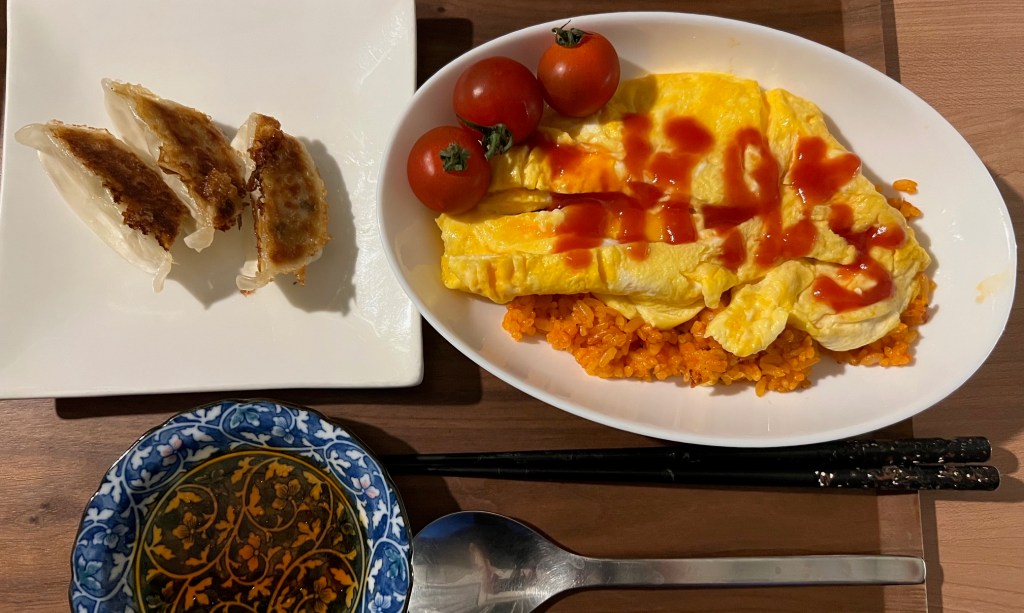
    I sent my friend an apologetic LINE message. Before long, my wife came home from work. I was planning to make omelets for dinner, so I started preparing. I fried up some frozen chicken rice in a pan, then on another burner started cooking beaten eggs. Getting the eggs just right is tricky. What I had in mind was placing a soft, fluffy omelet on top of the steaming chicken rice, then slicing it down the middle so it would spread out beautifully and cover everything.
    Yeah, well, things don’t go that smoothly in real life. Maybe I was feeling rushed from all the work stress, but the eggs ended up a bit too firm and didn’t open up like I wanted. Ah, well. Tough skill to master. Maybe it needs a hot, high flame to keep the outside firm while the inside stays gooey—but it all happens in just a moment, so who knows. I even tried writing something with ketchup, but that didn’t come out very well either. Can you even tell what it says? Yikes. Well, that’s just how it goes sometimes. My mom had made some gyoza, so we all sat down and had dinner together.

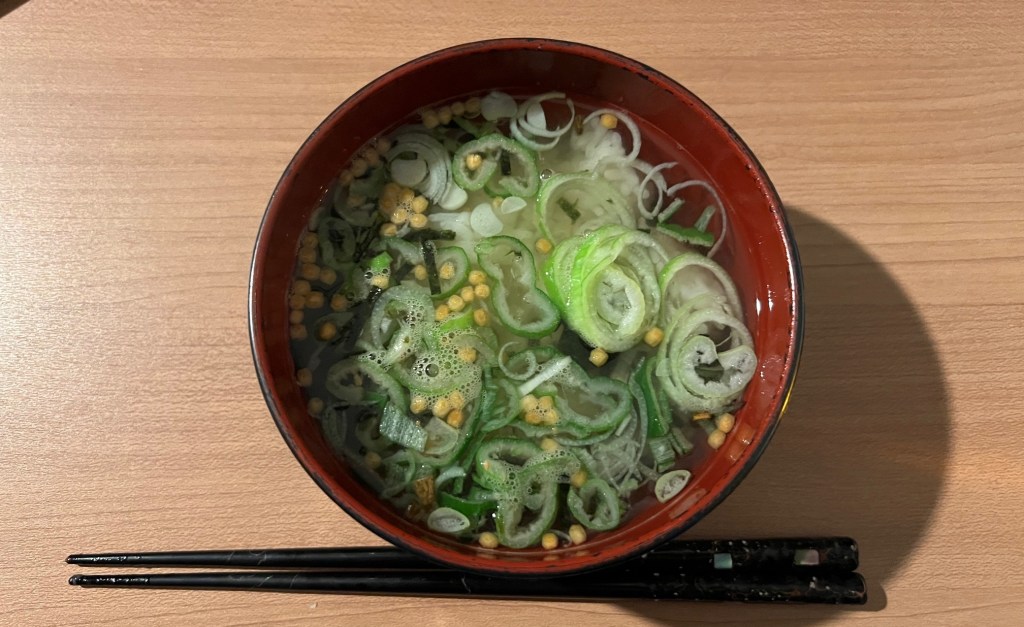
    After dinner, I got back to work. I was low on energy, so I fixed myself a bowl of ochazuke topped with chopped green onions. Even then, I couldn’t quite get everything done.


    Ah, today just wasn’t my day. But, well, that happens. Maybe tomorrow will be a little better. I decided to give up and head to bed.

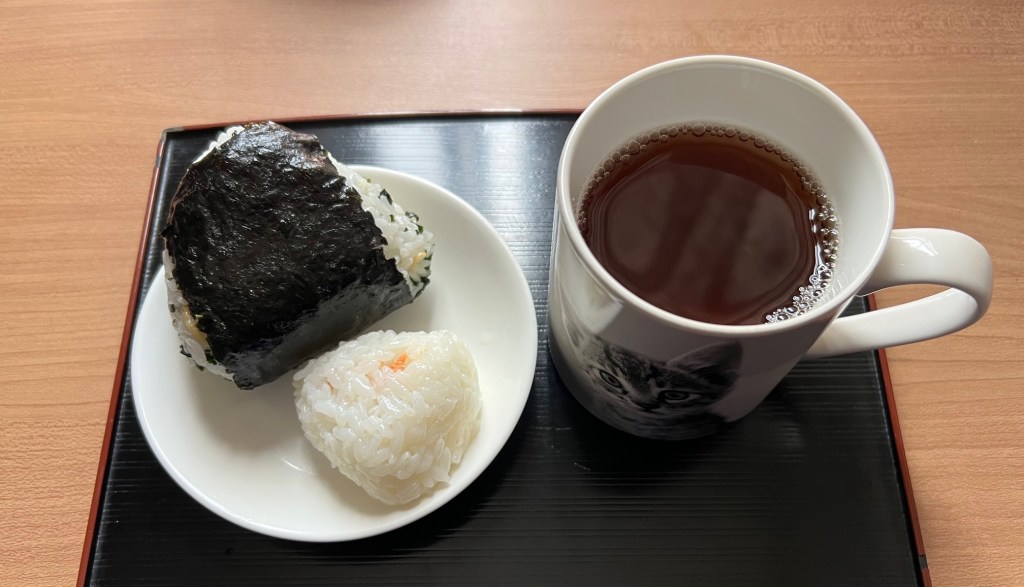
  • June 28th, Saturday. A perfectly clear day. When I woke up, it was already past 9:00. A week’s worth of fatigue had hit me all at once, and I had overslept. I had an appointment at the psychiatric clinic at 9:30, so I jumped out of bed and hurried to get ready. In the kitchen, I found some rice balls. My wife must have made them for me before leaving for work. I was in a rush, so that small kindness really helped.

    As I was scrambling to get ready, the contractors for our house repairs arrived. That’s right—today they were continuing the work that had been halted by rain on Monday. I exchanged a quick greeting with them, left the rest to my mother, and got in the car.

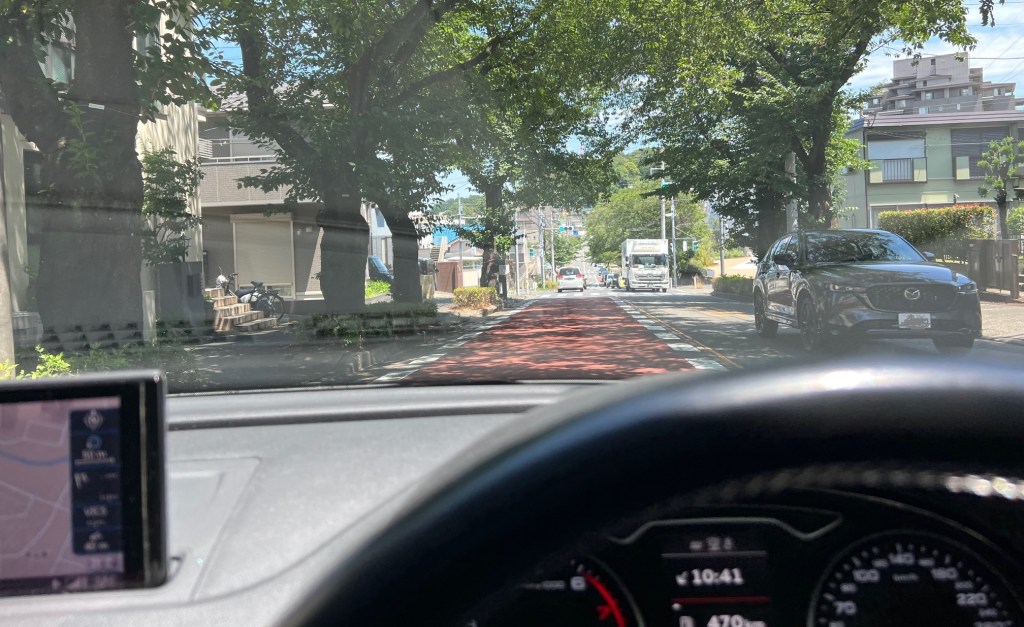
    The summer sun was dazzling. Even the once soft, fresh green leaves seemed to be wilting a bit under the relentless sunlight. On June 27th, it was announced that the rainy season had ended unusually early across much of western Japan. The height of summer was just around the corner.

    I parked at the usual coin-operated lot near Tsukushino Station on the Den-en-toshi Line and headed into the clinic. There, slightly overgrown goldcrests and hydrangeas that had turned a summer green welcomed me.

    I’ve been coming here since 2012. Unlike most modern clinics, this one was converted from the second floor of a private two-family home. What was probably once the living room now had long benches and served as the waiting room and reception, while the kitchen on the south side had been turned into the consultation room. So the sink and stove were still there, unused but kept perfectly clean. When the doctor called me in, sunlight poured through the south-facing window, gently illuminating my physician. She’s a woman in her late seventies, with white hair and a white coat that suit her kind face perfectly. When I first started coming here, I was still emotionally unstable and probably caused her some trouble with my erratic talk. But these days, it’s mostly just casual chatting before I leave.

    “How have you been feeling lately?”


    “Well, in April my company ordered me to start working alone in Osaka. But since I also had to take care of my father, I agreed on the condition that I could come back to Tokyo for about half the month. But then, just as I started living in Osaka, my father passed away on May 11th… I rushed back to Tokyo, and with the funeral, inheritance paperwork, and name changes, it was really overwhelming. They gave me a week of bereavement leave, but that was nowhere near enough. It took about a month from filing the death report to completing the removal from the family registry. After the funeral on May 18th, I returned to Osaka for work, then came back to Tokyo on June 20th. I worked remotely here until Wednesday. On Thursday and Friday, I took days off to gather and submit necessary documents at the ward office. There’s still a ton left to do—handling bank and postal inheritance procedures, filing for life insurance payouts, and switching my father’s pension over to a survivor’s pension for my mother at the pension office. To have my mother inherit my father’s house, we’ll also need to go to the Legal Affairs Bureau, which seems to involve quite a bit of paperwork and multiple visits. Since there’s nothing more we can do this week, I’ll come back again during the week of July 20th to continue.”


    “That sounds quite exhausting. How’s your health? You’re not feeling stressed or anxious with so much to handle?”


    “Fortunately, my condition seems stable now. As long as I have my medication, I don’t really feel stressed. It’s true that being away from the company so much might not look good to my boss, but I’ve reached a point where I can just accept that some things are beyond my control. If anything, I’m more worried about my mother being alone and depressed, and the burden it places on my wife, who’s been helping care for her. I wish I could come back to Tokyo more often, but since our head office is in Osaka, that’s hard to do.”


    “I see. So it’ll be a while before things settle down. But I’m glad your condition is stable. Your mother was here the other day too, and she seemed happy that her relationship with your wife had improved.”


    “Yes, I think it’s gotten better. My wife sometimes cooks for my mother, it seems.”


    “That’s wonderful. I’ll prescribe your usual medication. Please take care.”

    She really is a kind doctor. But since she’s getting older, she told me she plans to close the clinic by the end of this year. It’s sad, but I’ll have to find a clinic that can handle my prescriptions both in Tokyo and Osaka. I wish I could continue seeing her a little longer.

    I got back in the car and drove to the pharmacy, which is attached to a drugstore near my house. After parking and checking in at the counter:

    “I’m sorry, it’s a bit busy today, so it’ll take about 40 minutes to prepare your medicine.”
    “Oh, that’s fine. I’ll do some shopping next door in the meantime.”

    Inside the drugstore, I bought some carbonated water and two boxes of powdered sports drink you mix with water. I’d looked for these at supermarkets in Osaka but couldn’t find them, so I was glad to pick them up here. At just 250 yen for five liters’ worth, it’s much cheaper than buying bottled drinks. It’ll be an essential item for tennis in this season. Before long, my medicine was ready, and I picked it up. I’d left the contractors to my mother, which made me a little uneasy, so under the blazing sun, I hurried back home.

  • Friday, June 27.
    Once again, the weather was strange today—sunny, then cloudy, then sudden bursts of rain. After getting up and taking a bath, I had a lettuce sandwich for breakfast. Today, I planned to take my mother to the Pension Center near Machida Station to apply for the conversion of my late father’s pension into a survivor’s benefit for her.


    I carefully checked each required document and explained them one by one, guiding her as she filled them out. Everything went smoothly, and since we had some time left, I also helped her fill out the paperwork for the life insurance claim. Even such small interactions felt like meaningful moments of connection between us.
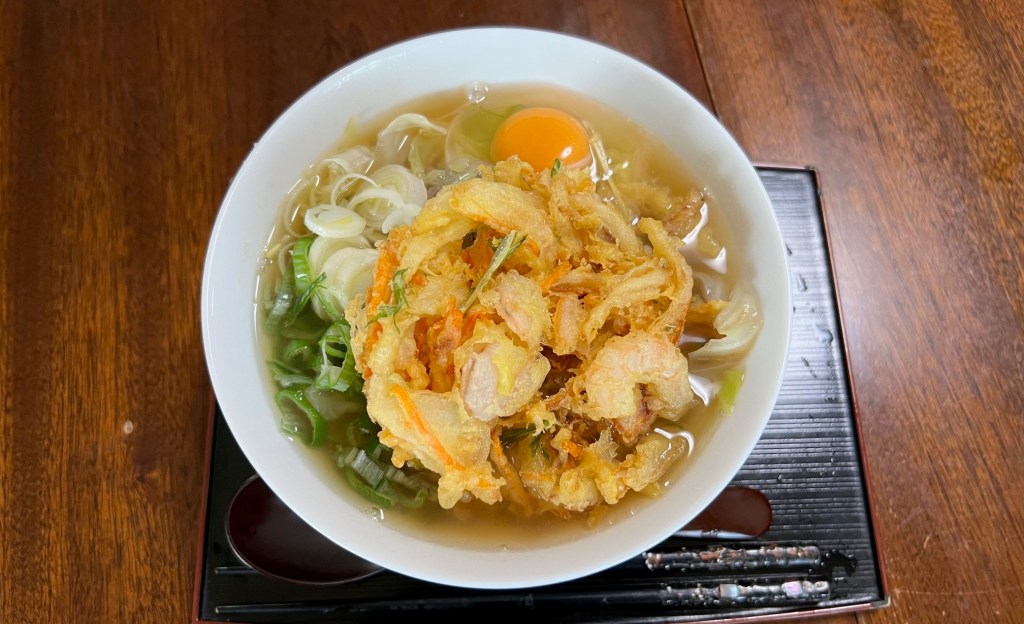
    For lunch, I made soba noodles with cabbage and vegetable tempura. Well, to be honest, I only used about 70 grams of dried noodles, so it was more like a Japanese-style soup with green onions and cabbage. Still, I really like this dish.

    In the afternoon, I drove with my mother to Machida.
    Thankfully, it didn’t rain while we were out, but the heat outside was a bit exhausting. Though it was a weekday, Machida was as lively as ever, full of young people.
    Thanks to the documents I had prepared in advance, the procedure at the Pension Center went smoothly. The staff member who assisted us was kind, but he spoke rather quickly—too quickly for my elderly mother, who’s hard of hearing. On the way home, she quietly muttered, “I couldn’t understand a word he was saying.”
    Just as we got home and sighed in relief, the sky suddenly turned dark and a heavy, gunshot-like downpour began. The rain splashing off the neighbor’s roof was so intense it bounced high into the air—it looked like it would really sting if it hit your skin. But it only lasted about ten minutes before the blue sky returned.
    What a strange day.

    Around 4:30 p.m., I decided to catch up on some work and opened my email. I was shocked by how many messages had piled up.
    Since I had taken yesterday and today off, the volume of tasks I left behind wasn’t small—and judging by the tone of the emails, my boss didn’t seem too happy about it. I could sense the frustration between the lines.
    …Not good.
    Instead of motivating me, it completely deflated my spirit, and I closed my laptop almost instantly.
    Ah, I’m done. Really. I’m just too tired.
    I’ll eat and go to bed.
    Please forgive me.
    I promise I’ll give it my all starting tomorrow.

    I went to the kitchen and started preparing dinner with my wife.
    We sautéed squid, shrimp, and bacon, then added chopped Chinese cabbage and cooked it until tender.
    Next, we poured in a ready-made white sauce and let it simmer gently.
    The aroma rose softly—like it was melting away the fatigue of the day.
    As we cooked, we shared a few laughs and lighthearted conversation.
    We scooped rice into a gratin dish, poured the hot sauce over it, sprinkled cheese on top, and baked it for about five minutes.
    And just like that, our Chinese cabbage and bacon seafood gratin was done.
    We served it with the Chinese-style soup I had made the day before.

    The bold flavor of the bacon paired beautifully with the gentle sweetness of the cabbage. Yet, it didn’t overpower the delicate taste of the squid and shrimp. It was a healthy, well-balanced dish.
    Yes, I did my best today.
    Thank you, me.
    Tomorrow, I’ll do even better.
    Good night.