Canon's Diary

Action without thought is empty; thought without action is blind – Goethe

While living with schizophrenia, I move between Tokyo and Osaka. Through this journal, I hope to quietly share moments from my daily life—and memories from the journey I’ve taken with my illness.

  • Friday, May 30.
    The sky is clear, with just a few thin clouds. According to the forecast, the temperature will drop later in the afternoon. Still, I can feel it getting warmer day by day. Even so, it’s not hot enough to break a sweat while walking.
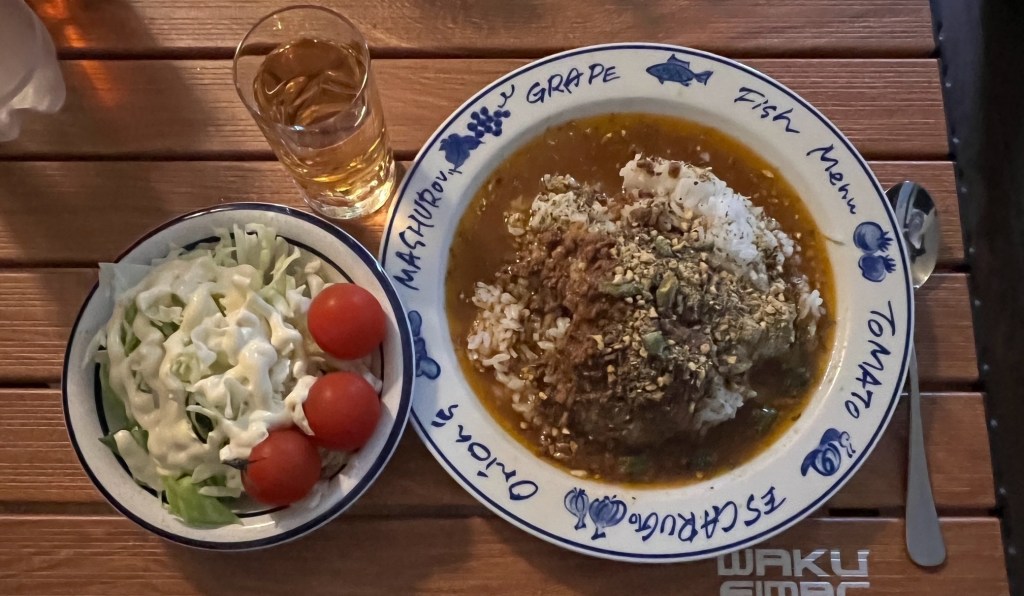
    So far, I’m not feeling any fatigue from yesterday. Since I had meetings today as well, I had a hearty breakfast to avoid running out of energy. Lunch was curry, so that was another big meal.

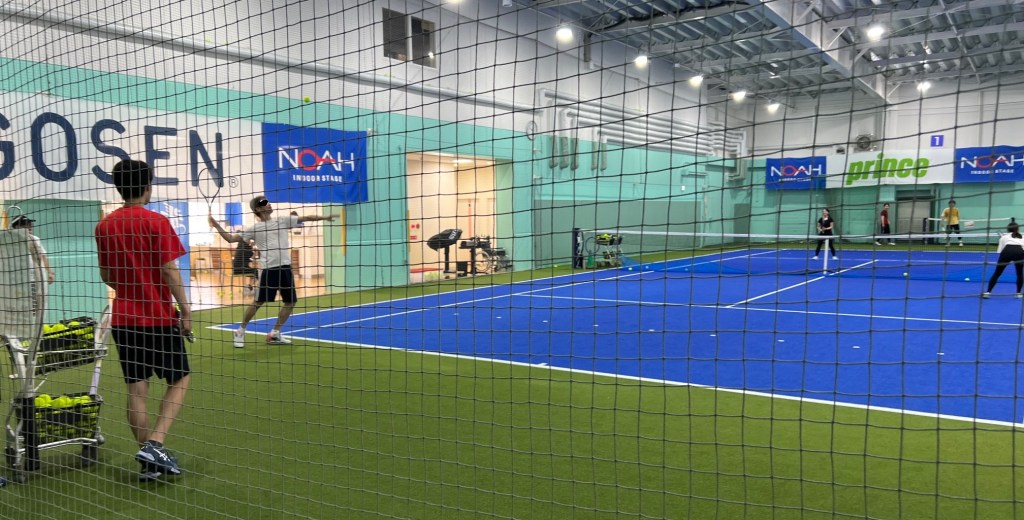
    During my lunch break, I reflected on yesterday’s tennis lesson. There were two other students besides me, both of whom had powerful shots. One in particular was a heavy hitter, and their shots were not only fast but loaded with spin. The impact made my racket shake.
    It’s been a while since I’ve had that kind of experience. My racket is indeed lightweight and prone to being overpowered, but it’s easy to handle and lets me prepare quickly. I’ve always felt that if I catch the ball on the sweet spot, it wouldn’t get pushed back much, even without extra force.
    Still, I’ve been practicing less recently, and I’ve had a bit of a break, so maybe it couldn’t be helped. But I need to figure out why I wasn’t able to hit the sweet spot if I want to do better next time.

    I suspect it was because the ball, with its heavy spin and power, behaved unpredictably after bouncing—either stretching forward or bouncing high—which made it hard to read. That delayed my reaction. Also, my footwork was a bit sluggish, likely due to the break, and I couldn’t position myself properly.
    Maybe I wasn’t watching the ball closely enough either. Hmm. I guess I just need to increase my practice and improve my ability to adapt.

    Thanks to the extra calories I took in, I managed to get through work today despite the fatigue from last night’s lesson.
    When I got home, I took a bath right away, then made a spinach and bacon cream pasta. I’d roughly learned the recipe from an AI. Maybe I used a bit too much flour? And perhaps I went overboard with the pepper at the end.
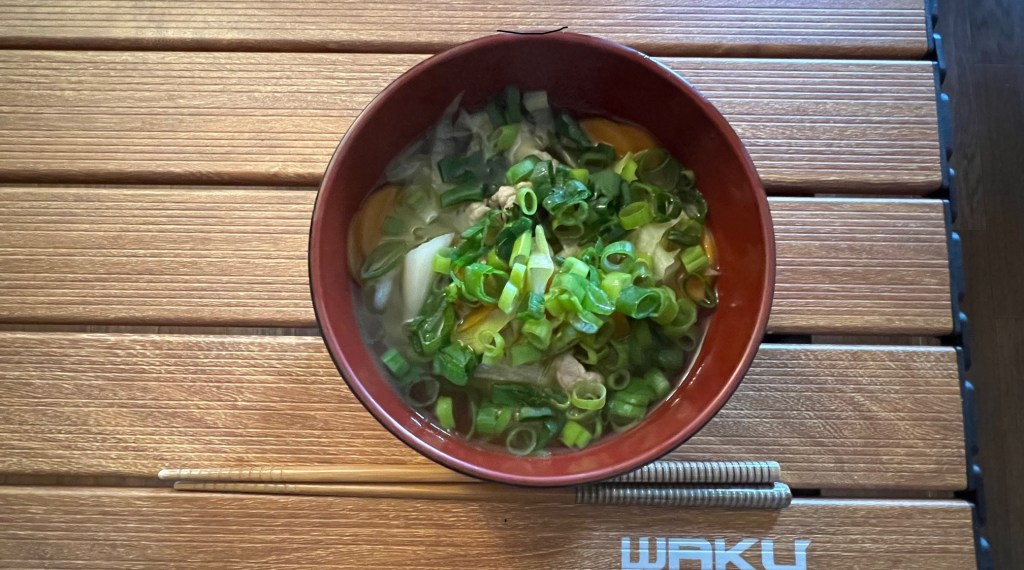
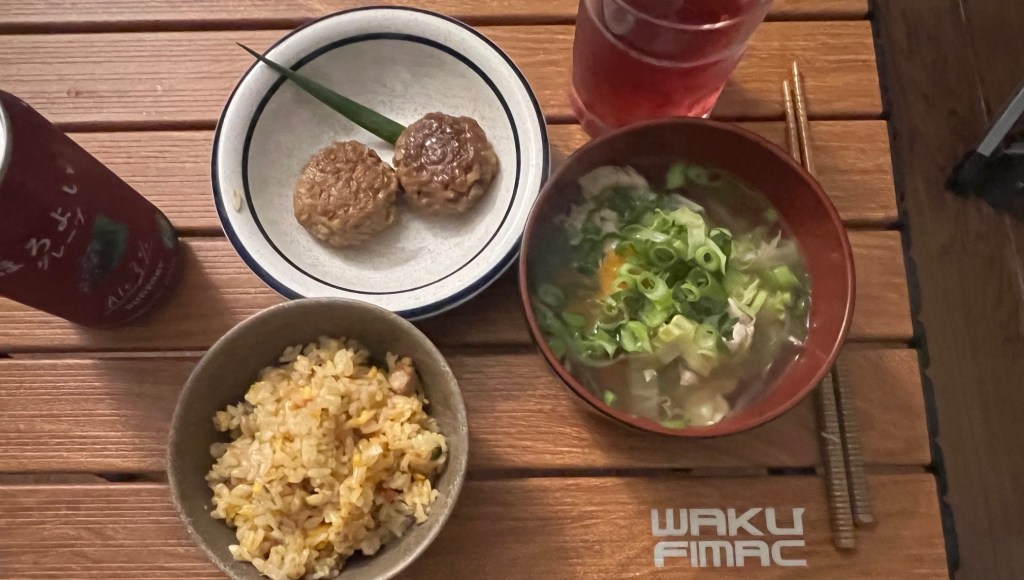
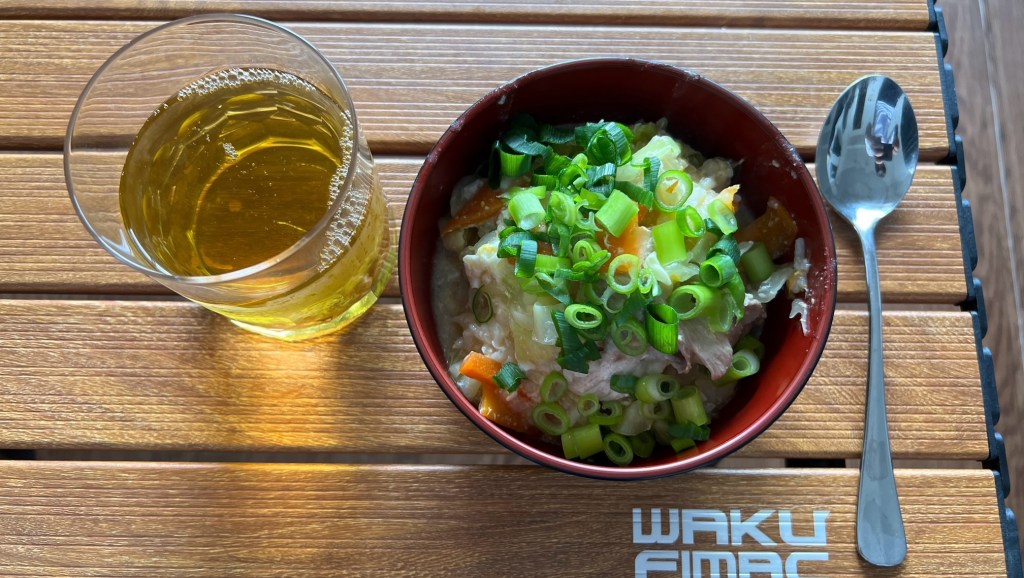
    Still, the milk thickened nicely, and it turned out delicious. I served it with a Japanese-style soup made from cabbage and spinach that I’d prepped yesterday.
    For a drink, I chose a non-alcoholic white sparkling wine.
    I messaged my mother and learned that my wife had cooked dinner and was keeping her company. I’m deeply grateful for that.

    I ate well today.
    Both my body and heart feel a little more satisfied.
    And sometimes, a day like this—
    is not bad at all.

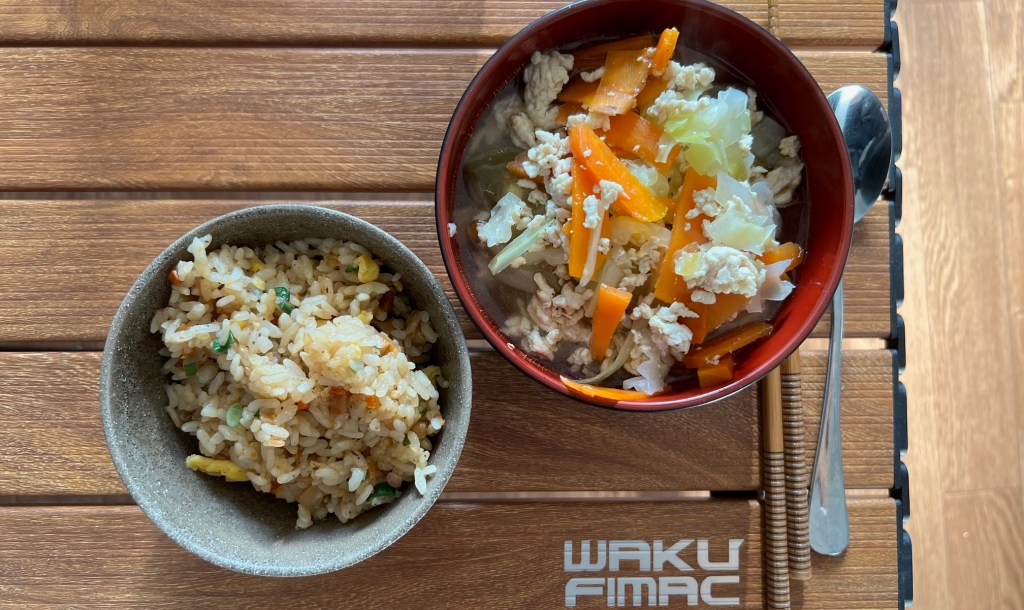
  • Thursday, May 29th. I woke up before six this morning. Since I had forgotten to cook rice last night, I had instant tomato soup and frozen fried rice for breakfast. When I opened the window, I was met with a cloudy sky. According to the weather forecast, it would start raining by tonight. The temperature was on the cooler side. I could hear the sounds of trucks and Hankyu trains passing by.

    I brought in the laundry I had hung out yesterday and picked out a white dress shirt to wear. I had a tennis lesson scheduled after work today. Since I would be going by motorcycle, I might need a rain suit.

    With the large umbrella I recently bought at the station in hand, I headed to the office. Since the company’s umbrella stand is full of similar umbrellas and there’s a high chance of losing mine, I stored it in my locker.

    Today, there was a scheduled handover meeting for a project I’m in charge of—transferring responsibilities from the sales department to the design department. As I had to lead the meeting, I reviewed the specifications and drawings once more. I was truly grateful not to feel unwell like yesterday. Just being able to move my body makes it feel like the day is starting off calmly.

    I cleared up any unclear points with the relevant members before the meeting. It had been a while since I led a meeting, so I was a little nervous, but I managed to guide it through smoothly.

    I left the office at 5:00 p.m. The sky was still bright. Though it was cloudy, the rain hadn’t started yet. After getting home, I still had a bit of time before heading out for tennis, so I cooked a cup of rice and began prepping cabbage soup.

    I had been thinking of trying a spinach and bacon cream pasta soon, but since I had a lesson today, I decided to go with something I was used to making. Last time, I made cabbage soup with a Western-style consomme base, but this time, I used soba noodle sauce, white dashi, bonito broth, and sesame oil for a Japanese-style twist. I was in a bit of a rush, so I ended up making more than I meant to. Well, it should be good for tomorrow’s breakfast and as a side soup for the pasta in the evening.

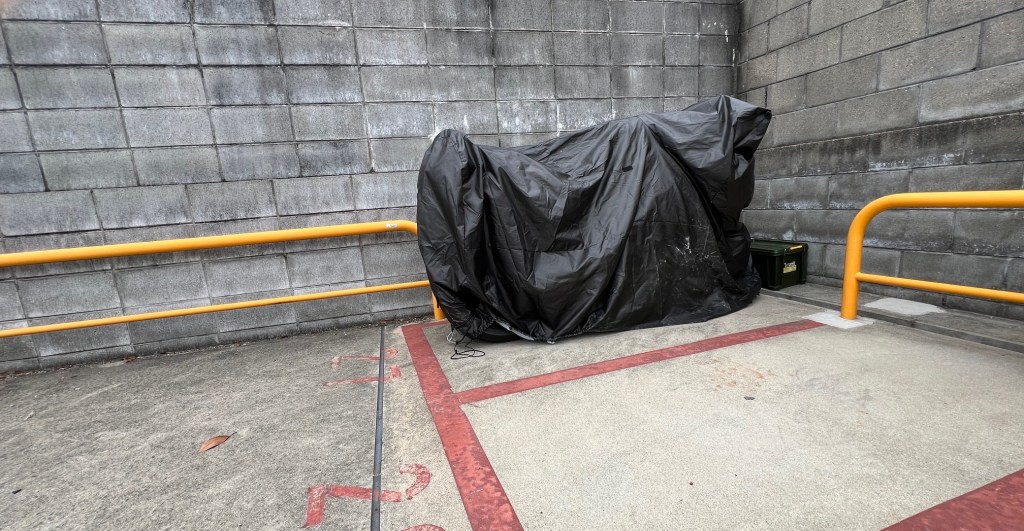
    After getting the soup ready to be reheated later, I headed off for my tennis lesson. I took off the sunshade cover from my motorcycle for the first time in a while and hopped on. Since I had some extra time, I took a leisurely ride through the town of Tonda.

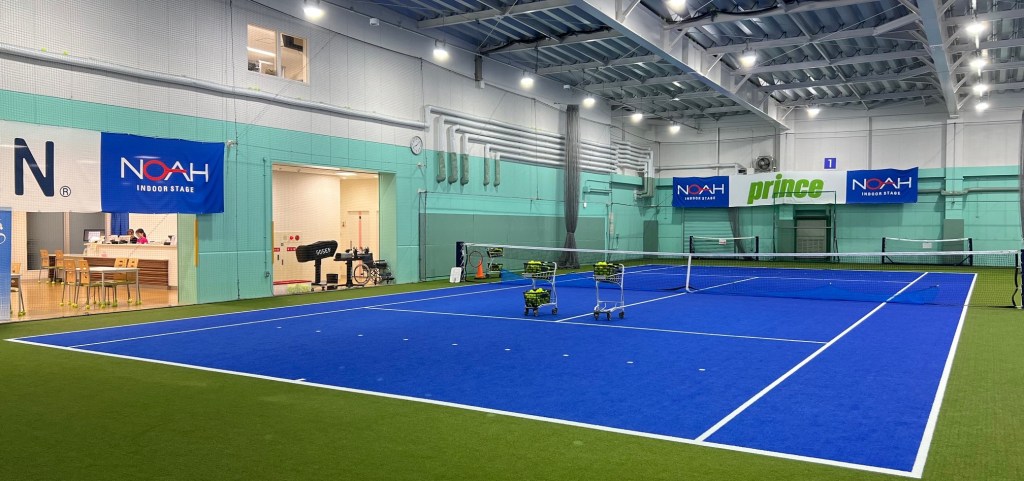
    Tennis school levels seem to vary depending on the region. When I lived in Machida, I was in an advanced class, but here, I’m in an intermediate one. That said, the intermediate class at this school is tougher than the advanced class in Machida. Today, there was just one young coach and three students, including me, which made for a very engaging and satisfying practice session.

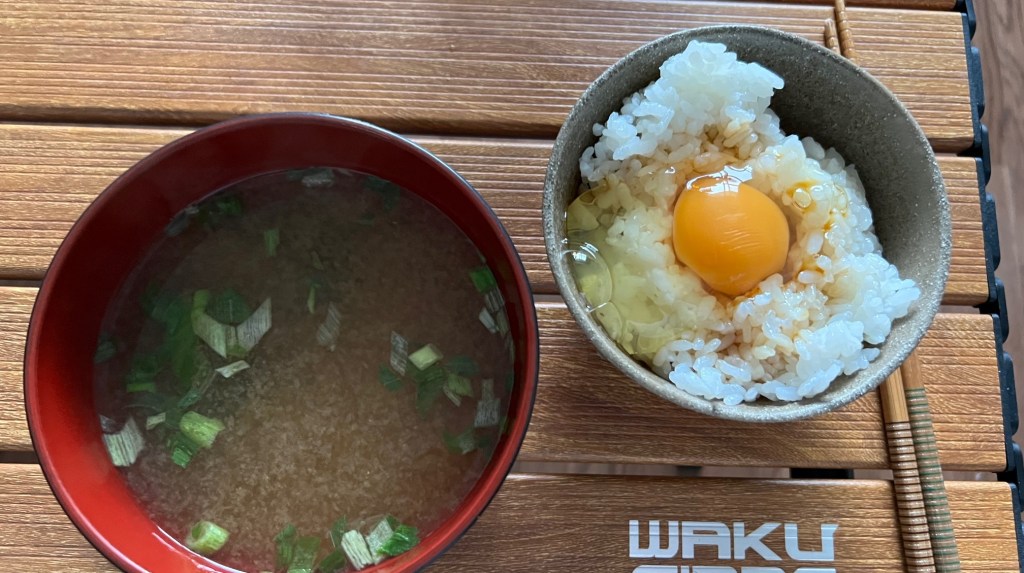
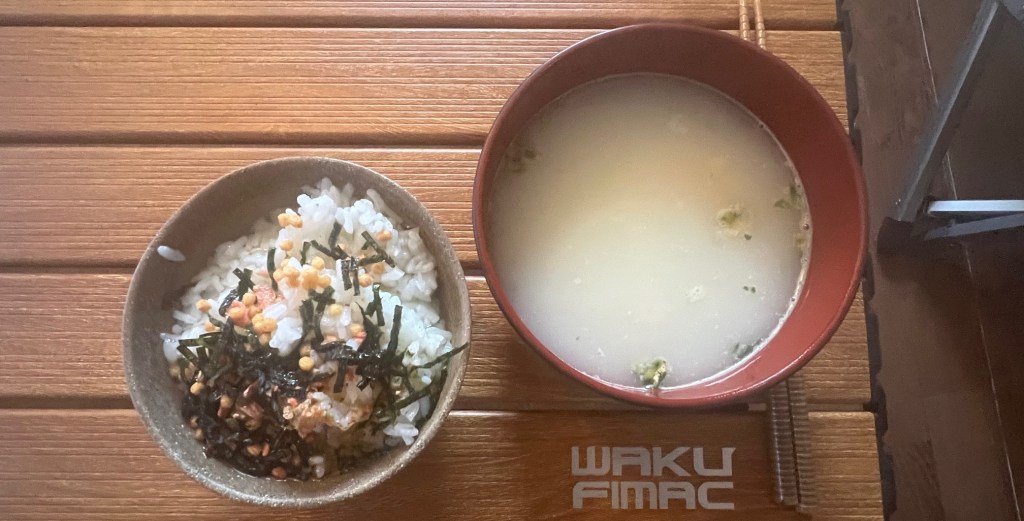
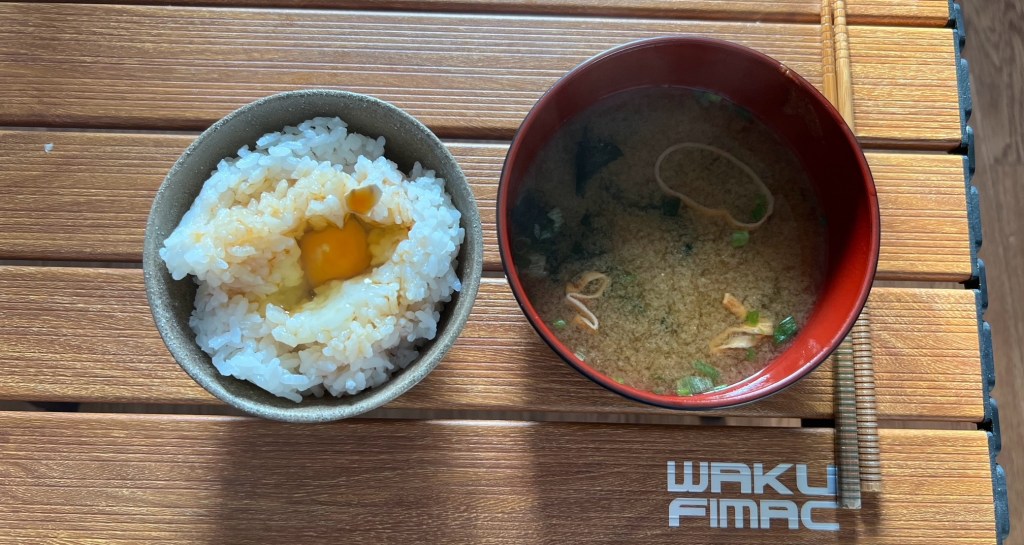
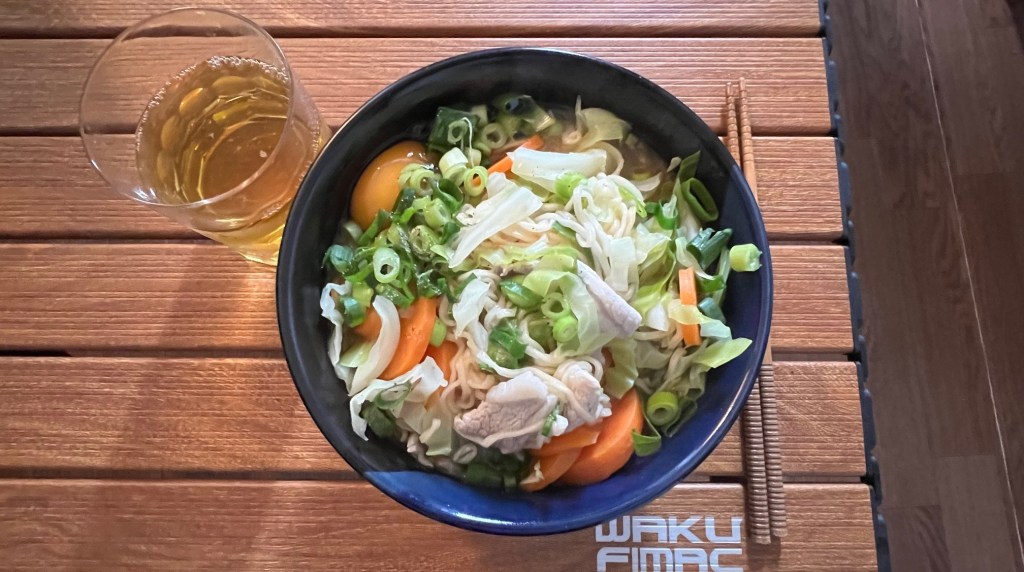
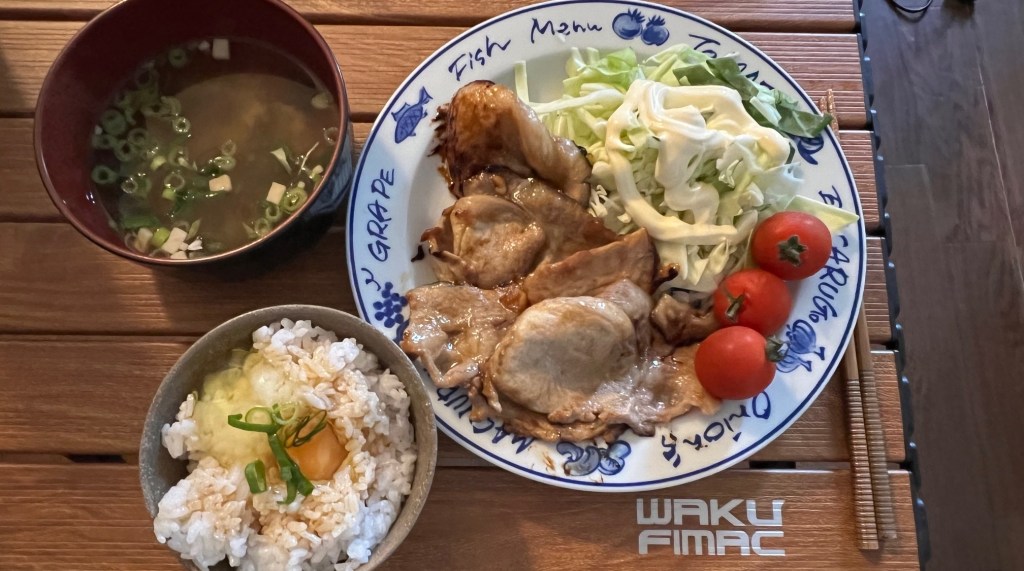
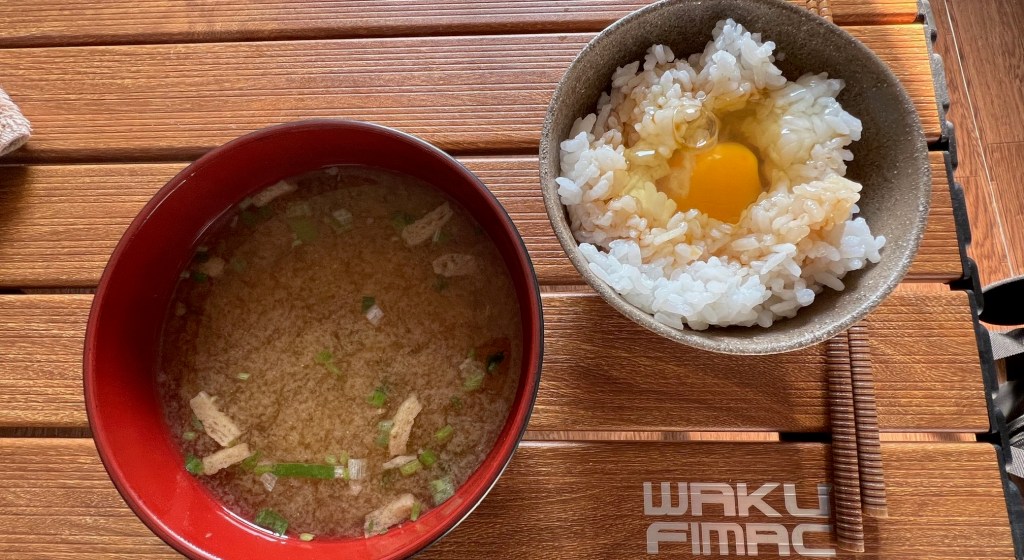
    After coming home, I took a shower and had the cabbage soup I had prepared earlier along with a bowl of rice topped with a raw egg. For a drink, I went with my usual Scotch. In the end, it didn’t rain after all. I put on some music, and now I feel completely relaxed.

    Still, since I pushed my body quite a bit during the lesson, I decided to go to bed early to make sure I can wake up properly tomorrow. I want to create a routine of playing tennis every other day, so I need to get my body used to today’s schedule.

    It was a busy day, but emotionally, it felt calm. I feel like I’m being gently supported by the quiet rhythm of everyday life.

  • Yesterday was the company’s welcome party. We drank late into the night, and I ended up sleeping in and taking a half day off. At my age, acting like a new hire is… not ideal. I slept until around 11 a.m., so I wasn’t feeling sleep-deprived, but I hadn’t eaten anything, so I was hungry. After a quick shower, I left home around 11:50. Walking my usual route to the office under the midday sun, I could feel the heat.

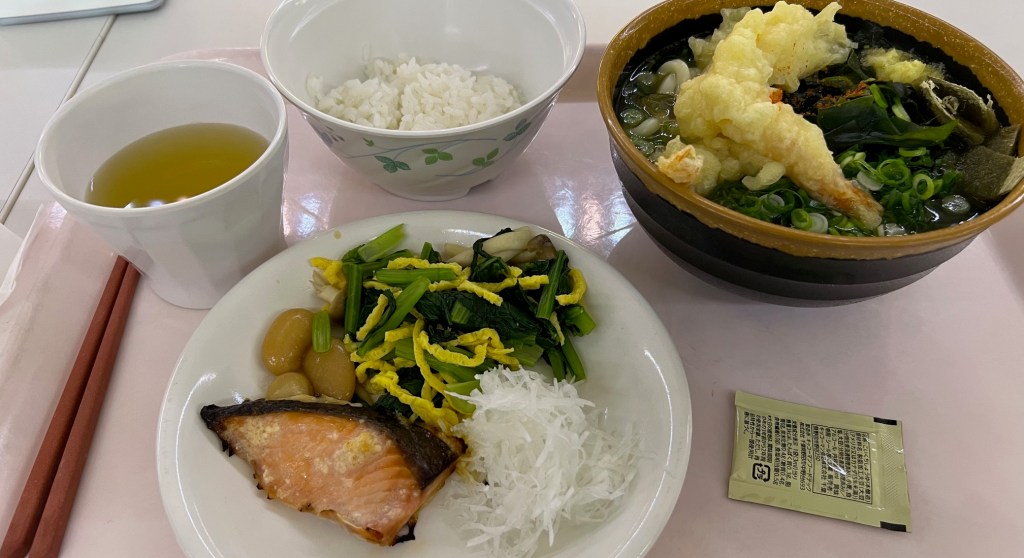
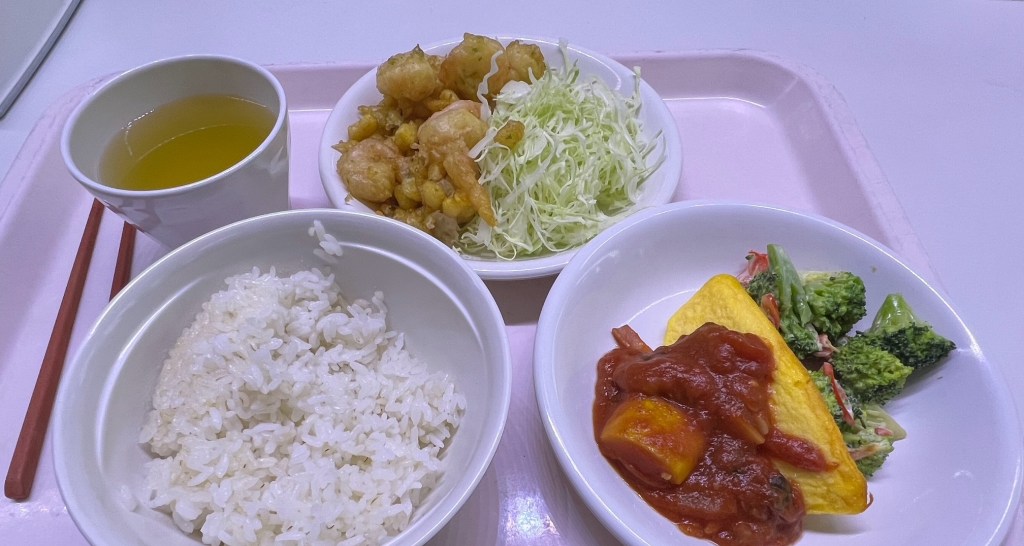
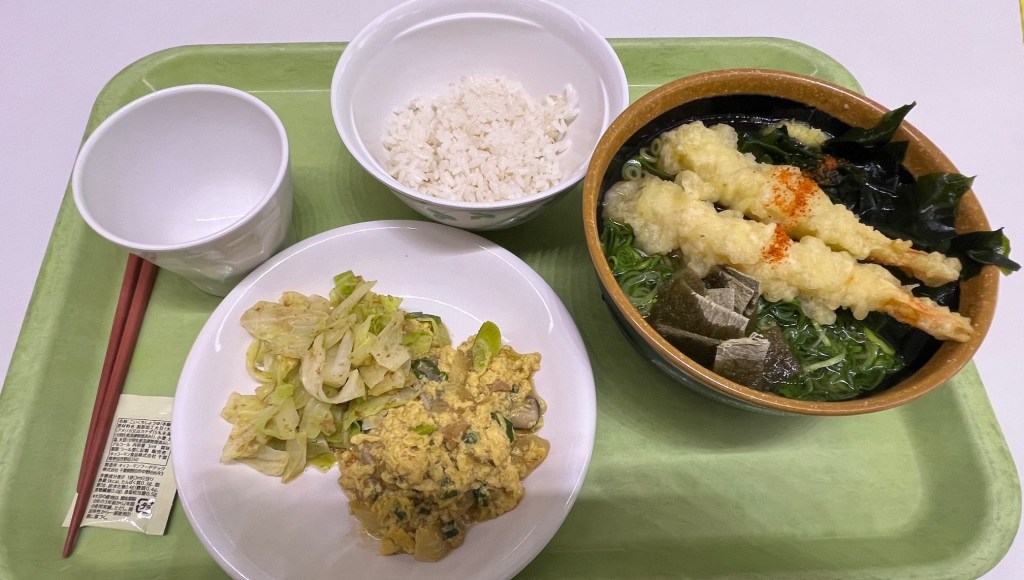
    I arrived at the office during lunch break, apologized to my boss, and headed straight to the cafeteria for a bowl of soba.

    I wasn’t feeling great, but I assumed it was just a hangover. Sure, I drank a fair amount at the party, but I thought I’d kept things under control. Still, something felt off—this wasn’t the usual day-after. I tried to work, but couldn’t concentrate at all. The discomfort in my body gradually worsened. My head felt fuzzy, and I started to lose focus. Even walking felt unsteady. That’s when I thought, “This isn’t normal,” and checked my medicine box.

    That’s when I realized I had forgotten to take one of the three pills I take every night for schizophrenia. Sometimes I miss all three, and when that happens, the symptoms are more obvious and I notice right away. But missing just one? That’s rare. The unfamiliar sensation threw me off.

    I took the forgotten pill with some water, and within about 30 minutes, my body returned to normal.

    Schizophrenia is a condition that doesn’t go away. These three medications are the result of years of trial, error, and careful monitoring with my doctor. It’s taken decades to arrive at this combination. These days, I’ve recovered to the point that I almost never think about the illness—but even missing one day’s dose throws my body into turmoil.

    When I skip my meds, memories from my most difficult times come rushing back, leaving me with a deep, heavy feeling. Moments like this remind me just how much of a miracle it is that I can live a normal life and go to work.

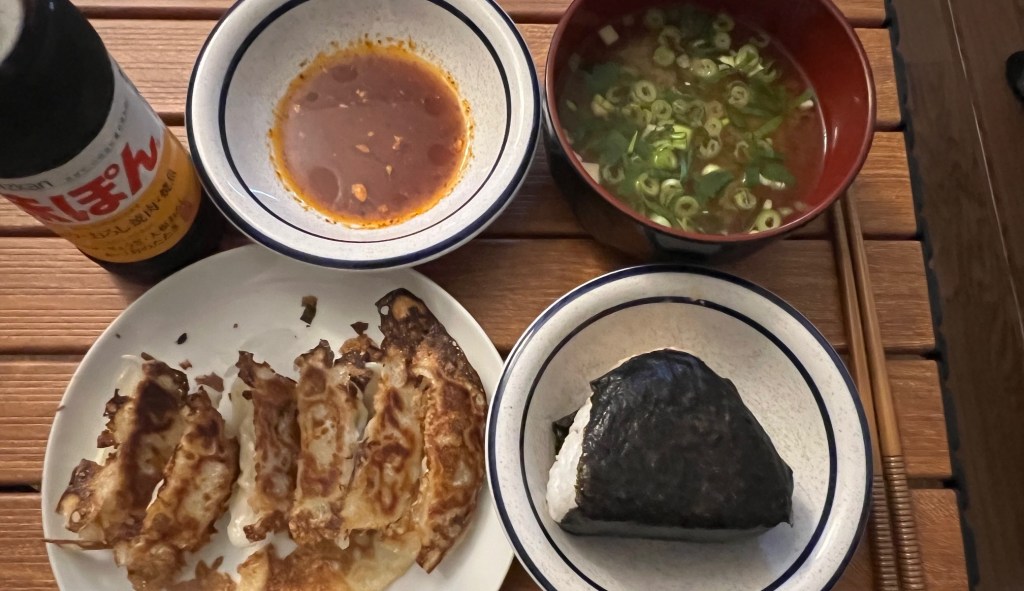
    After work, I went home. Dinner tonight was frozen gyoza over fried rice. I realized I didn’t have a clean dress shirt for tomorrow, so I did laundry while running a bath.

    Since it was a hot day, the fan I’d bought the day before yesterday felt especially pleasant after my bath.

  • Tuesday, May 27th.
    The sky is bright today. I stepped out of my apartment, took out the burnable garbage, and headed to work.
    The ten-minute walk for my commute is now a familiar routine.

    Yesterday, I checked my pedometer and found that including the walk to and from work, plus climbing the stairs to the 6th floor of the headquarters building, I had surpassed my daily target of 5,000 steps. My total calorie burn reached 2,500 kcal.
    Reaching those numbers on a day without playing tennis or any particular workout means that just going through my normal routine provides a decent amount of physical activity—an encouraging sign.
    If I manage to balance my intake of protein, carbohydrates, and vitamins, I think my overall physical condition will improve further.

    Tonight, there will be a welcome party for the new members of our department, including myself.
    I canceled my tennis lesson for the evening and rescheduled it for Thursday night.
    I’ve missed several lessons lately, so I have quite a few make-up sessions to do, but if I use the weekends wisely, I should be able to catch up soon.

    These days, websites for finding tennis events are also well developed.
    Since I’m now living in Osaka, I’d like to start building new connections here as soon as I can.

    Sorry, I’ll leave it at that for today.

  • Monday, May 26th.
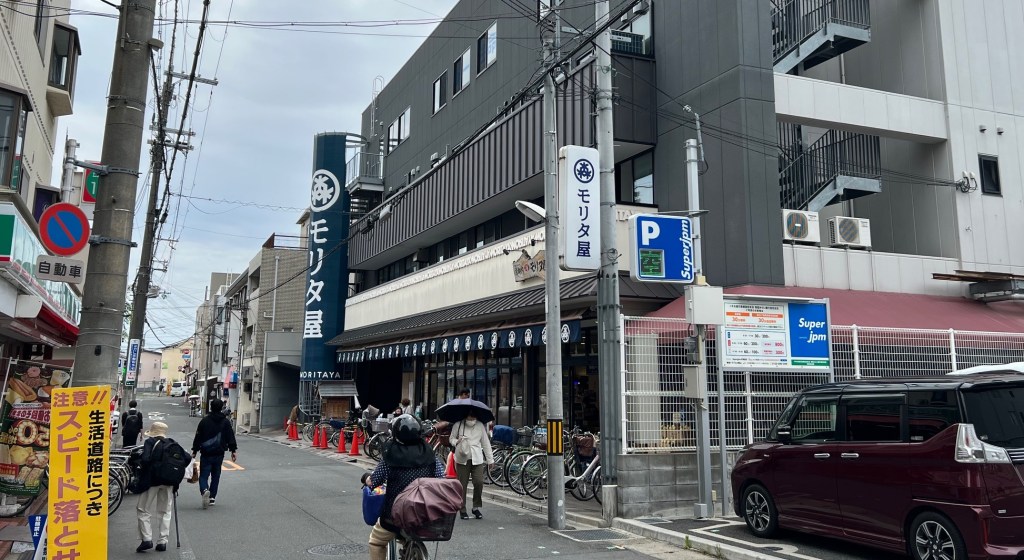
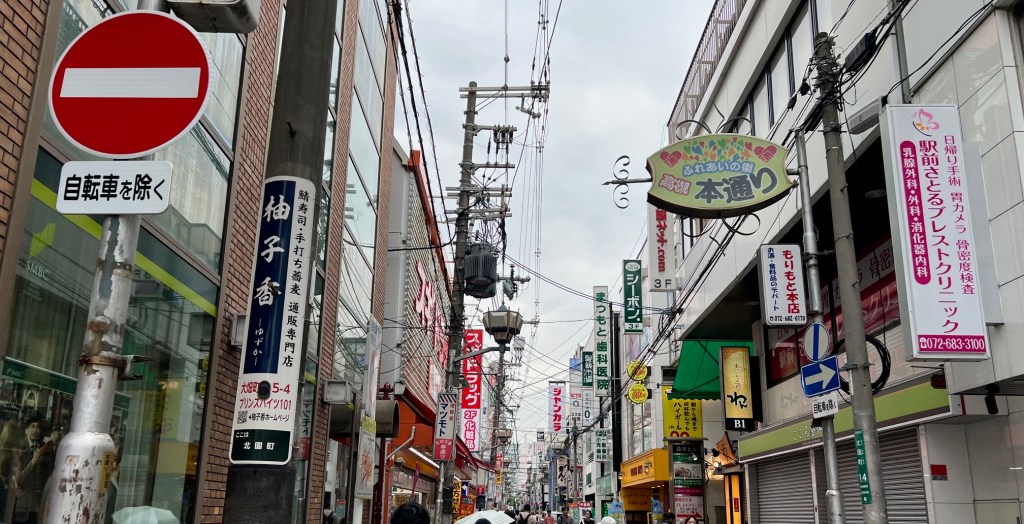
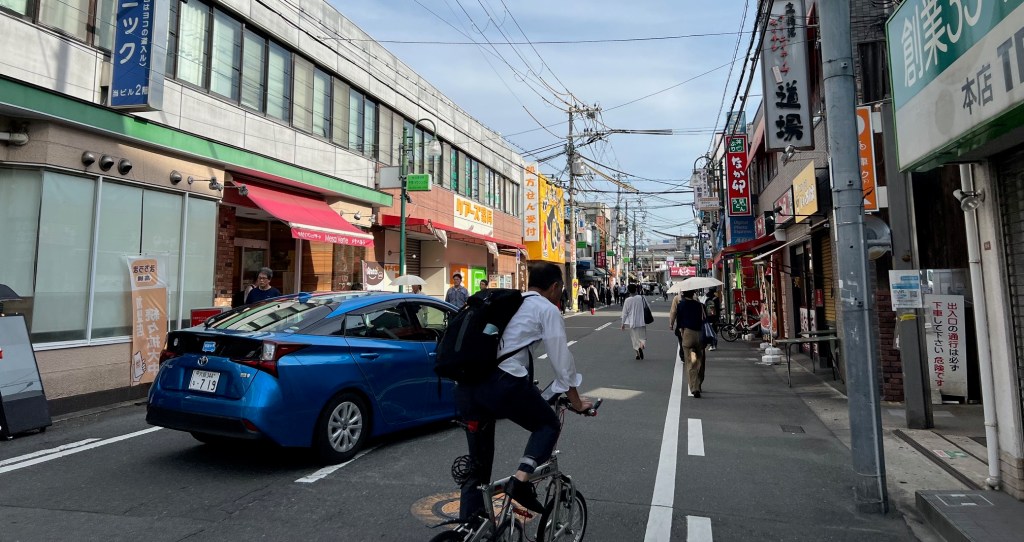
    The sky is overcast again today. After breakfast, I filled my thermos with coffee and headed to work. It felt a little chilly for this season. I crossed the railroad tracks and made my way through the shopping street toward Settsu-Tonda Station. I left home around 7:30, and at that hour, the streets are crowded with students on bicycles and office workers in suits.
    Beyond the station, the narrow alleys leading toward the company naturally form a line of people heading in the same direction. With about a thousand employees working at the Osaka headquarters, the morning commute always becomes a procession.
    I recently noticed that many of my colleagues wear very casual clothes on their way to work—T-shirts, jeans, and such. Since we change into company uniforms once we arrive, there’s no dress code for commuting. Having only visited headquarters on business trips before, I was used to wearing a suit, so I felt a bit out of place.

    As soon as I arrived at the office, I greeted the president, division head, and department manager to thank them for sending condolence telegrams for my father’s funeral. Perhaps it was just a formality for them, but I deeply appreciated it.
    Once the workday began, my mind quickly filled with project outlines and technical documents. The sounds of typing, mouse clicks, distant conversations between engineers, sales reps talking with clients on their phones, and documents being printed—
    the office was filled with the noise of work.
    Unlike working from home, being in the office makes me feel firmly grounded in reality.

    Just then, a LINE message came from my mother and sister. The city hospital had called the house in Tokyo to let us know that my father’s hospitalization certificate was ready for pickup. I exchanged a few messages with my sister, but the conversation ended midway.
    It stayed on my mind, but I got swept up in work and couldn’t get back to her. A few colleagues spoke to me about my father’s passing.
    Before I knew it, the workday had come to an end.

    Since I had wrapped things up, I left the office on time. Even at 5 PM, the sky was still bright. I always find summer evenings hot after a bath, so I stopped by a home improvement store on the way home and bought a cheap fan.
    Then I picked up some chili oil from the supermarket to go with frozen dumplings I plan to eat tomorrow.

    Back in my room, I turned on the orange light of my desk lamp. I played some jazz on the new audio system and made cabbage soup in the kitchen.
    I poured soy sauce over rice with a raw egg on top.
    Lately, I’ve been drinking more than usual, so I kept the Scotch to a minimum tonight.
    I sent a LINE message to my mother asking if she was able to pick up the hospitalization certificate, but there was no reply yet. It was 7:30 PM.
    At that time of day, she’s probably in the bath. My wife likely hasn’t come home from work yet.

    Around 8:30, my mother finally replied. I had only waited an hour, but part of my heart had been quietly unsettled the entire time.
    It would be a lie to say I don’t worry about my mother, now alone after my father’s passing.
    My wife works on weekdays, so she spend most evenings alone in her room.

    Later, my mother messaged me again to say that my wife had helped her fill out documents to change the name on the home fire insurance policy.
    Knowing that—despite always voicing frustrations about my mother—my wife had helped her out made me happy.

    For now, I plan to stay in close contact with both of them.
    Perhaps, by cherishing each moment like this, little by little, my everyday life will return.

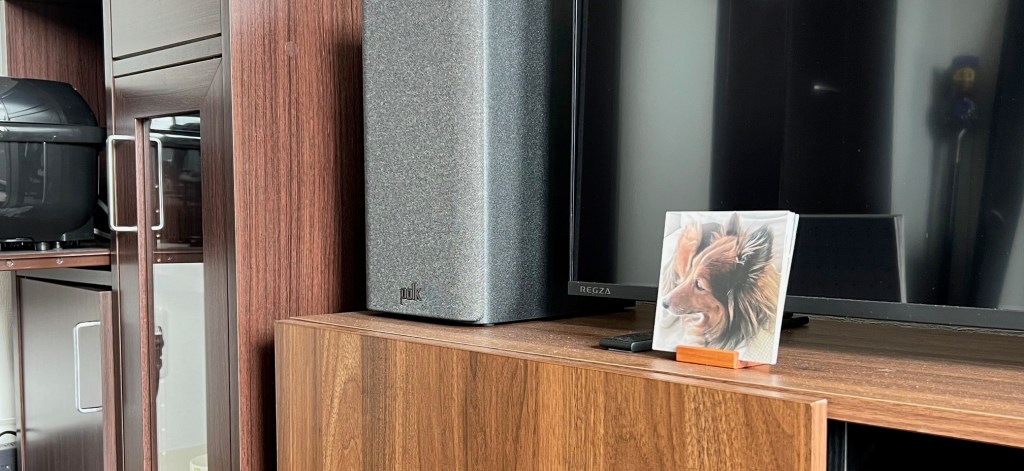
  • Sunday, May 25. The sky was a little overcast, and perhaps because I hadn’t slept well the night before, my mind felt a bit foggy. After breakfast, I spent the entire morning cleaning my room. I finished cutting the floor mats I had left half-done, shaping them to fit the room. I carefully placed a small dish rack and TV board on top of the mats and set up the coffee maker, rice cooker, and electric kettle. On the TV stand, I placed a compact stereo amplifier and small speakers, then connected the audio cables. There’s no CD player, but I can stream music from my smartphone via Bluetooth, which sounds good enough. As long as I keep the volume low enough not to disturb my neighbors, I can enjoy jazz at night. The TV connects to YouTube and Amazon Prime Video, so I’ll be able to quietly watch movies or tennis matches in the evening.
    —Now, I’ve finally finished what I started two weeks ago. Back then, I received a call that my father had fallen unconscious, and I dropped everything to rush to Tokyo.

    By lunchtime, everything in the fridge had spoiled, so I bought a salad and cold basil pasta at the convenience store. After eating, fatigue caught up with me, and I found myself idly sitting, doing nothing. When moments like that come, a quiet and inescapable sadness rises from deep within. I imagine my mother, now left alone, might be feeling the same. I thought about messaging her, but decided against it. It’s hard to explain why. The bond between parent and child, formed over so many years, can’t be captured in simple words.

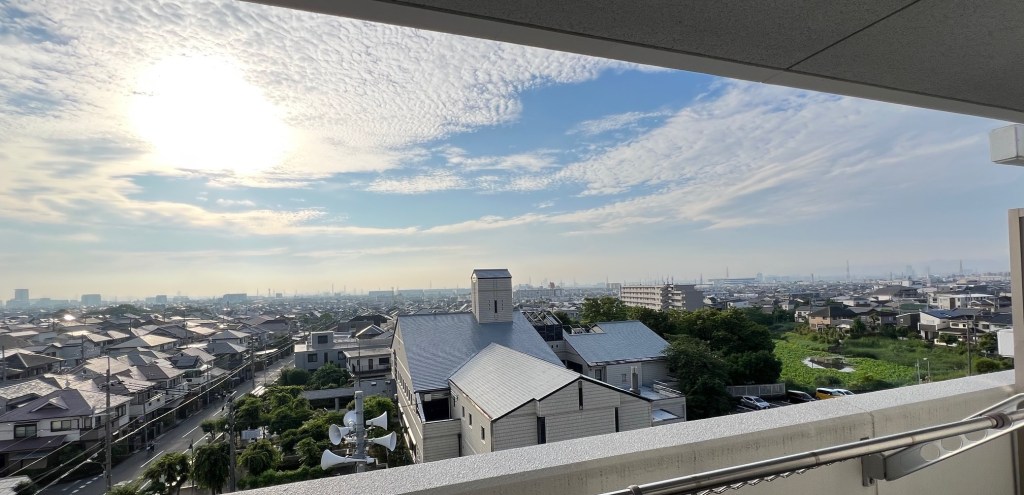
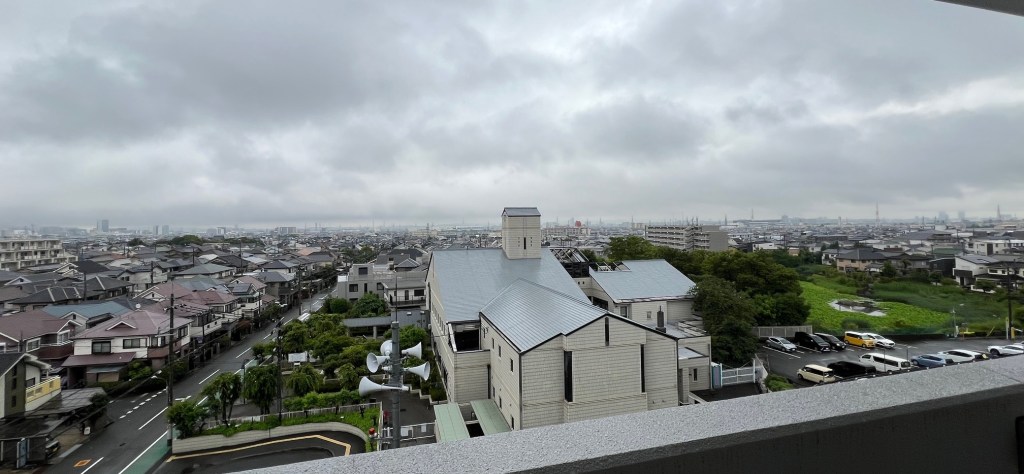
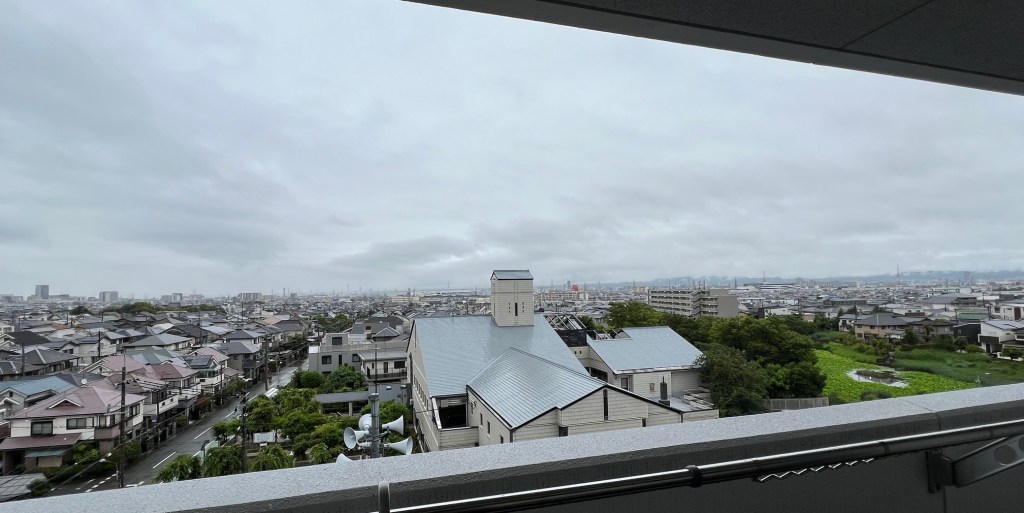
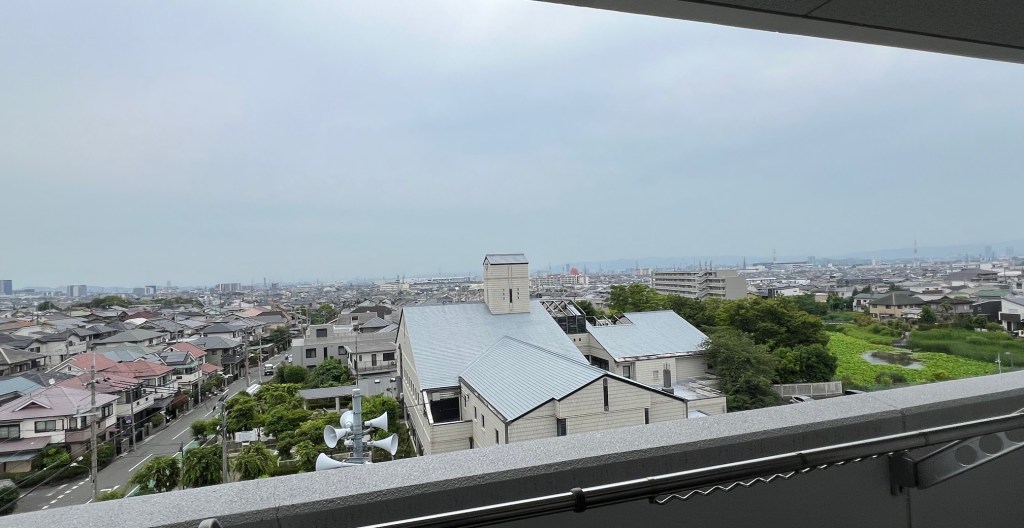
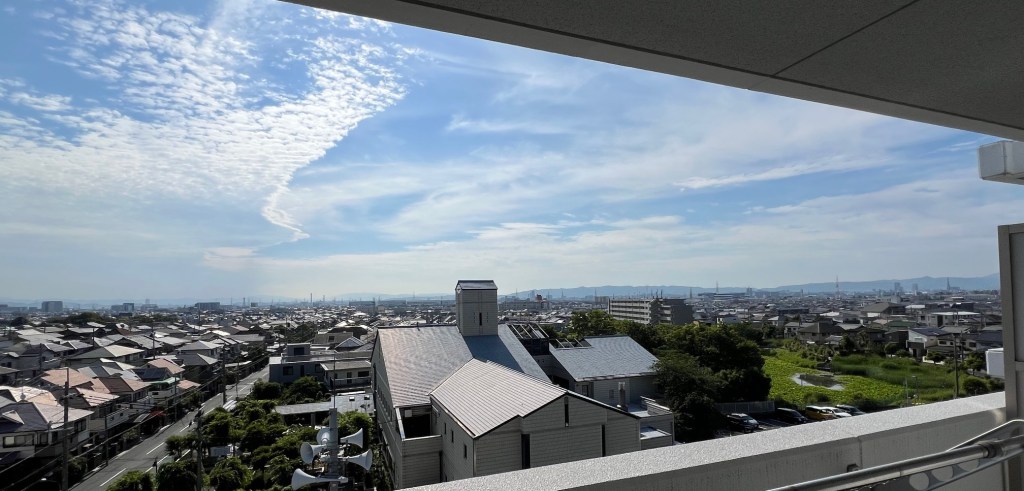
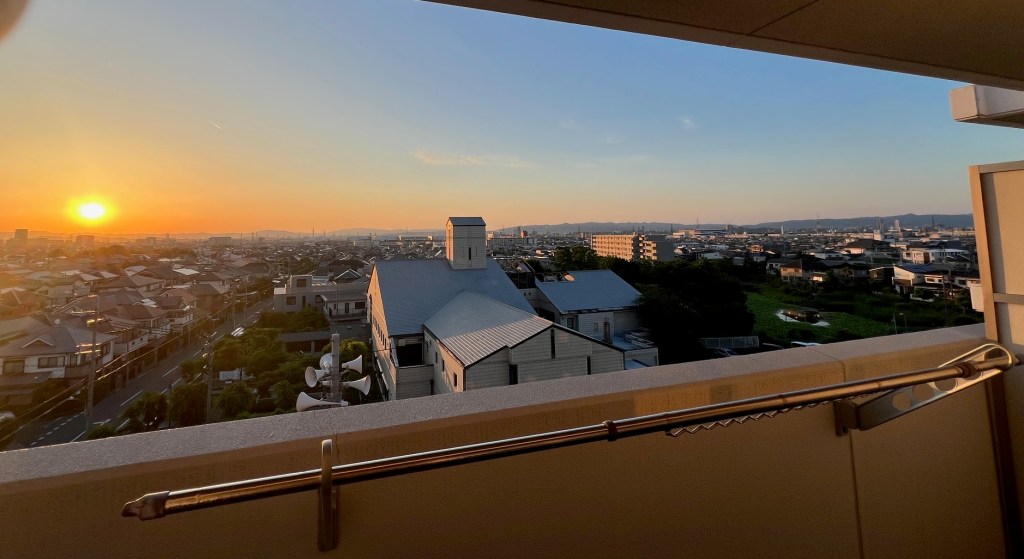
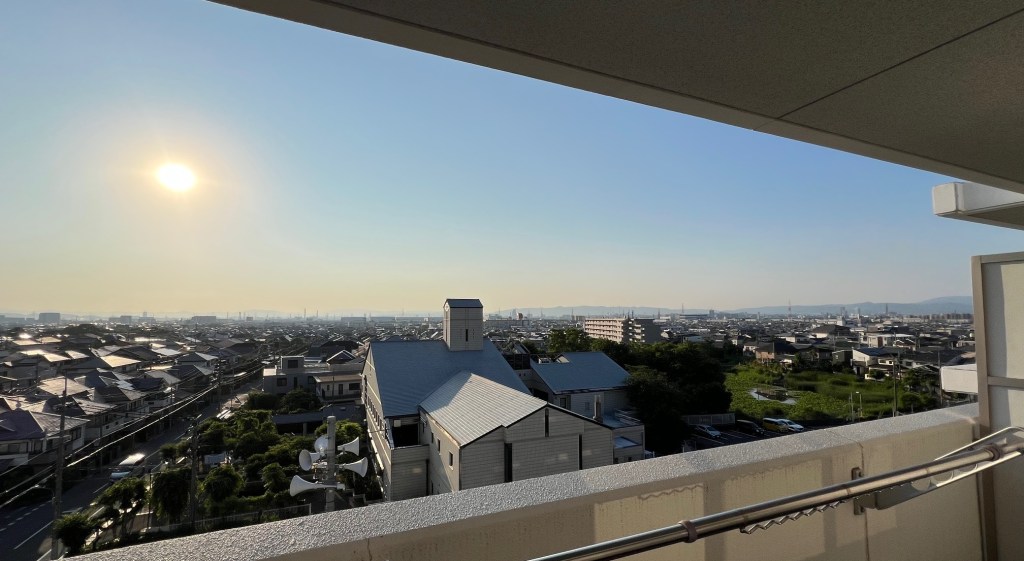
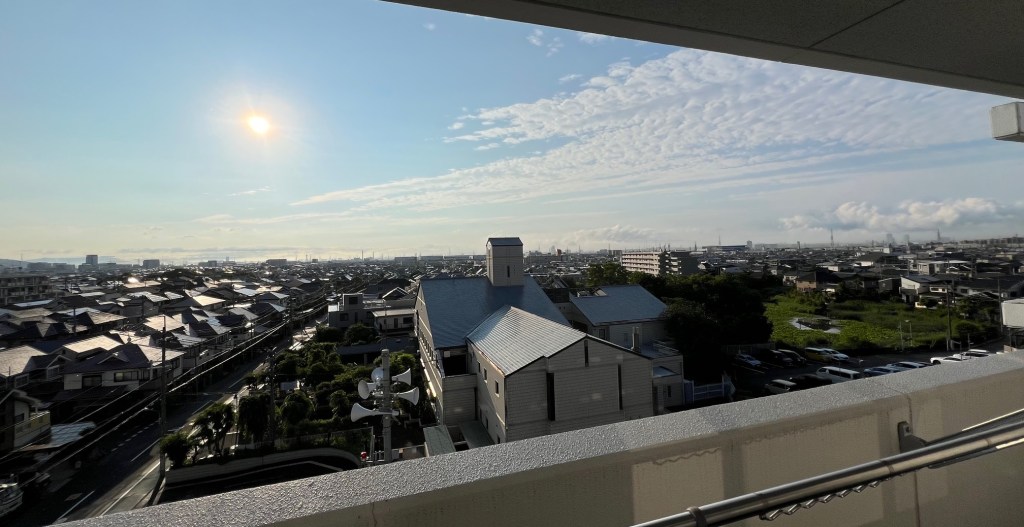
    Around 3 PM, I went out for groceries and took a short walk around the neighborhood. From my room on the sixth floor, I could see a large library and a pond, so I wanted to visit them. I changed out of my black Nike sweats into a pair of light blue jeans. There was a slight breeze as I opened the door, took the elevator, and stepped out into the open air.

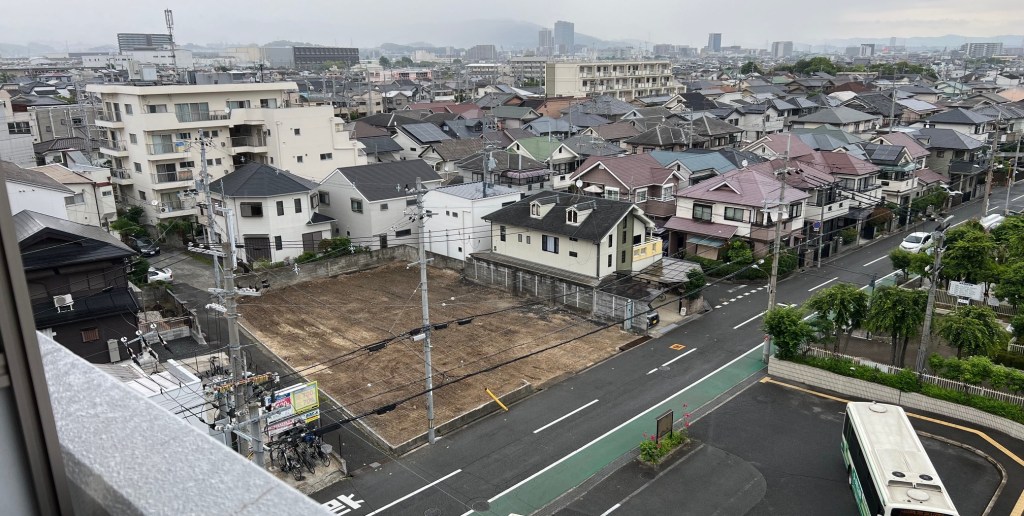
    The sky remained overcast. The weather hasn’t been great lately. I headed east, toward the library. Right next to my building is a small bus terminal, and just beyond that is the library—almost within arm’s reach. The sign read “Takatsuki City Koderaike Library.” Though old, it was a clean and well-maintained facility. The interior was spacious, with books in every genre: philosophy, religion, history, academics, business, self-help, and of course, fiction. Many people sat at tables or on benches, each absorbed in their reading. It might be nice to come here now and then—reading alone at home can feel isolating.

    After leaving the library, I continued east, turned right down a small alley, and after about 50 meters, arrived at Kodera Pond. It’s roughly 100 meters square and covered with lotus leaves. From my sixth-floor window, I’d seen movement on the water—now I knew what it was. Large koi were swimming in the pond. The pond is fenced off, with a walkway surrounding it. As I peeked through the fence, the koi noticed my shadow and gathered at the surface, rippling the water as if asking for food. One particularly large koi rolled on its side, as if looking at me with one eye. The walkway had benches where people could bring lunch and enjoy a peaceful meal. I slowly walked around the pond. The koi followed me.

    After a full circle around the pond, I returned to the street near the station. I crossed the railroad tracks and stopped at the supermarket closest to my apartment, buying vegetables, pork, and eggs. For dinner, I had a retort-pack keema curry and stir-fried spinach and bacon with butter.

    It was a quiet, unhurried day. Tomorrow, I’ll go back to the Osaka headquarters. The ordinary days are beginning again—softly rippling, like waves on the surface of water. I’ve decided to properly restart tennis again. Staying cooped up at home will only weigh me down.

  • Saturday, May 24. I left my family home in Tokyo and boarded a bullet train bound for Osaka. Nozomi No. 391, departing Shin-Yokohama at 2:29 p.m., arrived about five minutes late. Feeling drained, I closed my eyes and sat still. I could hear the train slicing through the wind. The subtle vibrations pulsed through my body. When we entered a tunnel, the sound of the wind grew louder, pressing against my eardrums.

    As we neared Shin-Fuji, I heard the clicks of passengers taking photos with their smartphones. I opened my eyes to find Mt. Fuji floating darkly against a sky of thin clouds. The snow on the summit seemed to have melted. A man in a suit, young women scrolling on their phones, schoolkids absorbed in their games, and a foreign couple in T-shirts with large suitcases stowed above—the car was filled with all kinds of lives.

    I wasn’t thinking about anything in particular. Just letting the train’s sway carry me along. The scenes inside the car, and those slipping past the window, stirred no emotion in me. I simply stared at them, absentmindedly. No, that’s not quite right. I was thinking—about two Sundays ago, when I received a LINE message from my wife on another bullet train, on my way to a Tokyo hospital. She told me that my father had just passed away. That moment came back to me.

    By the time we reached Nagoya, raindrops had begun to strike the window. The droplets traced horizontal lines along the glass, flowing backward with the train’s motion. As the speed increased, the flow of water diminished and eventually disappeared, likely swept away by the wind pressure. A haze covered the outside world. We arrived at Kyoto Station, and the rain was still falling. I stepped off the platform and transferred to the JR Kyoto Line, heading for Settsu-Tonda Station.

    A woman sat across from me, holding a newborn in her arms while gently chatting with a little boy, about three years old, who was in a stroller. The boy was full of energy, gleefully swinging around a toy in his hands. His voice echoed through the train, but no one seemed bothered. Suddenly, he dropped his toy. The mother, cradling her baby and steadying the stroller, struggled to pick it up. I reached out and retrieved it for her.
    “Thank you so much,” she said with a small bow.
    I didn’t reply, just smiled quietly.

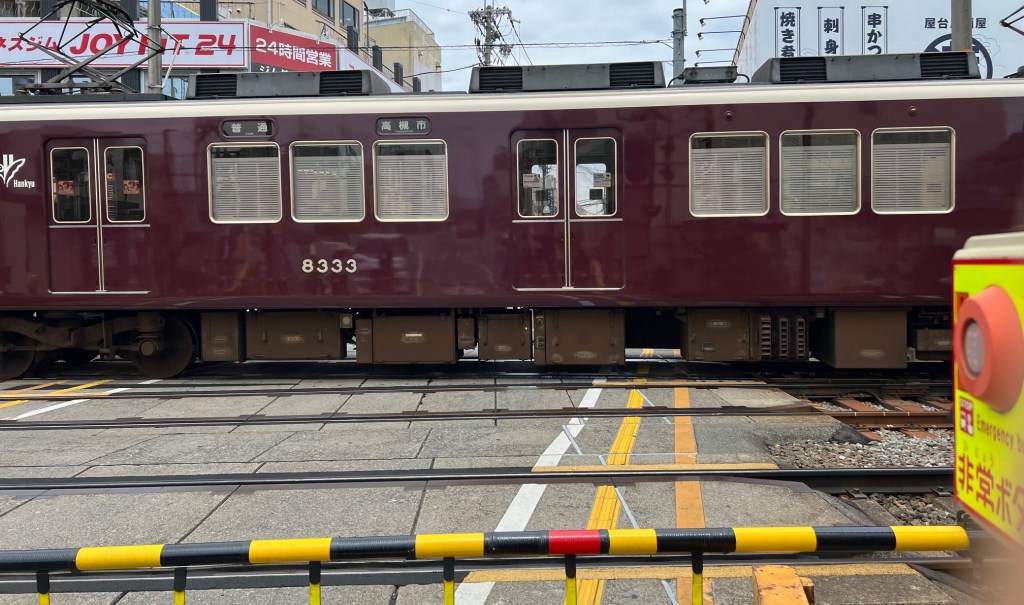
    At Settsu-Tonda Station, I bought a large vinyl umbrella. I walked through the rain-streaked shopping street. The new umbrella repelled the rain well. Bicycles and scooters zipped by, people crossed paths on either side, cautious cars moved through the crowd, and the sound of the crossing bell rang out. Though I had only moved here a month ago, it already felt like I had walked this route many times.

    I returned to the apartment. The room was still in disarray—I had rushed out after a sudden call from my mother in the middle of cleaning. For now, I decided to leave things as they were. I would resume the cleanup tomorrow.
  • Friday, May 23rd. Overcast skies. I dropped the documents for changing the names on the gas, electricity, and water utilities, as well as the bank account for automatic withdrawals, into the mailbox. I’m working remotely from Tokyo again today, but work has settled down for now. It was on May 11th that I received the call about my father’s unconscious state. I rushed out of my apartment in Osaka, went to the hospital in Tokyo, confirmed his death, arranged the funeral, consulted about inheritance, and handled various name change procedures. It has been a hectic time. The necessary documents and procedures are mostly organized, so my sister and I can now handle them as we prepare. I plan to return to Osaka tomorrow morning. The apartment is still in disarray, and I’m concerned about the vegetables and pork I bought for cooking—whether they’ve spoiled in the fridge. My sister has been thoughtful, occasionally traveling from Kita Ward to Machida, but leaving my mother and wife alone at the family home in Tokyo worries me.
    With work calming down, I took a moment to gaze out the window. My desk, facing a westward window, has a wood-grain L-shaped design, large enough to accommodate a 32-inch monitor. This is a quiet residential area, so there’s little traffic noise, but occasionally, I hear the sound of airplanes passing overhead or children talking on their way home from school. The greenery is relatively abundant, and from the south-facing window, I can see Tendai Park, where a towering tree, about 30 meters tall, sways its lush green leaves in the wind.

    Sitting at my desk, I straighten my back and try a bit of meditation. It’s so quiet that I can hear the cool air flowing from the air conditioner’s vent. I focus my consciousness inward, attuning to my heartbeat and sensing the flow of blood. I pay attention to the nerves extending from my body’s center to my hands and feet, feeling a slight warmth in my palms. I sense the passage of time. Outside the window, the wind whispers—it feels as if it’s resonating with the voice of my heart. Memories of recent events begin to replay in my mind.

    This situation has given me time to talk with my sister again. Among the photos my father took during his lifetime, there’s one from when I had just entered elementary school, showing me looking sheepish after making my sister cry. I remembered a time when I used to tease her and decided to apologize, but she said, “I only remember playing with you. You really played with me a lot.” I recalled how I used to use a stuffed rabbit to mimic Kenji Sawada’s songs in a puppet show style, making her laugh uncontrollably. It was also nice to talk a bit with my two nieces. The older one is attending Waseda University, and the younger is studying for the University of Tokyo entrance exams. The older niece mentioned that her university club is planning to visit a sewage treatment facility in Indonesia. Both of them have made studying an integral part of their lives, and they said they feel uneasy when they can’t find time to study, which was quite surprising to hear.

    As for my wife, after our beloved dog Kanon passed away, she lost her emotional anchor. We had arguments about my mother and didn’t speak for about six months. She only prepared meals during that time. However, we’ve gradually started to talk again, and I feel that we’re slowly building a relationship where we respect each other’s positions. Also, many members of the Soka Gakkai came to the funeral and spoke about my father. I was able to express my feelings about leaving the organization and my current sentiments towards it in my greeting speech. This made me feel as if something that had been smoldering inside me for years had slightly cleared.

    My father’s death has brought changes to our lives. However, time flows equally for those who remain. My mother, sister, and wife each have their own allotted time and are being drawn back into their respective lives. It was a very painful experience, but we must begin to look forward and move on. I feel that this process has already begun for me. I think some support is needed to fill the time my mother now spends alone. Since I can return to Tokyo for half of each month, I plan to consider how best to use that time.

  • May 22nd. The sky is lightly overcast, but now and then, rays of the setting sun break through. I was working remotely today. I currently work in project management for a pump manufacturer. It’s a position I requested and was fortunate to transfer into last year. My job involves coordinating between clients and internal departments, playing the role of a facilitator to keep projects moving smoothly. In a sense, I serve as a bridge for information flow, and the work suits my nature well. Perhaps this is heavily influenced by a part-time job I had during my university years. Today, I’d like to share a story from that time.

    I believe I got my motorcycle license not long after entering university—so I must’ve been around 19. I sold the 50cc moped I had been using and bought a 400cc bike. It was a used VFR400R (NC21), and if I remember correctly, it cost about 400,000 yen. To pay off the loan, I had to start working a part-time job. Back then, there was a magazine called Nikkan Arubaito News (Daily Part-Time Job News). With the economy booming during the bubble era, there were plenty of job opportunities, and choosing one was actually fun. I had heard that my cousin, who was two years older than me, was working as a bartender, so following a similar vibe, I decided to become a restaurant waiter.

    The location was right by the East Exit of Odakyu Machida Station, in a building surrounding the main plaza. On the ground floor was the Kumido Bookstore, and in the basement was a newly opening restaurant with a cake shop attached. They were recruiting opening staff. For some reason, the phrase “opening staff” had a nice ring to it back then. It gave me a sense of excitement, like maybe I’d make new friends. However, the restaurant was still under construction, so I had to work at another location for two weeks as part of my training. That place was the Kabukicho branch. I was 19, and just hearing the name “Kabukicho” made me feel uneasy.
    On my first day, I did customer service for the very first time. The customers included intimidating-looking men and women with overly thick makeup—honestly, I was scared stiff. The supervisor told me, “Go take that table’s order,” and when I approached the customer—very much the “stereotypical” type of tough guy—I asked, “May I take your order?” He simply said, “Reikō.” There didn’t seem to be anything by that name on the menu, so I hesitantly asked, “Um… what’s reikō?” He flared up and shouted, “When I say reikō, I mean iced coffee, you idiot!!” I remember bowing and apologizing over and over, totally flustered. That moment became a kind of trauma for me, and I was afraid to take orders after that. But there were normal customers too, so I somehow managed to get by.

    Still, talking with customers was hard for me, so I remember focusing desperately on refilling water for tables—something I could do without speaking. I also delivered cakes. The Kabukicho streets at night were truly terrifying for me at the time, and delivering cakes to hostesses’ apartments felt like stepping into an entirely different world. All I felt back then was fear. But one time, a cigarette-in-mouth, hostess-type woman said to me, “Thanks for coming all this way,” and from deep within, I felt a strange new sense of fulfillment. Looking back, that may have been my first real experience of participating in society. Even though it was scary, there was an undeniable thrill.
    Now that I reflect on it, I was just a clueless kid. But those two weeks of training in Kabukicho breathed into me a first taste of the real world. And then, finally, the Machida restaurant was completed. The real work was about to begin—(To be continued.)

  • Wednesday, May 21.
    Last night, for the first time in two weeks, I attended a tennis lesson. Since I had left my racket in Osaka, I had to use an old one I found at home—but it turned out to be a great way to refresh myself. Tennis is a full-body sport. To swing the racket properly, you need to plant your weight firmly on the ball of your pivot foot, twist your upper body from the waist, and transfer that energy through your shoulders, elbows, and arms using centrifugal force. Maintaining a stable core is also essential. The motion is reminiscent of ballet or dance. Each joint and muscle has to move delicately. That’s why professional players’ strokes look so refined and beautiful.

    In April 1987, I entered Chuo University.
    The Faculty of Science and Engineering was located at the Hakusan Campus, which could be reached by getting off at Korakuen Station on the Marunouchi Line, walking through Isogawa Park in Bunkyo Ward, climbing a staircase, and then heading up a slope on Kasuga Street. The campus had a gate known as Hakumon. During the entrance ceremony, flyers for clubs and circles were handed out as you passed through it—so many that my bag was quickly filled. At the time, Tokyo Dome was still under construction. From the pedestrian bridge near Korakuen Station, you could see the changing shape of the old Korakuen Stadium, later nicknamed BOGEGG. In contrast, the liveliness of the Korakuen amusement park was slowly fading away, and for some reason, that left a slightly lonely impression on me.

    I had already decided to join a tennis circle. I wanted to overcome my poor communication skills. But honestly, my vocabulary was terrible back then. After a grueling year of studying for entrance exams, during which I barely spoke at all, I had no idea how to hold a normal conversation. My mind had been consumed entirely by studying, so being expected to suddenly become talkative was a tall order.

    After the festive entrance ceremony, the campus quickly settled into a more subdued atmosphere once classes began. I was extremely nervous. While others were making friends with ease, I remember going nearly two weeks without speaking to anyone. Still, I eventually managed to connect with a few classmates, and that’s how my university life started.

    The school cafeteria was located in a semi-basement of Building 6, and I had lunch there every day. I still remember how delicious Set C was—it came with croquettes and teriyaki chicken.

    Keeping up with the classes was tough. Looking back, I realize I had overestimated myself in choosing this university. My classmates were far quicker thinkers than I was, and they seemed to breeze through lectures. I, on the other hand, often couldn’t even grasp what the professors were talking about. Luckily, my experience from my exam prep days gave me the habit of reviewing lessons at home, and that helped me survive.

    From the pile of flyers stuffed into my bag, I chose one tennis circle to join. It was called “Tennis Circle Palo Palo.” At first, I didn’t know how to pronounce it. When I asked an upperclassman, “How do you read this name?” he teased me:
    “Huh? Who knows? Pau Pau? Puff Puff? Something like that?”
    Later, I learned that typing “palo palo” in romaji produces “Pao Pao” which seemed to be the origin. Still, by the time I joined, everyone was pronouncing it “Paro Paro.” I must admit—it sounded kind of flashy. But I think I was drawn to that atmosphere. To be honest, I probably wanted to be popular. Yeah, no doubt about it. But allow me to make an excuse: I was also genuinely curious to explore worlds I had never experienced before.

    If I could talk to my younger self, I’d say:
    Take your time. Whether it’s building relationships or mastering your tennis form, it all comes together with time.

    Since university life has many stories to tell, I’ll pause here for now.

    Today marked the end of my bereavement leave. I resumed work remotely from home. My supervisor gave me a brief overview of the project that was handled in my absence, and I will be taking over starting with the kickoff meeting with the design department.

    Suddenly being pulled back into reality after the funeral made me feel a bit rushed.
    Still, I managed to finish my piled-up tasks, had dinner prepared by my wife, and took a relaxing bath. Now, I’m enjoying a quiet moment in my room, sipping a Scotch and soda.

    My remote work from Tokyo ends this weekend, and I plan to return to Osaka on Saturday.

    When I was younger, I believed everything could be mastered quickly. But just as it took me years to make the tennis swing feel natural, I’ve come to understand that building human relationships also takes time—little by little.